
Mexico 10 Centavos 2009 (Stainless Steel): What It's Worth
Prices updated: August 2026
Centavos stainless steel 2009.
Centavos stainless steel 2009.
Design
Banxico
Reverse
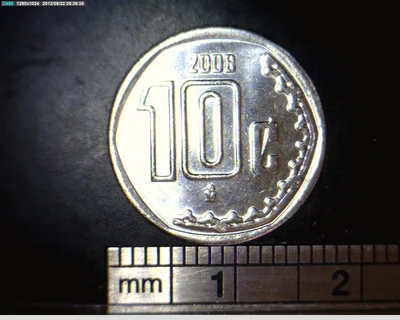
Reverse of the 10 Stainless Steel 2009 piece. Detail of the die cataloged by Banxico in its Numismatic Collection.
Obverse
Obverse with the Mexican National Coat of Arms and the legend "ESTADOS UNIDOS MEXICANOS" per official convention. Struck by the Mexican Mint under Banxico decree.
How much is the Mexico 10 Centavos 2009 (Stainless Steel): What It's Worth worth?
The market value of the Mexico 10 Centavos 2009 (Stainless Steel): What It's Worth is not yet documented with enough data to give a firm range. Weigh and measure your piece, compare it against the specifications, and check the forum for a second opinion.
The real price depends on four factors: the grade of preservation (a circulated piece is worth the low end of the range; an uncirculated one, or one still in its official blister pack, the high end), the finish (satin vs mirror/proof), the rarity within the series based on the mintage, and the metal spot price on the day of the deal when the piece is silver or gold. Check the value-by-grade table above and compare with equivalent pieces before buying or selling.
Where to buy or sell this coin?
Browse the national directory of numismatic shops or the community forum to trade directly with other collectors.
Description
If you found a 2009 Mexican 10 centavos coin and are hoping it's a hidden windfall, here's the honest answer up front: in worn, circulated condition it's worth about 1 to 5 US cents, essentially its face value. This is a common circulation coin, not a rarity. The only versions worth real money are top-grade uncirculated examples or genuine mint errors, which we cover below.
What this coin actually is
The 2009 10 centavos is a small stainless steel coin from the Casa de Moneda de México (the Mexican Mint, the oldest mint in the Americas). "Centavos" are the fractional units of the Mexican peso, so 10 centavos is one tenth of a peso, roughly half a US cent at current exchange rates.
Here are the exact specs, useful for both valuing and authenticating your coin:
| Feature | Detail |
|---|---|
| Denomination | 10 Centavos |
| Year | 2009 |
| Metal | Stainless steel |
| Weight | 2.08 grams |
| Diameter | 17 mm |
| Edge | Plain (smooth) |
| Mint | Casa de Moneda de México |
| Type | Regular circulation, no commemorative design |
This piece belongs to the family of peso fractions introduced after Mexico's 1992 monetary reform. Stainless steel replaced earlier materials in the smallest denominations because it's durable and cheap to strike, which mattered for coins that got heavy daily handling.
How much is the 2009 10 centavos worth?
Straight numbers, because that's what you came for:
| Condition | Approximate value (USD) |
|---|---|
| Circulated (worn) | About 1 to 5 cents (face value) |
| Uncirculated (AU/BU) | 25 cents to about 2 dollars |
| Certified top grade (MS66+) | A few dollars, occasionally more |
A worn 2009 10 centavos is a face-value coin. Millions were struck and millions still exist. Age alone does not make it valuable, and 2009 is recent by numismatic standards.
The value here lives in condition, not date. Low-denomination coins circulated until they were nearly smooth, so a 2009 example with full mint luster and no wear is harder to find than the mintage suggests. A clean uncirculated (UNC) piece rounds out a modern Mexican circulation set nicely, and that collector demand is what pushes a top-grade example above face value.
Errors: the only realistic path to real money
Genuine mint errors, off-center strikes, die rotation, double strikes, and recognized varieties, can multiply the value of an otherwise common coin. The catch: most "errors" people post online are post-mint damage, not factory errors. Scratches, dents, and corrosion from decades in a pocket or a jar are not errors and add no value.
If you think you have a real error, the difference between damage and a struck error is what determines whether it's worth cents or worth paying attention to.
How to check what yours is worth
- Weigh and measure it. Use a jewelry scale and calipers. It should be 2.08 grams and 17 mm. Off numbers point to a fake or a wrong-year coin.
- Grade the condition. Look for mint luster and sharp detail. Any smoothing or flatness on the high points means it's circulated and worth face value.
- Photograph both sides and the edge. Good, in-focus photos are what any buyer or appraiser will ask for first.
- Compare to sold listings, not asking prices. What someone lists a coin for and what it actually sells for are different numbers.
See our guide to grading modern Mexican coins and our reference on Mexican circulation coins after the 1992 reform for context on where this piece fits.
Where to sell it
For a common coin like this, keep expectations realistic and avoid overpaying anyone. A verified numismatic shop from the Pesoteca directory can appraise it on the spot, and the Pesoteca buy-and-sell forum connects you directly with collectors. Photograph the coin front, back, and edge, and check the range in this guide before you sell so you don't undersell an uncirculated piece.
Got a 2009 10 centavos you think might be a high-grade example or a genuine error? Post your photos in the Pesoteca forum and let the community weigh in before you sell.
Historical context
This 10 centavos piece from 2009 belongs to family B without the N$ prefix issued by Banxico. The 10 centavos is the most-used fractional step in Mexico. It shows up when paying cash bills with an odd price and as change in supermarkets, tortilla shops and pharmacies. Its national eagle + denomination + year face is among the most familiar to the everyday Mexican.
Stainless steel made it resistant to corrosion and cheap to mint. The piece replaced the copper-nickel that earlier generations had in the old peso system.
In 2009 annual inflation closed at 3.6% according to INEGI and the average exchange rate was 13.51 pesos per dollar according to Banxico's FIX. Year of the AH1N1 influenza health emergency and of the worst GDP collapse since 1995 (-6.5%). Banxico introduced the family C of coins with the new 20 and 50 centavos denominations in stainless steel with a dodecagonal profile. The country was under the Presidency of Felipe Calderon Hinojosa (PAN).
Catalog reference: KM#547. The piece is part of the official Banxico Numismatic Collection catalog and follows the convention of the PSM System, one ID per distinct physical piece, not per design shared with other years of the same series.
This piece belongs to the era
Nuevos Pesos y actualidad →Explore all the Mexican coins of this era, their historical context and how they connect to the monetary system of the period.
Value range of this piece
Value range without enough data for this piece.
See the full breakdown by grade (VG, F, VF, EF, AU, MS-60, MS-63, MS-65) for the whole series →
Same denomination, other years
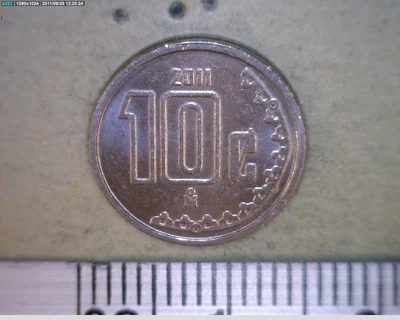
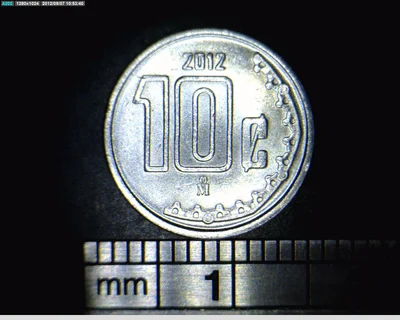
10 centavos Acero inoxidable · 10 Centavos Acero Inoxidable
Frequently asked questions
How much is the 2009 Mexican 10 centavos worth?
In circulated, worn condition it's worth about 1 to 5 US cents, basically face value. An uncirculated example with full mint luster can bring 25 cents to about 2 dollars, and a certified top-grade coin (MS66 or higher) can reach a few dollars. Age doesn't add value here; condition does.
Is the 2009 10 centavos rare?
No. It's a common circulation coin struck in large numbers by the Casa de Moneda de México, and millions still exist. What's genuinely scarce is a 2009 example in top uncirculated grade, since these small coins usually circulated until nearly smooth.
Where can I sell my 2009 10 centavos?
The safest options are a verified numismatic shop from the [Pesoteca directory](/tiendas), which can appraise it in person, or the [Pesoteca buy-and-sell forum](/foro/compra-venta) among collectors. Photograph the front, back, and edge, and check the value range in this guide first. Don't dump it to the first bidder on social media.
How can I tell if my 2009 10 centavos is genuine?
Weigh and measure it. A real one is 2.08 grams and 17 mm in diameter, made of stainless steel with a plain edge. Fakes usually have the wrong weight or diameter, flat relief, or poor detail. If your numbers match the specs above, it's almost certainly authentic.
Conversation
0 comments
Loading comments…