
100 Pesos 1984 (Carranza): What It's Worth Today
Prices updated: August 2026
How much is the 100 Pesos 1984 (Carranza): What It's Worth Today worth?
The market value of the 100 Pesos 1984 (Carranza): What It's Worth Today is not yet documented with enough data to give a firm range. Weigh and measure your piece, compare it against the specifications, and check the forum for a second opinion.
The real price depends on four factors: the grade of preservation (a circulated piece is worth the low end of the range; an uncirculated one, or one still in its official blister pack, the high end), the finish (satin vs mirror/proof), the rarity within the series based on the mintage, and the metal spot price on the day of the deal when the piece is silver or gold. Check the value-by-grade table above and compare with equivalent pieces before buying or selling.
Where to buy or sell this coin?
Browse the national directory of numismatic shops or the community forum to trade directly with other collectors.
Description
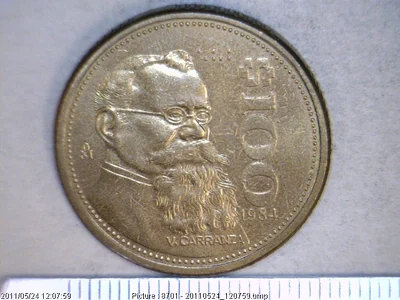
If you inherited a Mexican 100 pesos coin dated 1984 with a bearded man on it, here is the honest answer: in circulated condition it is worth close to face value, usually under 2 or 3 dollars. It is not silver, it is not rare, and it is not a fortune. But a pristine, uncirculated example can bring more, and that is the part most people miss.
What this coin actually is
The 1984 100 pesos is an aluminum-bronze circulation coin, not a precious metal piece. The bearded portrait is Venustiano Carranza, a leader of the Mexican Revolution. It was struck at the Casa de Moneda de México (the Mexican Mint), which has produced the country's coinage for centuries.
Here are the exact specifications, useful if you want to confirm what you have:
| Feature | Detail |
|---|---|
| Denomination | 100 pesos |
| Year | 1984 (struck multiple years) |
| Composition | Aluminum-bronze |
| Weight | 11.71 grams |
| Diameter | 26 mm |
| Edge | Discontinuous reeded |
| Portrait | Venustiano Carranza (reverse) |
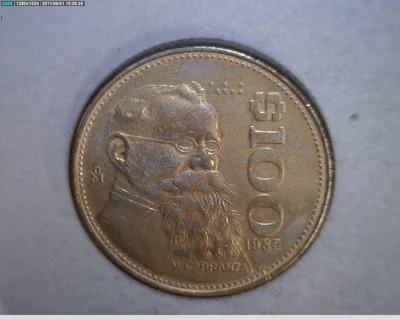
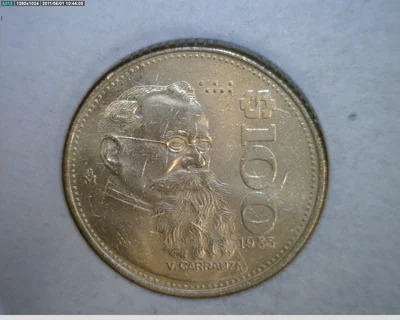
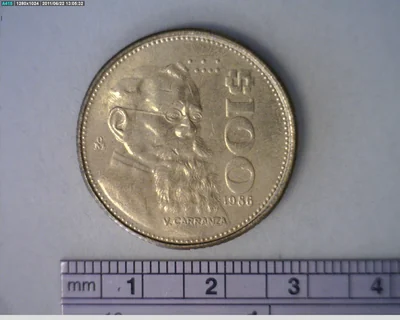
This coin belongs to the last stretch of the "old peso" before the Nuevo Peso arrived in 1993. Those were years of heavy inflation, which is why a high denomination like 100 pesos ended up as everyday pocket change. It was minted across several years and produced in large numbers, so tens of millions passed through Mexican hands.
Is it worth money?
For most people reading this: no, not in any life-changing way. This is one of the most common Mexican coins from the 1980s. A worn example that spent years in circulation is worth roughly its metal and collector floor, meaning a couple of dollars at best. Do not expect a dealer to pay more than that for a scratched, dull coin.
What changes the math is grade. Because almost everyone spent theirs, high-grade survivors are less common than the mintage suggests. An uncirculated coin with full original luster and sharp detail in Carranza's beard is the one collectors actually want, and it can sell for several times the value of a worn piece. Even then we are talking about tens of dollars in top condition, not hundreds. Be realistic: this is an entry-level collector coin, priced for people just starting a Mexican series.
Where the real value sits
Three things decide what your 1984 100 pesos is worth:
- Grade. Circulated equals a few dollars. Uncirculated with full luster is where the premium lives.
- Genuine mint errors. Off-center strikes, die rotation, and double strikes, if verified as real, can multiply the value. Most "errors" people post online are post-mint damage (dings, corrosion), not factory errors.
- Completing a set. It has natural demand as part of a Mexican Revolution figures collection or a full 1980s circulation set.
How to tell if yours is genuine
Counterfeits of a low-value coin like this are uncommon, but if you want to be sure, measure it. Weigh it on a jewelry scale (it should be 11.71 grams) and check the diameter with calipers (26 mm). Fakes usually miss on weight or diameter, or show flat, mushy relief and uneven coloring. The edge should be a discontinuous reeded pattern you can feel with your fingertip.
Where to sell it
If you decide to sell, photograph both sides and the edge, and know your grade before you talk to anyone. Your options:
- A verified coin shop from the Pesoteca dealer directory, which can appraise it on the spot.
- The Pesoteca buy-and-sell forum, where collectors trade directly.
Do not dump it to the first bidder on social media, and check the value range on this page first so you know what a fair offer looks like. If you have a full run of 1980s coins, selling the set together often beats selling one coin at a time.
Think you might have a genuine mint error, or an uncirculated example with full luster? Post clear photos of the front, back, and edge in the Pesoteca forum and let the community weigh in before you sell.
Value range of this piece
Value range without enough data for this piece.
See the full breakdown by grade (VG, F, VF, EF, AU, MS-60, MS-63, MS-65) for the whole series →
Other denominations from 1984
100 Pesos Bronce Aluminio · Aluminio-bronce
Same denomination, other years
100 pesos Aluminio-bronce · 100 Pesos Bronce Aluminio
Official sources
Frequently asked questions
How much is the 1984 Mexican 100 pesos coin worth?
In circulated condition it is worth close to face value, generally under 2 or 3 US dollars. It is a common aluminum-bronze circulation coin, not silver. A genuinely uncirculated example with full luster and sharp detail can sell for several times that, but still in the tens of dollars, not hundreds.
Is the 1984 100 pesos coin rare?
No. It was struck over several years in very large numbers and circulated widely, so it is easy to find. What is less common is a high-grade, uncirculated survivor with full original luster, which is the version collectors actually pay a premium for.
Where can I sell a 1984 Mexican 100 pesos coin?
The safest options are a verified coin shop from the [Pesoteca dealer directory](/tiendas), which can appraise and buy it on the spot, or the [Pesoteca buy-and-sell forum](/foro/compra-venta) between collectors. Photograph the front, back, and edge, and check the value range on this page before selling. Avoid dumping it to the first bidder on social media.
How do I tell if my 1984 100 pesos coin is genuine?
Weigh it (it should be 11.71 grams) and measure the diameter (26 mm) against the specs above. Counterfeits usually have the wrong weight or diameter, flat relief, or uneven coloring. The edge should show a discontinuous reeded pattern you can feel by touch.
Conversation
0 comments
Loading comments…