
100 Pesos 1986 (Carranza): What It's Worth
Prices updated: August 2026
Old peso era · Aluminum bronze
Old peso era · Aluminum bronze
Design
Banxico
Reverse
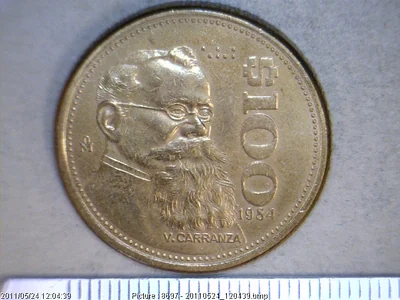
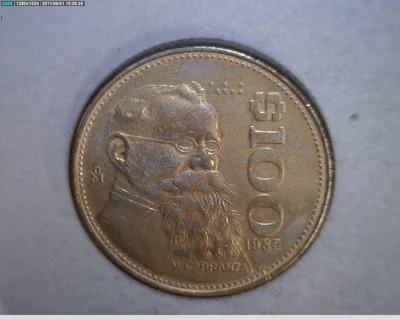
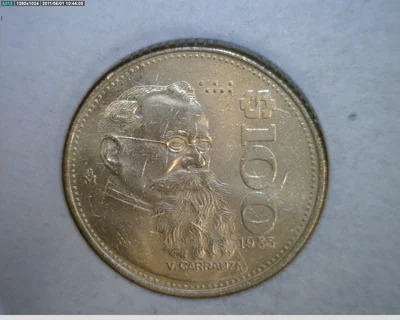
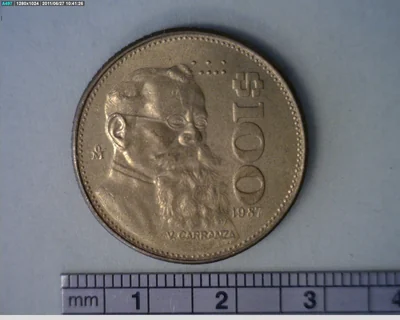
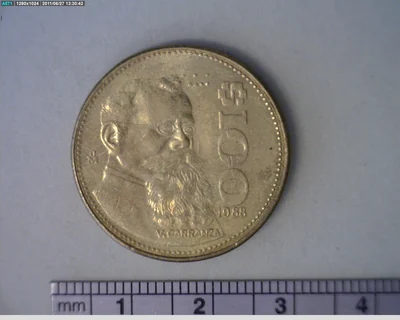
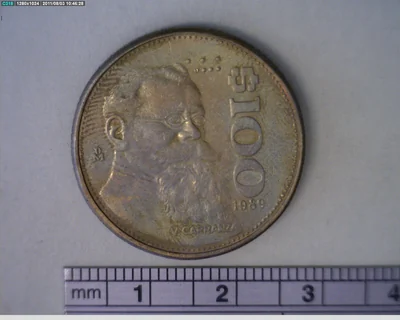
Reverse: portrait of Venustiano Carranza looking to the right, with the face value "100" and the number 100 in Braille (raised dots, for tactile identification). Year "1986" and mint mark "Mo" (Mexican Mint). The database entry that only mentioned the face value was incomplete: the main figure on the reverse is the bust of Carranza.
Obverse
Mexican National Coat of Arms with the inscription "ESTADOS UNIDOS MEXICANOS".
How much is the 100 Pesos 1986 (Carranza): What It's Worth worth?
The market value of the 100 Pesos 1986 (Carranza): What It's Worth is not yet documented with enough data to give a firm range. Weigh and measure your piece, compare it against the specifications, and check the forum for a second opinion.
The real price depends on four factors: the grade of preservation (a circulated piece is worth the low end of the range; an uncirculated one, or one still in its official blister pack, the high end), the finish (satin vs mirror/proof), the rarity within the series based on the mintage, and the metal spot price on the day of the deal when the piece is silver or gold. Check the value-by-grade table above and compare with equivalent pieces before buying or selling.
Where to buy or sell this coin?
Browse the national directory of numismatic shops or the community forum to trade directly with other collectors.
Description
If you found a gold-colored Mexican 100 pesos coin dated 1986 with a bearded man's face, here is the honest answer: it is almost certainly worth a few cents to a couple of dollars. It is not gold, it is not silver, and it is not rare. Only a top-grade uncirculated example reaches 25 to 40 USD. Below is exactly what you have and how to tell if yours is one of the few worth setting aside.
Quick value answer
The 1986 Mexican 100 pesos in aluminum-bronze (the gold-toned alloy, not actual gold) is a common circulation coin. Mexico struck about 43 million of them in 1986 alone, and the whole 1984 to 1992 run came in huge quantities. That volume is why the coin has little collector value in typical condition.
- Worn, circulated: a few cents to about 1 USD. Face value in pesos is long gone (the currency was reissued in 1993).
- Uncirculated with original luster: roughly 25 to 40 USD, based on recorded sales on Numista and similar marketplaces.
- Melt value: effectively zero. There is no precious metal in it.
Grade is the only thing that moves the price. A pristine, never-circulated example with full detail on Carranza's face is the only version anyone pays real money for.
What this coin actually is
The portrait is Venustiano Carranza, a leader of the Mexican Revolution who became president. He faces right on the reverse, next to the value "100 pesos" and the number 100 rendered in Braille (raised dots so blind users could identify the denomination by touch, a feature on several Mexican coins of this era). The obverse carries the Mexican national coat of arms, an eagle on a cactus eating a snake, with the legend "Estados Unidos Mexicanos" (United Mexican States).
This is an "old peso" coin from the tail end of that currency system. In the 1980s, Mexican inflation was severe, so denominations that had once been solid silver coins (the 100 pesos included) ended up being made in cheap base-metal alloys instead. In 1993 Mexico revalued its currency, wiping out this entire system. That is why the coin has no spendable value today.
Specifications
| Feature | Detail |
|---|---|
| Denomination | 100 pesos (old peso) |
| Year shown | 1986 |
| Metal | Aluminum-bronze: 92% copper, 6% aluminum, 2% nickel |
| Weight | approx. 11.82 g (catalog lists near 11.9 g) |
| Diameter | 26.57 mm |
| Edge | reeded with interrupted sections |
| Design | Venustiano Carranza (reverse), national coat of arms (obverse) |
| Mintage (1986) | approx. 43,000,000 |
Is it silver or gold?
No. The warm golden color throws people off, but it comes from the bronze in the alloy, not from gold. The metal is aluminum-bronze, 92% copper, 6% aluminum, 2% nickel. There is no silver and no gold, so the coin has no intrinsic bullion value. If you were hoping for a precious-metal windfall, this is not the coin. For coins that actually contain silver, that is a different category entirely.
The myths worth killing
"It's old, so it's worth a fortune." Age alone means nothing here. Tens of millions were made and millions survive in drawers and jars across two countries. Common plus surviving in quantity equals low value.
"The Braille dots make it special." They do not. The raised dots simply spell 100 in Braille and appear on many coins of the period. They are a design feature, not a rarity.
"Mine has an error." There is no famous, documented error variety for the 1986 aluminum-bronze 100 pesos in the standard references. If you genuinely think you have a real double die or a badly off-center strike, have a specialist confirm it before assuming any premium. Most "errors" people spot are post-mint damage.
How to check what yours is worth
- Judge the condition. Look at Carranza's face and hair and the eagle's detail. Sharp, crisp detail with original shine points to a high grade and the only real value. Smooth, flat, dull surfaces mean a worn common coin.
- Confirm the specs. It should weigh about 11.8 grams and measure 26.57 mm. A large deviation is worth a second look, though it is usually just wear or a scale issue.
- Check authenticity. Genuine coins have the correct weight, diameter, reeded edge with interrupted sections, and clean raised Braille dots. Counterfeits of a low-value base-metal coin are rare because there is no profit in faking it.
- Get a second opinion if it looks flawless. If your coin is genuinely uncirculated, a dealer or grading service can confirm it, which is what unlocks the 25 to 40 USD range.
Where to sell or buy it
Because this is a common coin, do not expect a bidding war. To sell, offer a clean, high-grade example, or bundle it into a lot with other old-peso coins to make the sale worth a buyer's time. You can use the Pesoteca shop directory to find numismatic dealers near you. For a collector building a date run of old-peso 100 pesos, this is one of the easiest and cheapest pieces to pick up.
Got a 1986 100 pesos that looks mint-fresh, or a whole box of old Mexican coins you inherited? Post clear photos in the Pesoteca forum and we will help you separate the common from the keepers.
Historical context
Mexican circulating peso coins of the second half of the 20th century were struck in alloys that changed according to the cost of metals and inflationary processes: .720 silver in the $1, $5, $10, $25 denominations during the 1940s-50s; cupronickel from the 1970s; aluminum bronze and stainless steel in the 1980s; pieces with figures (Hidalgo, Cuauhtemoc, Juárez, Madero, Carranza, Sor Juana) in the late 1980s just before the transition to Nuevos Pesos in 1992. 1986 corresponds to the period when this variant was in circulation.
This piece belongs to the era
México Moderno (pre-1992) →Explore all the Mexican coins of this era, their historical context and how they connect to the monetary system of the period.
Value range of this piece
Value range without enough data for this piece.
See the full breakdown by grade (VG, F, VF, EF, AU, MS-60, MS-63, MS-65) for the whole series →
Same denomination, other years
100 pesos Aluminio-bronce · 100 Pesos Bronce Aluminio
Official sources
Frequently asked questions
How much is the 1986 Mexican 100 pesos coin worth?
In circulated condition it is worth only a few cents to about 1 USD, mostly as a curiosity. Uncirculated examples with original luster have sold for roughly 25 to 40 USD, based on recorded sales. Condition is the only thing that moves the price.
Is the 1986 100 pesos coin silver or gold?
Neither. It is aluminum-bronze: 92% copper, 6% aluminum, 2% nickel. The golden tone comes from the bronze, not from gold. It contains no precious metal, so it has no bullion value.
Is the 1986 100 pesos coin rare?
No. Mexico struck about 43 million in 1986 alone, and the entire 1984 to 1992 series came in very high quantities. It turns up constantly among old coins stored at home, which is why its collector value is low except in very high grades.
Where can I sell this coin?
Since it is a common piece, it sells best as a high-grade example or bundled into a lot with other old-peso coins. Use the Pesoteca dealer directory to find numismatic shops near you, and post photos in the Pesoteca forum for a quick assessment before selling.
Conversation
0 comments
Sources
Images for informational and educational purposes, attributed to their original source. Reference values; the real price depends on the grade, the specific variant and demand.
Loading comments…