
100 Pesos Carranza (1989): Value & Worth
Prices updated: August 2026
Old peso era · Carranza · Aluminum bronze
Old peso era · Carranza · Aluminum bronze
Design
Banxico
Reverse
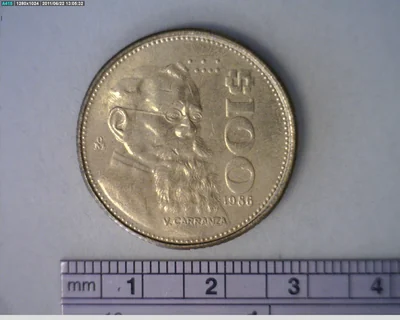
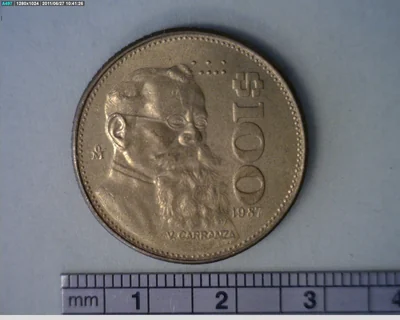
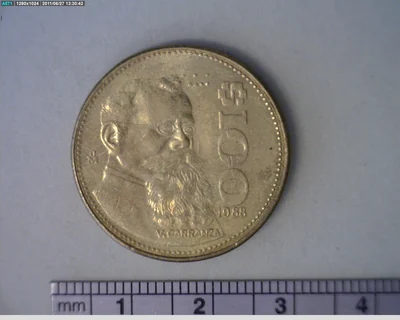
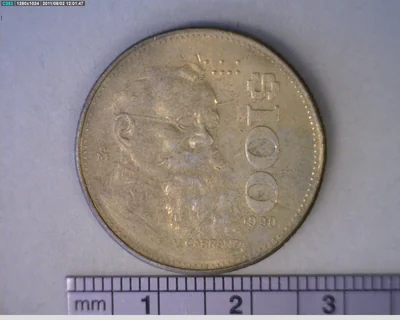
Bust of Venustiano Carranza facing right, with the value 100 vertically and the 7 braille dots representing 100 to one side. Below, the legend V. CARRANZA, the mint mark Mo and the year 1989.
Obverse
Mexican National Coat of Arms with the inscription "ESTADOS UNIDOS MEXICANOS".
How much is the 100 Pesos Carranza (1989): Value & Worth worth?
The market value of the 100 Pesos Carranza (1989): Value & Worth is not yet documented with enough data to give a firm range. Weigh and measure your piece, compare it against the specifications, and check the forum for a second opinion.
The real price depends on four factors: the grade of preservation (a circulated piece is worth the low end of the range; an uncirculated one, or one still in its official blister pack, the high end), the finish (satin vs mirror/proof), the rarity within the series based on the mintage, and the metal spot price on the day of the deal when the piece is silver or gold. Check the value-by-grade table above and compare with equivalent pieces before buying or selling.
Where to buy or sell this coin?
Browse the national directory of numismatic shops or the community forum to trade directly with other collectors.
Description
If you inherited a box of gold-colored Mexican coins with an old man's profile and the number 100, you probably have the 100 Pesos Carranza. Here is the honest answer: a normal circulated 1989 example is worth roughly 1 to 8 US dollars. The listings you see online for 100,000 pesos or more are speculative asking prices, not real sales. This coin was made by the hundreds of millions.
That gold color is not gold. It is aluminum-bronze, an alloy of 92% copper, 6% aluminum, and 2% nickel. There is no silver and no gold in it, so it has no precious-metal (melt) value. Whatever it is worth comes purely from condition and collector demand, and for a coin this common, that demand is small.
What the 1989 100 Pesos Carranza is
This is a circulation coin from the last generation of the old Mexican peso, before the 1993 currency reform knocked three zeros off the money. During the 1980s, inflation was so severe that everyday purchases needed 100, 500, and even 1,000 peso coins. This one carries the profile of Venustiano Carranza, a key figure behind Mexico's 1917 Constitution, facing right, with the value 100, the legend V. CARRANZA, the Mo mint mark (Casa de Moneda de México, the Mexico City mint), and the year.
A small but interesting detail: the reverse has 7 raised dots arranged in braille to represent 100, a feature added so people with visual impairments could identify the denomination by touch.
Specifications
| Feature | Detail |
|---|---|
| Metal | Aluminum-bronze (92% copper, 6% aluminum, 2% nickel) |
| Weight | 11.97 g |
| Diameter | 26.5 mm |
| Thickness | 2.8 mm |
| Edge | Reeded with interrupted (segmented) plain sections |
| Mint | Mexico City (Mo) |
| 1989 mintage | 135,630,000 |
How much is it worth?
For the vast majority of people reading this, the answer is a few dollars.
- Circulated (worn, been in pockets): about 1 to 3 USD.
- High-grade uncirculated with full original luster: roughly 5 to 20 USD, depending on how sharp it is.
- Verifiable proof or mirror-finish strikes (small mintages): these are the only versions that command meaningfully more, and even those are for collectors who want a specific grade.
The 1989 date has one of the lower mintages in the series, second only to 1986 (about 43 million). That sounds impressive until you see the full picture: the entire 1984 to 1992 family topped 2 billion coins. Low relative to its siblings is not the same as rare.
Is it rare?
Honestly, no. The 1989 has a lower mintage than most other dates in the series, but not low enough to make it scarce or valuable. Its appeal is historical: it circulated during Mexico's hyperinflation of the 1980s, when 100 pesos already bought almost nothing. It marks the closing chapter of an entire monetary era, which is why beginning collectors like it as an affordable piece with a story behind it.
The "worth a fortune" myth
Type this coin into an auction site and you will find listings for tens or hundreds of thousands of pesos. Those are wishful asking prices from sellers who never sell. A coin minted 135 million times cannot be a rarity by definition.
Where real money can appear in this family is mint errors. The documented notable error is a 1985 "mule": the reverse of the 1 Peso Morelos struck on a 100 Peso blank. That is from 1985, not 1989. Before you assume you have a fortune, compare your coin's edge, exact weight (11.97 g), and die alignment against a normal example. Most "errors" people spot are just post-mint damage or normal die wear.
How to tell if yours is genuine
This coin is common enough that counterfeiting for profit makes little sense, but here is how to verify:
- Weigh it. A genuine coin weighs 11.97 g. A significant deviation is a red flag.
- Measure it. 26.5 mm diameter, 2.8 mm thick.
- Check the edge. The reeding is segmented, with plain (smooth) stretches interrupting the ridges. Crude reproductions usually get this wrong.
- Look at the strike. Genuine coins have crisp lettering and a clean braille pattern.
Where to sell it
Be realistic before you list: a circulated 1989 is worth dollars, not thousands, unless it is a verifiable proof. To buy or sell with serious dealers, check the Pesoteca shop directory at /tiendas, where you can find numismatists by region. If you have a stack of these and want a straight assessment, that is the place to start.
If you have other Mexican coins from this era, the 500 and 1,000 peso pieces and the earlier silver issues are worth checking separately, since some of the pre-1980 silver coins actually carry real metal value.
Have a 1989 100 Pesos Carranza you think might be a proof or an error? Post clear photos of both sides and the edge in the Pesoteca forum and let the community weigh in before you sell.
Historical context
Mexican circulating peso coins of the second half of the 20th century were struck in alloys that changed according to metal costs and inflationary processes: .720 silver in the $1, $5, $10, $25 denominations during the 1940s-50s; cupronickel from the 1970s; aluminum bronze and stainless steel in the 1980s; pieces with figures (Hidalgo, Cuauhtemoc, Juarez, Madero, Carranza, Sor Juana) in the late 1980s just before the transition to New Pesos in 1992. 1989 corresponds to the period in which this variant was in circulation. Venustiano Carranza, constitutionalist leader of the Revolution, appears on circulating $100 denominations of the 1980s.
This piece belongs to the era
México Moderno (pre-1992) →Explore all the Mexican coins of this era, their historical context and how they connect to the monetary system of the period.
Value range of this piece
Value range without enough data for this piece.
See the full breakdown by grade (VG, F, VF, EF, AU, MS-60, MS-63, MS-65) for the whole series →
Other denominations from 1989
100 Pesos Bronce Aluminio · Aluminio-bronce
Same denomination, other years
100 pesos Aluminio-bronce · 100 Pesos Bronce Aluminio
Official sources
Frequently asked questions
How much is a 1989 100 Pesos Carranza coin worth?
A normal circulated 1989 example is worth about 1 to 8 US dollars depending on condition. It is a common coin, so the 100,000-peso listings you see online are speculative asking prices, not real sales. Only verifiable proof or mirror-finish strikes with small mintages are worth meaningfully more.
Is the 100 Pesos Carranza made of gold or silver?
Neither. Despite its gold color, it is aluminum-bronze: 92% copper, 6% aluminum, and 2% nickel. It contains no precious metal, so it has no melt value. Any worth is purely numismatic and depends on grade, which for this common coin is limited.
Is the 1989 100 Pesos Carranza rare?
No. The 1989 date has a lower mintage than most in the series at 135,630,000 coins, but the full 1984 to 1992 family exceeded 2 billion pieces. It is not scarce. Its interest is historical, not rarity based.
Where can I sell a 100 Pesos Carranza coin?
Use the Pesoteca shop directory at /tiendas to find serious numismatists by region. Set expectations first: a circulated 1989 is worth dollars, not thousands, unless it is a verifiable proof strike. Weigh it (11.97 g) and check the segmented reeded edge before assuming it is anything special.
Conversation
0 comments
Sources
Images for informational and educational purposes, attributed to their original source. Reference values; the real price depends on the grade, the specific variant and demand.
Loading comments…