
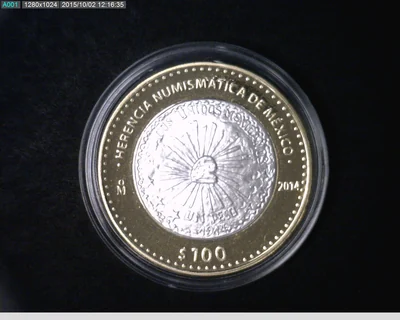
100 Pesos Herencia Numismática IV (Oaxaca 60 Pesos), 2014
Prices updated: August 2026
Reproduction of the revolutionary 60 pesos Oaxaca 1916. Matte-brilliant finish.
Reproduction of the revolutionary 60 pesos Oaxaca 1916. Matte-brilliant finish.
How much is the 100 Pesos Herencia Numismática IV (Oaxaca 60 Pesos), 2014 worth?
The market value of the 100 Pesos Herencia Numismática IV (Oaxaca 60 Pesos), 2014 is not yet documented with enough data to give a firm range. Weigh and measure your piece, compare it against the specifications, and check the forum for a second opinion.
The real price depends on four factors: the grade of preservation (a circulated piece is worth the low end of the range; an uncirculated one, or one still in its official blister pack, the high end), the finish (satin vs mirror/proof), the rarity within the series based on the mintage, and the metal spot price on the day of the deal when the piece is silver or gold. Check the value-by-grade table above and compare with equivalent pieces before buying or selling.
Where to buy or sell this coin?
Browse the national directory of numismatic shops or the community forum to trade directly with other collectors.
Description
If you inherited or found a large bimetallic Mexican 100 pesos coin dated 2014 with an Oaxaca design, here is the honest answer up front: this is a modern collector coin, not a rare fortune. Its value in 2026 runs from roughly 30 to 70 USD depending on condition and whether it still has its original Banco de México packaging. The real driver of value is the silver inside, plus condition.
This piece belongs to the Herencia Numismática de México series, a modern collector program from Banco de México (the Mexican central bank, called Banxico). The fourth issue reproduces the design of the 60 pesos revolutionary coin struck in Oaxaca in 1916, an emergency coinage from the Mexican Revolution. The 2014 version is a modern reproduction, not the original 1916 coin, so do not confuse the two.
What it actually is
The coin is a bimetallic piece, meaning it has an outer ring of one metal and a center core of another. It carries a face value of 100 pesos, but nobody sells it for face value. The center core contains silver, which sets a floor under its price.
| Spec | Detail |
|---|---|
| Denomination | 100 Pesos |
| Year | 2014 |
| Weight | 33.96 grams |
| Diameter | 39 mm |
| Composition | Bimetallic (silver center core, base metal ring) |
| Edge | Discontinuous reeded |
| Series | Herencia Numismática de México (issue IV) |
| Design source | 60 Pesos Oaxaca, 1916 |
| Finish | Matte-brilliant |
What it's worth in USD
This is a modern commemorative sold to collectors, so it was never rare in the way a genuine antique is. Value depends on three things: condition, whether it still sits in its original Banxico blister pack, and the silver spot price on the day you sell.
- Circulated or loose, average condition: roughly 25 to 40 USD
- Uncirculated, with original Banxico packaging: roughly 45 to 70 USD
- Certified high grade (NGC or PCGS): can reach higher, but certification only pays off for top examples
The silver content is the safety net. Even a beat-up example is worth its melt value, which moves with the silver market. Do not sell one of these for face value or spend it at a bank.
The myth to avoid
Because the design copies a 1916 Revolution coin, some sellers describe it as "a 1916 Oaxaca 60 pesos." It is not. This is a 2014 reproduction with a clear 2014 date and a bimetallic construction the original never had. A genuine 1916 Oaxaca gold 60 pesos is a different, far more expensive coin. If someone offers to buy "your 1916 Oaxaca" and points at your 2014 piece, they are either confused or hoping you are. Read the date.
If you want to understand how modern issues like this compare to older, genuinely scarce Mexican silver, see our guide to the most valuable Mexican coins and the broader Nuevos Pesos and modern era.
How to tell if yours is genuine
Modern Banxico coins are well made and hard to fake profitably, but check anyway:
- Weight it. A jewelry scale should read 33.96 grams. A significant deviation is a red flag.
- Measure it. The diameter should be 39 mm. Use calipers if you have them.
- Check the edge. It should show the discontinuous reeded pattern, not a smooth or fully continuous edge.
- Look at the two-metal contrast. The silver center and the outer ring should be crisply defined, not blurred or discolored.
Most "error" claims you see online are post-mint damage (scratches, corrosion, bank-teller dings), not factory errors. A real mint error on a modern coin is uncommon and must be verified before it adds value.
Where to sell it
For the best price without gambling, use a verified numismatic dealer from the Pesoteca directory, where you get an on-the-spot appraisal, or the Pesoteca buy-and-sell forum where collectors trade directly. Photograph the obverse, the reverse, and the edge in good light before you list it, and compare your condition against the ranges above. Avoid dumping it to the first bidder on social media, and never take a lowball offer just because a coin "is old," this one is not even old.
Before you decide, grade your piece against our Mexican coin condition guide. Condition is the single biggest swing between the low and high end of the range.
Got the original Banxico blister pack, or want a second opinion on the finish? Post clear photos in the Pesoteca forum and let the community weigh in before you sell.
Historical context
100 pesos silver Herencia Numismática de México series IV, 2014, a reproduction of the revolutionary 60 pesos of Oaxaca 1916. A piece from the Bank of Mexico's Herencia project dedicated to the 60 pesos gold coin issued by the Free and Sovereign State of Oaxaca in 1916 during the second year of the Second Oaxacan Sovereignty. It was the highest gold denomination issued by a provisional Mexican revolutionary mint, with substantial gold content and a distinctive regional design. The obverse showed the bust of Benito Juárez, of Oaxacan origin, and the reverse the state coat of arms with the legend ESTADO LIBRE Y SOBERANO DE OAXACA. Under the government of José Inés Dávila in the final phase of the sovereignty episode. Official weight of the Herencia reproduction close to 31.10 grams with silver fineness .999. The matte-brilliant finish combines a satin field with mirror relief. Under the administration of the Bank of Mexico led by Agustín Carstens. Series IV included six pieces in 2014. Collectible pieces for reproducing in modern format the Mexican revolutionary gold issue with the highest nominal denomination of the 1910-1917 cycle.
This piece belongs to the era
Nuevos Pesos y actualidad →Explore all the Mexican coins of this era, their historical context and how they connect to the monetary system of the period.
Go deeper on this coin
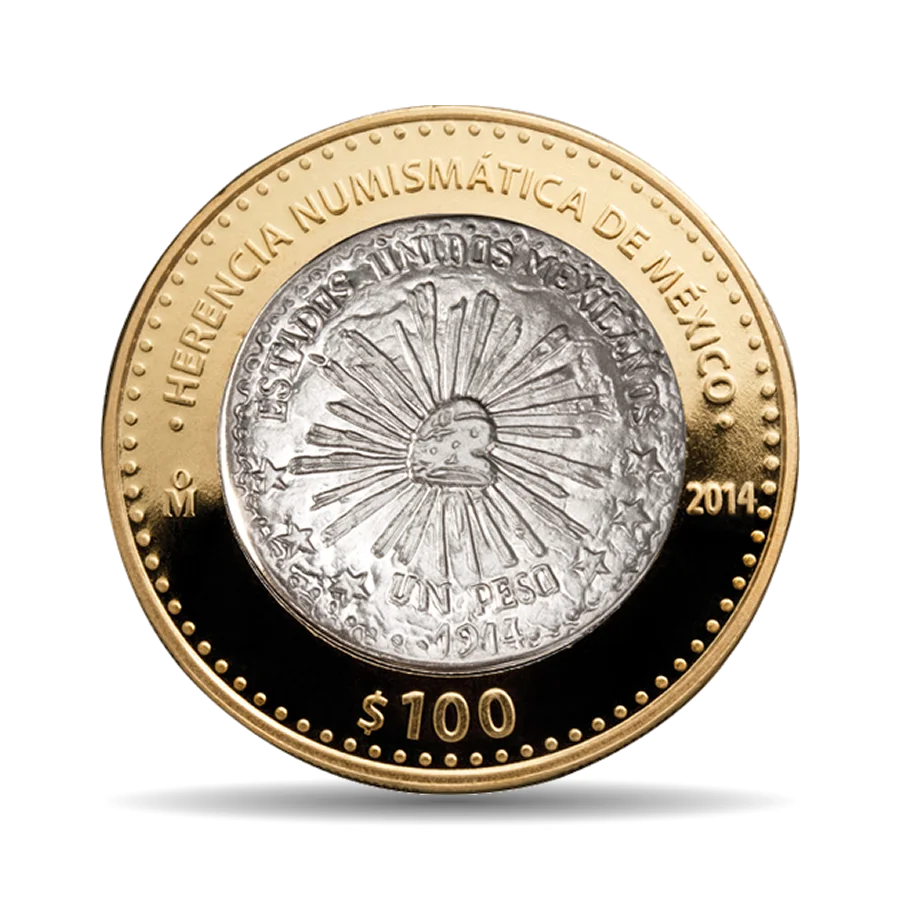
Herencia Numismática de México: la guía completa de la serie de 100 pesos de plata
La única serie mexicana de plata donde cada moneda reproduce otra moneda de nuestra historia: el Caballito, la Macuquina, el Columnario. Aquí te la explico completa, emisión por emisión, para que la caces sin que te vean la cara.
Read the full article →Value range of this piece
Value range without enough data for this piece.
See the full breakdown by grade (VG, F, VF, EF, AU, MS-60, MS-63, MS-65) for the whole series →
Other denominations from 2014
Herencia Numismática de México · Bimetálica
Same denomination, other years
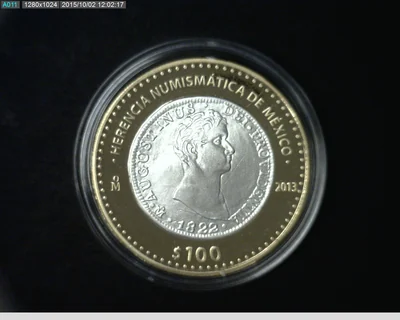
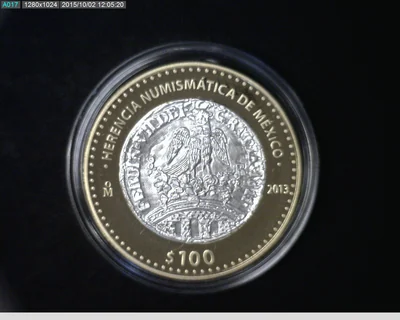
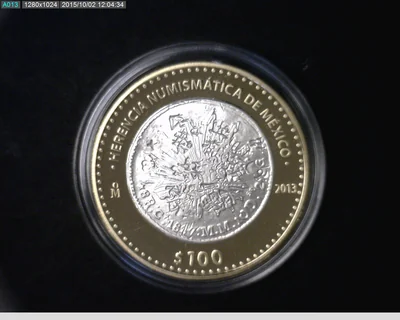
100 pesos Bimetálica · Herencia Numismática de México
Frequently asked questions
How much is the 2014 100 Pesos Herencia Numismática IV (Oaxaca) worth?
In {{AÑO}} it typically sells for about 25 to 40 USD loose or circulated, and 45 to 70 USD uncirculated with its original Banxico packaging. The silver center core sets a floor at melt value, so it is always worth more than its 100 peso face value. Certified high-grade examples can bring more.
Is this coin rare?
No. It is a modern collector coin issued by Banco de México in 2014, part of the Herencia Numismática series, so it was made for collectors rather than circulation. It is not scarce, but it holds value thanks to its 33.96 gram bimetallic build with a silver center and its clean commemorative design.
Where can I sell it?
The safest routes are a verified [numismatic dealer from the Pesoteca directory](/tiendas), which appraises it on the spot, or the [Pesoteca buy-and-sell forum](/foro/compra-venta) where collectors trade directly. Photograph the obverse, reverse, and edge, and check the value ranges on this page before accepting any offer.
How do I know if mine is genuine?
Weigh it (should be 33.96 grams) and measure the diameter (39 mm) with a jewelry scale and calipers, then compare against the specs above. Genuine pieces have a crisp discontinuous reeded edge and a sharp contrast between the silver center and the outer ring. Fakes often show wrong weight, flat relief, or muddy color.
Conversation
0 comments
Loading comments…