
100 Pesos Michoacán (Escudo) 2003: Value & Silver Content
Prices updated: August 2026
Union of the States: Michoacán, first stage.
Union of the States: Michoacán, first stage.
Design
Banxico
Reverse
Official coat of arms of the state of Michoacán, with the surrounding legend "ESTADOS UNIDOS MEXICANOS". Reverse of the first stage of the Union of the States of the Mexican Republic series.
Obverse
Mexican National Coat of Arms within the silver center, with the denomination "100 PESOS" and the legend "ESTADOS UNIDOS MEXICANOS" on the aluminum-bronze ring. Year of minting on the obverse.
How much is the 100 Pesos Michoacán (Escudo) 2003: Value & Silver Content worth?
The market value of the 100 Pesos Michoacán (Escudo) 2003: Value & Silver Content is not yet documented with enough data to give a firm range. Weigh and measure your piece, compare it against the specifications, and check the forum for a second opinion.
The real price depends on four factors: the grade of preservation (a circulated piece is worth the low end of the range; an uncirculated one, or one still in its official blister pack, the high end), the finish (satin vs mirror/proof), the rarity within the series based on the mintage, and the metal spot price on the day of the deal when the piece is silver or gold. Check the value-by-grade table above and compare with equivalent pieces before buying or selling.
Where to buy or sell this coin?
Browse the national directory of numismatic shops or the community forum to trade directly with other collectors.
States of the Federation
The 64 pieces of the 180th Anniversary series
This coin is part of the series that dedicated one piece to each Mexican state. Two phases: Heraldic (2003) and Cultural (2005-2007).
Description
If you have a 2003 Mexican 100-pesos coin marked "Michoacán," the good news is it contains real silver. The bad news for anyone hoping to retire on it: most examples are worth roughly 15 to 30 USD, driven mostly by the silver in the center, not by rarity. Pristine uncirculated pieces can bring more. Here is exactly what yours is and how to check it.
What you actually have
This is a bimetallic (two-metal) 100-pesos commemorative from the first stage of Mexico's "Unión de los Estados" series, a 32-coin set the Banco de México (Mexico's central bank, often called Banxico) released to honor each state plus the capital. The Michoacán coin was issued in 2003.
The key detail for value: the center disc is Sterling silver (.925 fineness), surrounded by an outer ring of aluminum-bronze. That silver center is why the coin has a hard floor value and why it weighs more than a typical circulating coin.
The reverse shows the official coat of arms of Michoacán, featuring King Cazonci with a bow, a nod to the last ruler of the Purépecha empire (Michoacán's capital is Morelia). The obverse is shared across all 32 coins in the set: the Mexican National Coat of Arms inside the silver center, with the "100 pesos" denomination.
Technical specs (check yours against these)
| Feature | Specification |
|---|---|
| Denomination | 100 pesos |
| Year | 2003 |
| Weight | 33.78 grams |
| Diameter | 39 mm |
| Center metal | Sterling silver, .925 fine |
| Outer ring | Aluminum-bronze |
| Edge | Interrupted reeded (discontinuous) |
| Series | Unión de los Estados (Stage 1) |
The silver center weighs around 16.8 grams of the total, giving it roughly half a troy ounce of Sterling silver. That is where the base value comes from.
What it's worth in USD
Be realistic. This coin is not rare. Millions across the full 32-coin series exist, and Michoacán is not a scarce entry.
- Circulated, handled, or damaged: value is basically the silver, in the 12 to 20 USD range depending on the silver spot price.
- Uncirculated with original satin finish: typically 20 to 35 USD.
- Complete matched set of all 32 states: collectors pay a premium for the full set, often 700 to 1,000 USD or more in nice condition, which is worth more assembled than the coins sold one at a time.
Anyone claiming a single common-date Michoacán is worth hundreds by itself is inflating the price. The real driver here is the silver content plus set-collecting demand, not one-off rarity.
The "worth thousands" myth
Social media posts love to slap a huge price tag on these bimetallic 100-pesos coins. In reality:
- Most "error coins" people post are post-mint damage: dings, corrosion, or spots from handling, not factory mistakes.
- Genuine mint errors (off-center strikes, die rotation, doubled strikes) do exist and can multiply the value, but they are uncommon and must be verified by a grading service or experienced collectors.
- Tarnish or toning on the silver center is normal and does not make the coin rare.
If you think you have a real error, photograph both sides and the edge and post it in the Pesoteca forum so the community can weigh in before you assume it's a jackpot.
How to check what yours is worth
- Confirm the weight and diameter. Use a jewelry scale and calipers. It should hit 33.78 grams and 39 mm. Wrong numbers usually mean a fake or a different coin.
- Check the finish. Original uncirculated coins have a satin luster and sharp relief. Worn, flat, or scratched surfaces knock the value down to melt.
- Look at the silver center. It should be visibly a different, whiter metal than the ring. Flat color across the whole coin is a red flag for a counterfeit.
- Grade honestly. Condition drives the premium above silver value. When in doubt, professional grading (NGC or PCGS) settles authenticity and grade.
Where to sell it
- A verified coin shop gives you an on-the-spot appraisal. Browse the Michoacán shop directory or the full Pesoteca shop directory.
- The Pesoteca buy-and-sell forum connects you directly with collectors, often the best price for a single coin or a full set.
- Photograph the obverse, reverse, and edge before you sell, and check the range above so you don't dump it to the first lowball offer.
The companion piece to look for is the Michoacán Cultural 2005 coin, issued in the second stage of the series with a state-specific design instead of the coat of arms. Together the two complete the Michoacán 100-pesos pairing.
Got the 2003 Michoacán 100-pesos in hand and not sure if it's uncirculated or just cleaned? Post clear photos in the Pesoteca forum and let the community grade it for you.
Historical context
The 100-pesos Union of the States of the Mexican Republic series began in 2003 with the first stage, called the Coat of Arms stage because the reverse bears the official arms of each of the 32 states. The piece dedicated to Michoacán is part of that first block of 32 coins, issued by Banxico under the framework of the Monetary System that has governed the modern peso since the new-pesos reform of 1993.
Michoacán has Morelia as its capital. It is one of the original states of the 1824 Federal Pact, signed on January 31 of that year. The reverse of the piece shows the official coat of arms of the state, with no reference to specific historical episodes: the central motif is the heraldic emblem. For mintages and economic circulation data of each piece in the series, the sources are Banxico's official reports; until they are verified in the CM10 catalog, they are not reported on this listing.
This piece belongs to the era
Nuevos Pesos y actualidad →Explore all the Mexican coins of this era, their historical context and how they connect to the monetary system of the period.
Go deeper on this coin
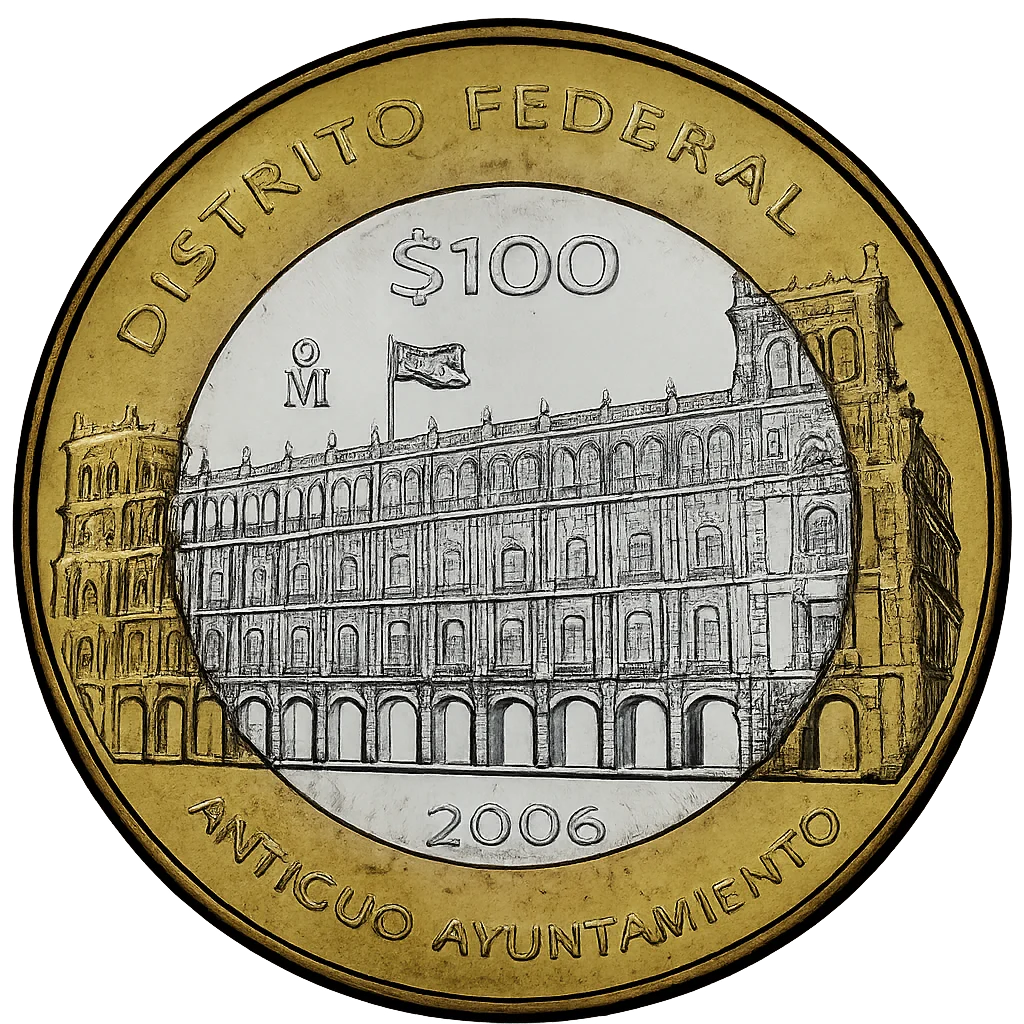
100 pesos de los Estados: la moneda de plata dedicada a tu estado (guía completa Escudo y Cultural)
Banxico acuñó una moneda de plata para cada uno de los 32 estados de México, y luego lo hizo dos veces. Aquí está la guía completa de las 100 pesos de los Estados: qué son, la diferencia entre la versión Escudo y la Cultural, por qué el centro de plata importa, cómo armar la colección y la lista de las 64 fichas para que caces la de tu tierra.
Read the full article →Unique context of this piece
The coat of arms of Michoacán shows King Caltzontzin with a bow, a reference to the last ruler of the Purépecha empire.
Michoacán was the seat of the Purépecha Empire, one of the few pre-Hispanic peoples that resisted the Aztecs before the Spanish conquest.
Michoacan did not have a colonial mint during the Mexican viceroyalty, but it joined Banxico's official commemorative program when the Bank of Mexico made the "Union of the States of the Mexican Republic" series official in 2003. This bicolor 100-peso piece is the first and only official coin dedicated specifically to the state of Michoacan during its first stage.
If you want to hunt this piece down in person or find specialized collectors in Michoacan, check the Michoacan store hub, where we document the state's verified stores with honest reviews, addresses and contact details.
If you collect the full series, your next target is the Cultural 2005 sibling of Michoacan, struck two years later with a state-specific iconographic motif instead of the official coat of arms. The full 100 Pesos States series also has the complete catalog with every sibling piece verified by Pesoteca.
Related pieces and hubs
Specific questions about this piece
Did Michoacan have a Mexican colonial mint?
No, Michoacan did not have a colonial mint during the viceroyalty. The active Mexican colonial mints were Mexico City (Mo, the most important), Zacatecas (Zs), Guadalajara (Ga), Guanajuato (Go), Durango (Do), Chihuahua (CH), Oaxaca (Oa, insurgent), San Luis Potosí (Pi, insurgent) and a few others of lower volume. You can see the full catalog in our colonial 8 reales series.
What is the difference from the 100 Pesos Michoacan Cultural 2005?
The Coat of Arms 2003 version (this one) shows the state's official coat of arms on the reverse. The sibling Cultural 2005 version shows an iconographic motif representative of the state (a historical figure, a monument, a cultural element) instead of the coat of arms. Both share the bimetallic format and composition. Collecting both is what completes the 100 Pesos set of Michoacan.
Where can I buy the 100 Pesos Michoacan Coat of Arms 2003 today?
The main circuit for pieces in this series is the specialized numismatic market: auction houses, verified stores in the state, and private collectors. In the Michoacan store hub we document the local options with honest reviews. For UNC pieces or those with the original Banxico blister pack, the price rises between 3x and 8x the 100-peso face value.
Why did Michoacán (Escudo) 2003: Value & Silver Content not have a colonial mint?
Michoacán (Escudo) 2003: Value & Silver Content did not have an operating mint during the Spanish viceroyalty. The active Mexican colonial mints were Mexico City (Mo, the most important and oldest on the continent), Zacatecas (Zs), Guadalajara (Ga), Guanajuato (Go), Durango (Do), Chihuahua (CH), Oaxaca (Oa, insurgent) and San Luis Potosí (Pi, insurgent).
The main reason was economic: mints were only established in regions with enough silver mining output to justify the infrastructure. The silver circulating in Michoacán (Escudo) 2003: Value & Silver Content during the colonial era came mainly from the central Mexico City mint. That is why this bicolor 100-peso piece from 2003 is the first official coin dedicated specifically to the state.
Figures and symbols of Michoacán (Escudo) 2003: Value & Silver Content on other Mexican coins
Beyond the official coat of arms that appears on this 2003 piece, Michoacán (Escudo) 2003: Value & Silver Content has other symbols and figures that have been depicted in the official numismatic catalog of Banxico and the Mint:
- 5 pesos Bicentenario Independencia José María Cos 2009
Piezas de personajes insurgentes que operaron desde Michoacán durante la Guerra de Independencia.
Key historical event of Michoacán (Escudo) 2003: Value & Silver Content (1521-1530)
El Imperio Purépecha, con capital en Tzintzuntzan, fue uno de los pocos pueblos prehispánicos que resistió militarmente al Imperio Mexica antes de la conquista española. Su último gobernante, Tzimtzicha Tangaxoán II, fue ejecutado en 1530.
Circulation and market of Michoacán (Escudo) 2003: Value & Silver Content
Coleccionismo activo en Morelia por herencia purépecha y tradición cultural. Circulación amplia en Zamora y Uruapan.
Other denominations from 2003
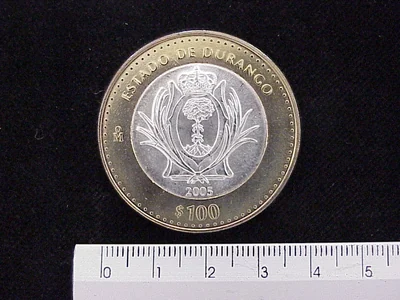
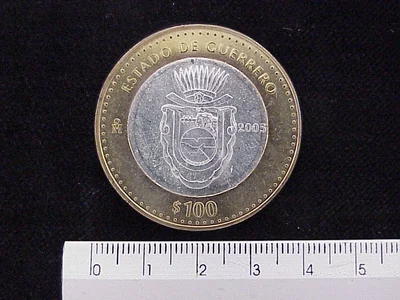
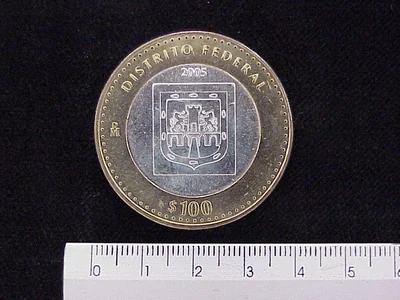
180 Aniversario de la Unión de los Estados en una Federación · Bimetálica
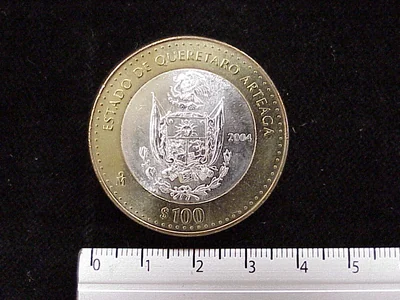
Same denomination, other years
100 pesos Bimetálica · 180 Aniversario de la Unión de los Estados en una Federación
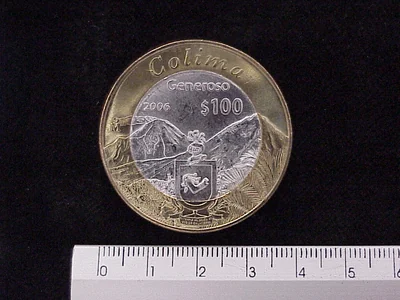
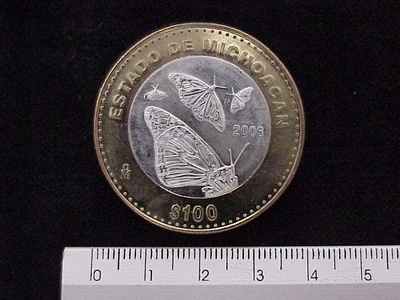
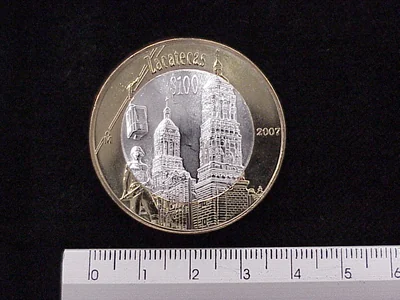
Frequently asked questions
How much is the 2003 100-pesos Michoacán coin worth?
Most examples are worth about 12 to 35 USD. Circulated coins trade near their silver melt value (12 to 20 USD), while uncirculated pieces with the original satin finish reach 20 to 35 USD. A complete 32-coin set of all states is worth far more, often 700 to 1,000 USD or more.
Is the 2003 Michoacán 100-pesos coin rare?
No. It was minted in large numbers as part of a 32-coin state series, and Michoacán is a common entry. Its value comes from the Sterling silver center and from collectors who want the complete set, not from scarcity of this single coin.
Where can I sell my 2003 Michoacán 100-pesos coin?
Sell through a verified coin shop, which appraises it on the spot, or the Pesoteca buy-and-sell forum where collectors bid directly. Photograph the obverse, reverse, and edge, and check the price range before selling so you don't accept a lowball offer.
How do I tell if my Michoacán 100-pesos coin is genuine?
Weigh it (should be 33.78 grams) and measure it (39 mm) with a jewelry scale and calipers. The silver center should be visibly whiter than the aluminum-bronze ring. Fakes often have wrong weight or diameter, flat relief, or uniform color across both metals.
Conversation
0 comments
Sources
Images for informational and educational purposes, attributed to their original source. Reference values; the real price depends on the grade, the specific variant and demand.
Loading comments…