
100 Pesos Yucatán (2005): Value & Silver Content
Prices updated: August 2026
Union of the States: Yucatán, second cultural stage
Union of the States: Yucatán, second cultural stage
Design
Banxico
Reverse
Cultural motif representative of Yucatán (architecture, fauna, flora, archaeological site, dance, or traditional dress). Reverse of the second stage of the Unión de los Estados series. Verify the exact design against the Banxico catalog before cataloging your piece.
Obverse
Mexican National Coat of Arms with eagle devouring a serpent on a nopal. Shared obverse of the $100 States series.
How much is the 100 Pesos Yucatán (2005): Value & Silver Content worth?
The market value of the 100 Pesos Yucatán (2005): Value & Silver Content is not yet documented with enough data to give a firm range. Weigh and measure your piece, compare it against the specifications, and check the forum for a second opinion.
The real price depends on four factors: the grade of preservation (a circulated piece is worth the low end of the range; an uncirculated one, or one still in its official blister pack, the high end), the finish (satin vs mirror/proof), the rarity within the series based on the mintage, and the metal spot price on the day of the deal when the piece is silver or gold. Check the value-by-grade table above and compare with equivalent pieces before buying or selling.
Where to buy or sell this coin?
Browse the national directory of numismatic shops or the community forum to trade directly with other collectors.
States of the Federation
The 64 pieces of the 180th Anniversary series
This coin is part of the series that dedicated one piece to each Mexican state. Two phases: Heraldic (2003) and Cultural (2005-2007).
Description
If you inherited a large, heavy Mexican coin marked "100 Pesos" with "YUCATÁN" on it, here is the honest answer: the plain circulating version is worth close to face value, while the silver-center collector version trades for roughly 30 to 60 USD in nice condition. It is not a rare coin, but it does have real value in the right version and grade.
What this coin actually is
The 100 Pesos Yucatán is part of a series the Bank of Mexico (Banco de México) issued starting in the early 2000s, dedicating one coin to each of Mexico's 31 states plus Mexico City. Yucatán's coin came out in 2005 in the second phase of the program.
It is a bimetallic coin, meaning it has a ring of one metal around a core of another, similar in look to a US 2-dollar-style ringed coin or a euro. Specs:
- Weight: 33.94 g
- Diameter: 39 mm (large, roughly the size of a US silver dollar or bigger)
- Edge: interrupted reeding (segments of ridges with smooth gaps)
- Reverse design: Yucatán's cultural identity, with Maya heritage motifs
Here is the part that decides its value: this series was made in two different versions, and collectors treat them as separate coins.
The two versions (this is what changes the price)
1. The circulating version. A base-metal coin meant for everyday use. If you got yours in change or from a general box of coins, this is most likely what you have. It is worth about face value, a couple of US dollars at most in worn condition, slightly more if it is uncirculated.
2. The silver-center collector version. Banxico also struck a version with a .925 sterling silver core inside a base-metal ring, sold to collectors, often as a proof. This is the one worth money. Depending on condition it trades in the range of roughly 30 to 60 USD, and clean proof examples can reach the higher end.
Both look almost identical from across a table. The difference is the metal in the center and how it was struck. See the check section below to tell them apart.
Value at a glance
| Version | Metal (core) | Typical value (USD) | Notes |
|---|---|---|---|
| Circulating | Base metal | 2 to 6 | Face value to slightly above if uncirculated |
| Silver collector / proof | .925 sterling silver | 30 to 60 | Higher for clean proof examples |
These are collector-market ranges, not fixed prices. A worn or damaged silver example sells for less; a flawless proof with original packaging sells for more.
The myth: "it's 100 pesos, so it's worth a lot"
The face value says 100 pesos, and 100 of anything sounds like real money. It is not. One hundred Mexican pesos is worth roughly 5 to 6 US dollars right now, and the circulating coin trades near that. The number stamped on a coin almost never reflects what collectors pay. What drives value here is the version (silver vs base metal), the grade, and whether the packaging survived, not the big "100" on the face.
What actually drives the value
- Version: silver center vs base metal. This is the single biggest factor.
- Grade: proof and uncirculated pieces with a sharp ring and core command the premium. Handled, spotted, or scratched coins drop fast.
- The bimetallic seam: on this coin the contact line between the ring and the core is where wear and tarnish show first. A clean, tight seam matters to buyers.
- Completeness: collectors building the full 32-coin state series pay up for a clean Yucatán to finish an album.
How to check what yours is worth
- Weigh it. Use a jewelry scale. It should read 33.94 g. A reading noticeably off points to a fake or a damaged coin.
- Measure it. 39 mm across with a caliper.
- Figure out the version. The silver-center collector coins were sold in proof or collector finishes with mirror-like fields and often came in official capsules or cases. If yours arrived in packaging, or has a frosted-and-mirror proof look, you likely have the silver version. A dull, clearly circulated coin from pocket change is the base-metal one.
- Grade it honestly. Look for scratches, spots, and wear on the high points and along the metal seam. If you think it may be a high-grade silver example, professional grading by NGC or PCGS can be worth it before selling.
Where to sell it
For the silver collector version, sell to buyers who know the series. A verified numismatic dealer from the Pesoteca directory will appraise it on the spot at a fair price, or you can list it in the Pesoteca buy-and-sell forum among collectors who want it to complete their set. Photograph the front, back, and edge before selling. Skip dumping it to the first offer on social media, and don't hand it to a walk-in buyer who lowballs the silver.
Building the full state series? Post a photo in the Pesoteca forum and tell us which states you still need. Someone there almost certainly has your missing Yucatán, or wants your spare.
Historical context
The entry dedicated to Yucatán belongs to the first wave of the Cultural phase, issued in 2005 along with most of the set. Banxico called this second stage Emblematic Motifs and replaced the state coat of arms with a specific cultural symbol.
The reverse of the piece shows the Pyramid of Kukulcán, or El Castillo, at Chichén Itzá, with nine stepped tiers and 91 steps on each of its four sides. El Castillo was built between 987 and 1200 A.D. according to INAH chronology. Its 91 steps per side plus the upper platform total 365, the Maya solar year. Each spring and autumn equinox the shadow of the balustrades casts a descending serpent onto the northern stairway, an astronomical effect documented by Alfonso Caso. Chichén Itzá has been a UNESCO World Heritage Site since 1988 and a New Wonder of the Modern World since 2007.
State context: Yucatán was established as a state on December 23, 1823. Its capital, Mérida, was founded on the Maya city of T'hó in 1542. The peninsula was Maya territory for centuries and sustained the Caste War against the Mexican government from 1847 to 1901.
In the Mexican numismatic market the Cultural phase circulated less than the 2003 Coat of Arms phase and today is usually found in higher grades because it reached the street late. Banxico's official mintages for this piece are not always published in the Economic Information System, but the figure reported to circulation tends to be around 250,000 pieces per state in the Cultural phase. Always confirm against the catalog of the complete 100 pesos States series before closing a large purchase.
The 2003 Coat of Arms sister of Yucatán is part of the first phase of the series, with the state's official coat of arms on the reverse. Hunting both pieces completes the set dedicated to Yucatán.
This piece belongs to the era
Nuevos Pesos y actualidad →Explore all the Mexican coins of this era, their historical context and how they connect to the monetary system of the period.
Go deeper on this coin
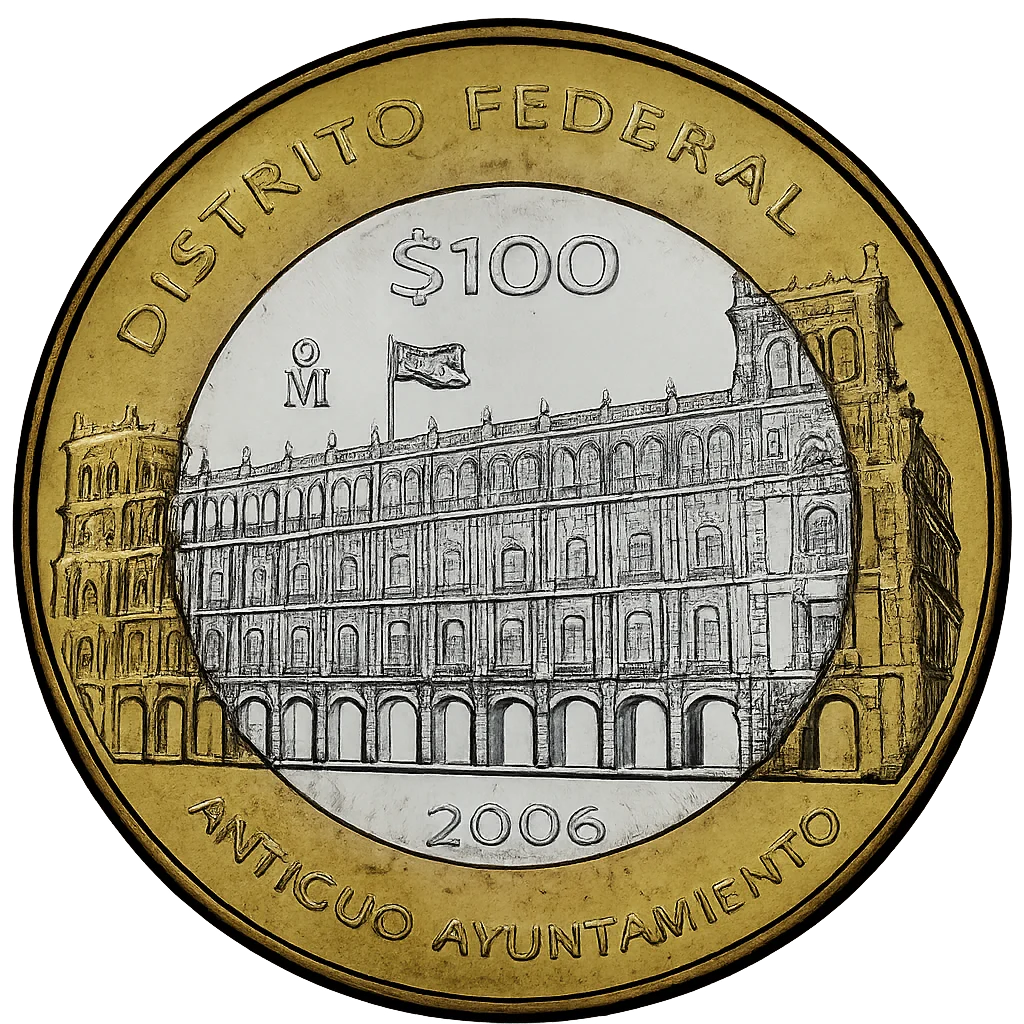
100 pesos de los Estados: la moneda de plata dedicada a tu estado (guía completa Escudo y Cultural)
Banxico acuñó una moneda de plata para cada uno de los 32 estados de México, y luego lo hizo dos veces. Aquí está la guía completa de las 100 pesos de los Estados: qué son, la diferencia entre la versión Escudo y la Cultural, por qué el centro de plata importa, cómo armar la colección y la lista de las 64 fichas para que caces la de tu tierra.
Read the full article →Value range of this piece
Value range without enough data for this piece.
See the full breakdown by grade (VG, F, VF, EF, AU, MS-60, MS-63, MS-65) for the whole series →
Other denominations from 2005
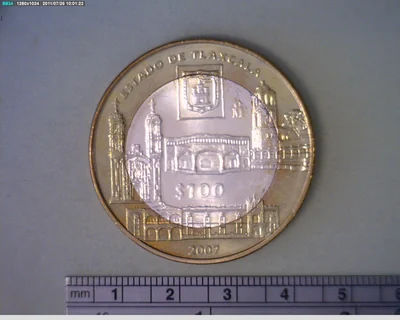
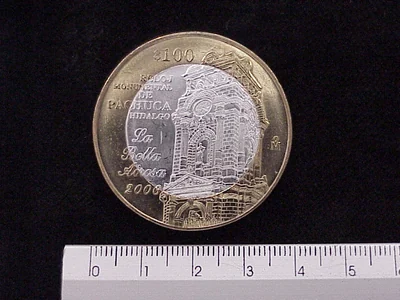
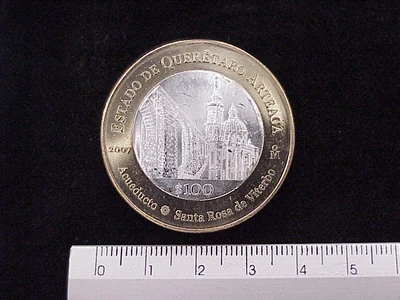
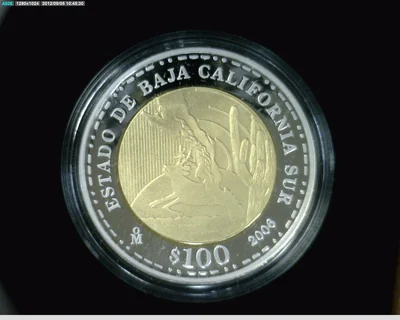
180 Aniversario de la Unión de los Estados en una Federación · Bimetálica
Same denomination, other years
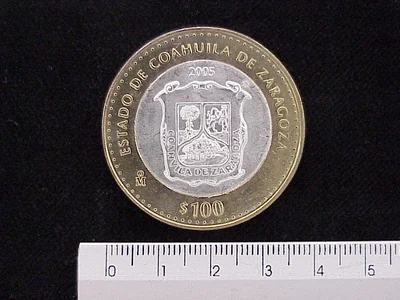
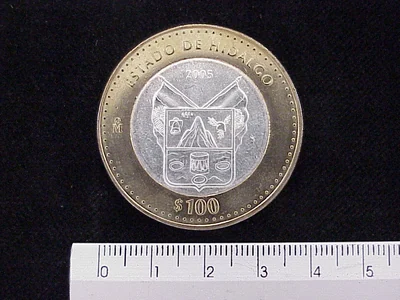
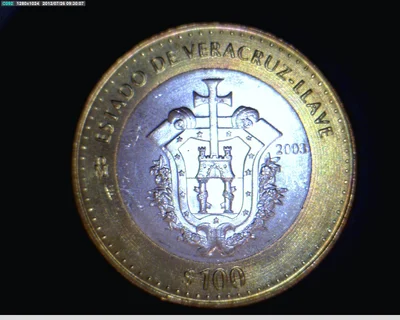
100 pesos Bimetálica · 180 Aniversario de la Unión de los Estados en una Federación
Frequently asked questions
How much is the 100 Pesos Yucatán 2005 worth?
It depends on the version. The plain circulating coin is worth close to face value, about 2 to 6 USD. The silver-center collector version (.925 sterling core) trades for roughly 30 to 60 USD, with clean proof examples reaching the higher end. Grade and original packaging both push the price up.
Is the 100 Pesos Yucatán 2005 rare?
No, it is not rare. It was a modern Bank of Mexico issue made in reasonable numbers. The circulating version is common. The silver collector version is scarcer and more desirable, but it is still readily available to collectors, which is why it sits in the 30 to 60 USD range rather than commanding a fortune.
Where can I sell my 100 Pesos Yucatán 2005?
The safest options are a verified dealer from the Pesoteca directory, who will appraise and buy it on the spot, or the Pesoteca buy-and-sell forum among collectors completing the state series. Photograph the front, back, and edge, and check the value range on this page before you accept an offer.
How do I tell if the coin is silver or genuine?
Weigh it (should be 33.94 g) and measure it (39 mm) with a jewelry scale and caliper. The silver version has a .925 sterling center, usually a proof or mirror finish, and often came in official packaging. Fakes tend to show wrong weight or diameter, flat relief, or poorly aligned two-tone metals.
Conversation
0 comments
Sources
Images for informational and educational purposes, attributed to their original source. Reference values; the real price depends on the grade, the specific variant and demand.
Loading comments…