
2 Reales Carlos y Juana: One of the First Silver Coins of the Americas
The 2 Reales Carlos y Juana: One of the First Silver Coins of the Americas is worth between $182 and $210 MXN depending on its grade of preservation.
Prices updated: August 2026
Viceroyalty · Mexico City Mint · Assayer R
Viceroyalty · Mexico City Mint · Assayer R
The 2 Reales Carlos y Juana: One of the First Silver Coins of the Americas is worth between $182 and $210 MXN depending on its grade of preservation.
Prices updated: August 2026
How much is the 2 Reales Carlos y Juana: One of the First Silver Coins of the Americas worth?
The estimated value of the 2 Reales Carlos y Juana: One of the First Silver Coins of the Americas ranges from $182 (circulated, XF) up to $210 (official blister pack), with $200 as a reference for an uncirculated (UNC) piece. The estimate is based on the official mintage and the historical behavior of the family.
The real price depends on four factors: the grade of preservation (a circulated piece is worth the low end of the range; an uncirculated one, or one still in its official blister pack, the high end), the finish (satin vs mirror/proof), the rarity within the series based on the mintage, and the metal spot price on the day of the deal when the piece is silver or gold. Check the value-by-grade table above and compare with equivalent pieces before buying or selling.
Where to buy or sell this coin?
Browse the national directory of numismatic shops or the community forum to trade directly with other collectors.
Description
If you inherited a 2 Reales Carlos y Juana, here is the honest answer up front: worn, circulated examples typically sell in the low hundreds of dollars, but sharp, well-preserved specimens certified by a grading service can reach several thousand. This is one of the first silver coins struck in the Americas, and that history is what drives demand.
Most people who find one of these assume "old Spanish colonial coin equals fortune." Sometimes yes, usually no. Value here is decided by grade, strike quality, and authenticity, not just age. Let's break down what yours is actually worth.
What This Coin Is
The 2 Reales of Carlos y Juana was struck at the Mexico City Mint (the Casa de Moneda de México) during the joint reign of Carlos I of Spain and his mother Juana. "Reales" was the Spanish silver denomination of the era; a 2 reales was a mid-size coin used for everyday commerce of some value.
The mint was founded in 1535, and this inaugural silver series gave New Spain its own coinage. It laid the groundwork for the system that later produced the famous "real de a ocho" (the eight-real piece, better known to Americans as the Spanish dollar or piece of eight).
Because it belongs to the earliest wave of American numismatics, collectors prize it. But every one of these was struck by hand, so strike quality varies wildly, and centuries of circulation take a heavy toll. That is exactly why grade matters so much on this coin.
Technical Specs (Check Yours Against These)
| Feature | Specification |
|---|---|
| Metal | Silver, .900 fine |
| Weight | 6.6 grams |
| Diameter | 27 mm |
| Edge | Plain (unmilled) |
| Mint | Casa de Moneda de México |
| Reign | Carlos I and Juana |
If your coin's weight and diameter are off from these numbers, that is your first red flag. Genuine .900 silver of this size should land at 6.6 grams. A coin that weighs noticeably less, or a lot more, deserves a hard look before you trust it.
What It's Actually Worth in 2026
There is no single price for this coin, and any site that gives you one flat figure is guessing. Value moves on a scale:
- Heavily worn, circulated: roughly 100 to 500 USD, depending on how much design detail survives.
- Better circulated with clear devices: several hundred to low four figures.
- Certified Uncirculated or high Mint State (MS-63 and up): several thousand dollars, with the strongest strikes commanding the most.
Hand-struck colonial silver is rarely flawless, so a coin with a full, centered strike and readable legends is worth a real premium over a soft or clipped example. That is where the money is on this series.
Because the exact mintage of this early issue is not documented in official records, rarity is judged by how many survive and how they present, not by a published production number. That undocumented status tells you circulation and survival were limited, which supports collector interest.
How to Tell If Yours Is Genuine
Early colonial silver is heavily faked, so verify before you celebrate or sell.
- Weigh and measure it. 6.6 grams, 27 mm. Off spec means proceed with caution.
- The ping test. Real .900 silver gives a long, high-pitched ring when you balance it on a fingertip and tap it gently. Fakes and plated pieces sound dull and short.
- Look at the edge. It should be plain, with no milling or reeding.
- Get it graded for anything valuable. For a coin that could be worth thousands, professional certification from NGC or PCGS is the only real insurance. It confirms authenticity and locks in a grade that buyers trust.
Watch out for "error" claims. Genuine mint errors (off-center strikes, die rotations, doubling) can multiply value, but most so-called errors floating around online are post-mint damage: dings, corrosion, or cleaning. Those hurt value, they don't add it.
Where to Sell It
Since this is a precious-metal coin with real numismatic upside, sell where the buyer will actually inspect and appraise it:
- A verified dealer from the Pesoteca shop directory, sorted by city, who can value it on the spot.
- The Pesoteca buy-and-sell forum, where collectors know exactly what this issue is.
- For a top-grade certified example, a specialist auction house that handles Spanish colonial silver will reach the deepest pool of buyers.
Before you list it, photograph the obverse, reverse, and edge in good light, and note the weight. Never dump it to the first offer on general marketplaces, that is where undervaluation and fakes both thrive. If a buyer won't let you verify the coin first, walk away.
Not sure whether yours is a worn common example or a sleeper worth grading? Post clear photos of both sides and the edge on the Pesoteca forum and let collectors weigh in before you sell.
Historical context
This piece corresponds to the first series of the Mexican Mint, struck in the name of Charles I of Spain and his mother Joanna I of Castile, called the Mad. They are the first metal coinages in the Americas, authorized by Royal Decree of May 11, 1535 and produced between 1536 and 1572 in the palace of the Marquis of the Valley in Mexico City.
The 2 reales denomination theoretically weighed 6.77 grams with a silver fineness of 0.9028 (early) / 0.903 (late). The 2 reales, also called peseta, were a medium purchase coin in New Spain: the weekly pay of muleteers, a laborer's day, and purchases in the central market.
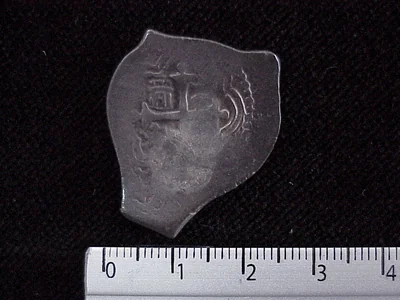
The R signature appears on blanks of the first series bearing that initial. It is combined with the shield-type reverse (lions and castles) typical of the heraldic order of Castile and León under the early House of Austria.
The 2 reales of the first series are in good demand for their legible size that allows the shield and the perimeter legend with the names of Charles and Joanna to be clearly identified. When buying side by side it is worth checking that the blank retains an identifiable design on both faces, and consulting public catalogs before accepting a middleman markup.
This piece belongs to the era
Colonial / Virreinato →Explore all the Mexican coins of this era, their historical context and how they connect to the monetary system of the period.
Value range of this piece
Market estimate: $182 - $210 MXN depending on the grade of preservation (typical range between a circulated and an uncirculated piece).
See the full breakdown by grade (VG, F, VF, EF, AU, MS-60, MS-63, MS-65) for the whole series →
Same denomination, other years
2 reales Plata 0.900 · Reales Coloniales (1/2 a 4 reales)
Frequently asked questions
How much is a 2 Reales Carlos y Juana worth?
It depends heavily on grade and preservation. Heavily circulated, worn examples typically sell for about 100 to 500 USD, while certified Uncirculated or high Mint State coins can reach several thousand dollars. For a precise value on your specific piece, have it appraised by a professional numismatic dealer or certified by NGC or PCGS.
Is the 2 Reales Carlos y Juana rare?
The exact mintage was never officially documented, which itself points to limited production and circulation. As one of the first silver coins struck in the Americas, surviving examples in good condition are genuinely scarce and sought after by collectors. Well-struck, high-grade pieces are the rarest and most valuable.
How can I tell if my 2 Reales Carlos y Juana is genuine?
It should weigh 6.6 grams, measure 27 mm, and have a plain (unmilled) edge. Real .900 silver gives a long, high-pitched ring when balanced on a fingertip and tapped gently; fakes sound dull and short. For any coin that could be worth thousands, professional certification from NGC or PCGS is the definitive check.
Where can I sell a 2 Reales Carlos y Juana?
The safest options are a verified dealer from the Pesoteca directory who can appraise it in person, or the Pesoteca buy-and-sell forum among collectors. For a top-grade certified example, a specialist auction house handling Spanish colonial silver reaches the most serious buyers. Photograph both sides and the edge, note the weight, and avoid selling to the first offer on general marketplaces.
Conversation
0 comments
Sources
Images for informational and educational purposes, attributed to their original source. Reference values; the real price depends on the grade, the specific variant and demand.
Loading comments…