
1973 Mexican 20 Centavos (Brass, Pyramid of the Sun)
Prices updated: August 2026
Old peso era · Brass
Old peso era · Brass
Design
Banxico
Reverse
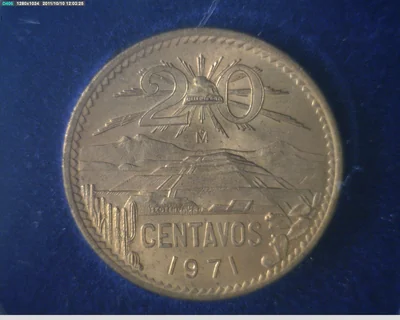
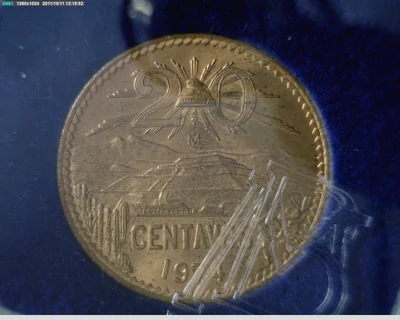
Pyramid of the Sun at Teotihuacán at the center, crowned by a radiant Phrygian cap (symbol of liberty), with the Popocatépetl and Iztaccíhuatl volcanoes in the background and the denomination 20 CENTAVOS. Corresponds to KM#441 (brass type 1971-1974), not KM#440.
Obverse
Mexican National Coat of Arms with the inscription "ESTADOS UNIDOS MEXICANOS".
How much is the 1973 Mexican 20 Centavos (Brass, Pyramid of the Sun) worth?
The market value of the 1973 Mexican 20 Centavos (Brass, Pyramid of the Sun) is not yet documented with enough data to give a firm range. Weigh and measure your piece, compare it against the specifications, and check the forum for a second opinion.
The real price depends on four factors: the grade of preservation (a circulated piece is worth the low end of the range; an uncirculated one, or one still in its official blister pack, the high end), the finish (satin vs mirror/proof), the rarity within the series based on the mintage, and the metal spot price on the day of the deal when the piece is silver or gold. Check the value-by-grade table above and compare with equivalent pieces before buying or selling.
Where to buy or sell this coin?
Browse the national directory of numismatic shops or the community forum to trade directly with other collectors.
Description
If you inherited a jar of Mexican coins and found a brass piece with a pyramid on the back, here is the honest answer: the 1973 20 centavos is one of the most common coins from that era. A worn one is worth a few cents above face. A truly uncirculated example with original luster runs roughly 2 to 5 USD. Mexico struck 78,398,000 of them in 1973 alone, so this is not the rare find some people hope for.
What it's actually worth in 2026
Value on this coin comes down to one thing: condition. There is no silver or gold in it, so there is no metal floor to prop up the price.
- Circulated (worn, scratched, dull): a few cents to about 1 USD. Millions survive in this state.
- Uncirculated with original luster: roughly 2 to 5 USD.
- Certified in high grade (MS-65 or better by NGC or PCGS): a premium example can reach 20 to 40 USD, but only when it's genuinely pristine and slabbed.
Brass tarnishes and spots over time, so a piece that still shows bright original color is worth far more than the common brown, worn examples. That gap in condition is the whole story with this coin.
| Coin | Year | Metal | Typical value (USD) |
|---|---|---|---|
| 20 Centavos, Pyramid of the Sun | 1973 | Brass (95% copper, 5% zinc) | Circulated: cents to 1 USD |
| 20 Centavos, Pyramid of the Sun | 1973 | Brass | Uncirculated: 2 to 5 USD |
| 20 Centavos, Pyramid of the Sun | 1973 | Brass | Certified high grade: 20 to 40 USD |
What you're actually holding
The reverse shows the Pirámide del Sol (Pyramid of the Sun) at Teotihuacán, one of the largest pyramids in the Americas. At the center is a radiant Phrygian cap, the classic symbol of liberty in Mexican coinage, flanked by the two volcanoes Popocatépetl and Iztaccíhuatl. The obverse carries the Mexican national coat of arms (the eagle on a cactus with a snake) and the legend "Estados Unidos Mexicanos."
This is part of the larger brass 20 centavos series struck from 1971 to 1974. It's a big coin for its denomination: 28.54 mm across, 10.06 g, plain edge, minted by the Casa de Moneda de México (the Mexican Mint). It's noticeably larger than the smaller cupronickel 20 centavos that came later.
Is it rare? No.
With 78,398,000 pieces struck in 1973, this is one of the most abundant years of the entire brass type. Plenty were saved, plenty still circulate in coin jars across Mexico and the US. If you have one, you have a common coin. That's not a knock on it, it's just the reality of the numbers.
The one thing worth checking: errors
The standard 1973 brass coin is common. There is a documented rarity, a mule error that combines dies from the transition between series, which is different from the normal circulation piece and can carry real value. A genuine off-center strike, double strike, or major die shift can also push the price up. These need verification by a specialist before you get excited, because most "errors" people spot are just damage or normal wear.
How to tell if yours is genuine
Fakes of a coin this common are not really a concern, but here's how to confirm you have the right type:
- Weight: close to 10.06 g.
- Diameter: 28.54 mm.
- Edge: plain (smooth), not reeded.
- Color: golden brass tone, not silver.
- Reverse: Pyramid of the Sun between the two volcanoes.
If your coin is silver-colored and smaller, it's a different type: the Francisco I. Madero 20 centavos struck from 1974 onward in cupronickel.
Where to sell or appraise it
For a common coin like this, the price swings entirely on grade, so it pays to compare before you buy or sell. Check the Pesoteca shop and dealer directory to find numismatic dealers and sellers. If you're building the full pyramid series by date, this is one of the easy years to pick up cheaply, and a natural entry point for new collectors.
Have a jar of brass 20 centavos and not sure which years you actually have? Post clear photos of the fronts and backs in the Pesoteca forum and we'll help you sort the common ones from anything worth a second look.
Historical context
The circulating cent coins in Mexico during the second half of the 20th century were struck in alloys that changed with the cost of the metals: copper, bronze, and brass for low denominations (1¢, 5¢, 20¢); cupronickel for intermediate denominations (25¢, 50¢, late 10¢); and .720 silver for some 25¢ and 50¢ pieces in the 1950s. Each change of alloy created a distinct variant of the same face value. 1973 corresponds to the period when this variant was in circulation, before the transition to Nuevos Pesos in 1992. The Mexican Mint kept the basic design of the National Coat of Arms on the obverse and the numeric value on the reverse throughout this era.
This piece belongs to the era
México Moderno (pre-1992) →Explore all the Mexican coins of this era, their historical context and how they connect to the monetary system of the period.
Value range of this piece
Value range without enough data for this piece.
See the full breakdown by grade (VG, F, VF, EF, AU, MS-60, MS-63, MS-65) for the whole series →
Other denominations from 1973
Centavos Mexicanos · Bronce
Same denomination, other years
20 centavos Bronce · Centavos Mexicanos
Frequently asked questions
How much is a 1973 Mexican 20 centavos worth?
Circulated, it's worth a few cents to about 1 USD. Uncirculated with original luster runs roughly 2 to 5 USD, and only an exceptional certified high-grade example reaches 20 to 40 USD. Mexico struck 78,398,000 in 1973, so it's a common year.
Is the 1973 20 centavos rare?
No. With 78,398,000 pieces minted in 1973, it's one of the most abundant years of the brass type (1971 to 1974). Millions circulated and many survive today.
What metal is the 1973 20 centavos made of?
Brass: 95% copper and 5% zinc. It contains no silver or precious metal, so there's no melt value to calculate. Its worth is purely numismatic and depends on condition.
Where can I sell a 1973 20 centavos?
Check the Pesoteca dealer directory at /tiendas to find numismatic shops and sellers. Because the price of a common coin like this swings heavily on grade, compare a few offers before selling. For a quick opinion, post photos in the Pesoteca forum.
Conversation
0 comments
Sources
Images for informational and educational purposes, attributed to their original source. Reference values; the real price depends on the grade, the specific variant and demand.
Loading comments…