
2002 Mexican 5 Centavos (Stainless Steel): What It's Worth
Prices updated: August 2026
Centavos stainless steel 2002.
Centavos stainless steel 2002.
Design
Banxico
Reverse
Reverse of the 5 stainless steel 2002 piece. Detail of the die cataloged by Banxico in its Colección Numismática.
Obverse
Obverse with the Mexican National Coat of Arms and the legend "ESTADOS UNIDOS MEXICANOS" per official convention. Struck by the Mexican Mint under Banxico decree.
How much is the 2002 Mexican 5 Centavos (Stainless Steel): What It's Worth worth?
The market value of the 2002 Mexican 5 Centavos (Stainless Steel): What It's Worth is not yet documented with enough data to give a firm range. Weigh and measure your piece, compare it against the specifications, and check the forum for a second opinion.
The real price depends on four factors: the grade of preservation (a circulated piece is worth the low end of the range; an uncirculated one, or one still in its official blister pack, the high end), the finish (satin vs mirror/proof), the rarity within the series based on the mintage, and the metal spot price on the day of the deal when the piece is silver or gold. Check the value-by-grade table above and compare with equivalent pieces before buying or selling.
Where to buy or sell this coin?
Browse the national directory of numismatic shops or the community forum to trade directly with other collectors.
Description
If you found a 2002 Mexican 5 centavos coin, here's the honest answer up front: in circulated condition it's worth a few cents, essentially face value. This is a common modern circulation coin made of stainless steel, not silver, and not rare. The exception is a pristine uncirculated example or a genuine mint error, which is where the small premiums live.
Let's break down what you actually have and what, if anything, it's worth in 2026.
Quick answer: how much is it worth?
The 2002 5 centavos is a base-metal circulation coin. There's no precious metal in it, so there's no bullion floor to protect its value. What you have is worth:
- Worn or circulated: a few US cents, basically face value.
- Uncirculated (mint state): a small premium, typically a dollar or two to a collector completing a set.
- In original Banxico blister packaging: slightly more, again in the low single dollars.
- Genuine, verified mint error: this is the only scenario where the value can jump, and real errors are far rarer than people think.
The "5" here refers to 5 centavos, which are cents of the Mexican peso. Five centavos is one twentieth of a peso. Even at face value the coin is worth a fraction of a US cent, so the entire value for collectors comes from condition and completeness, not the denomination.
What the coin actually is
This piece belongs to the 5 Centavos Stainless Steel series with a satin finish, part of the modern Nuevos Pesos era of Mexican coinage. It was struck by the Casa de Moneda de México (the Mexican Mint) under Banco de México (Banxico) decree.
Specifications
| Feature | Detail |
|---|---|
| Denomination | 5 centavos |
| Year | 2002 |
| Metal | Stainless steel |
| Weight | 1.58 grams |
| Diameter | 15.5 mm |
| Edge | Plain (smooth) |
| Finish | Satin |
| Mint | Casa de Moneda de México |
Obverse (front): The Mexican National Coat of Arms (the eagle on a cactus with a serpent) with the legend "ESTADOS UNIDOS MEXICANOS," which is the official name of the country and appears on all Mexican coinage.
Reverse (back): The denomination side of the coin, catalogued by Banxico in its numismatic collection.
Because it's stainless steel, not silver or gold, a common question we get is whether it can be melted for metal value. It can't in any meaningful way: stainless steel is cheap, and the coin's metal is worth essentially nothing. Any value it has is collector value.
The myth: "old-ish Mexican coins are worth a fortune"
Social media is full of posts claiming small Mexican coins from the 2000s are worth hundreds or thousands of dollars. For the standard 2002 5 centavos, that's not true. It was a circulating coin produced in normal quantities, so millions of people have handled one. Age alone (barely two decades) does not create rarity, and neither does simply being foreign.
Where the real money can appear is with genuine mint errors: off-center strikes, die rotation, double strikes, or documented die varieties. If confirmed by graders, these can multiply the value well beyond face. The catch: the vast majority of "errors" people post online are post-mint damage, not factory errors. Dents, scratches, corrosion, and gouges from decades in a coin jar look dramatic but add nothing. A true error is struck that way at the mint, and it takes an expert eye or a grading service to confirm.
How to check what yours is worth
- Grade it. Value here is almost entirely about condition. A worn coin is face value; a flawless uncirculated one earns a small premium. Compare yours against our Mexican coin grading guide.
- Verify it's genuine. For a coin this common, fakes are rare, but you can confirm authenticity by weighing it (should be 1.58 grams on a jewelry scale) and measuring the diameter (15.5 mm with calipers). Wrong weight, wrong size, flat relief, or off tone are red flags.
- Look for a real error. If something looks off, don't assume it's rare. Post clear photos of the obverse, reverse, and edge to the Pesoteca forum and let the community weigh in before you get excited.
- Check completeness. An original Banxico blister pack adds a little value for set collectors.
Where to sell it
For a coin in this value range, keep it simple and honest. Your best options:
- A verified numismatic shop from the Pesoteca directory, which can appraise it on the spot without middleman markups.
- The Pesoteca buy and sell forum, where collectors trade directly.
Photograph the coin (front, back, and edge) and check the grade before you sell. For a common circulation coin, don't expect a windfall, but if you have a genuine uncirculated example or a confirmed error, the right buyer will pay the premium.
Got a 2002 5 centavos with something unusual about the strike? Post your photos in the Pesoteca forum and we'll help you tell a real error from a jar ding.
Historical context
This 2002 5-centavo piece belongs to the family B without the N$ prefix issued by Banxico. The 5 centavos is the smallest denomination in the post-reform Mexican system. They never bought anything on their own: they serve to settle the last centavo when paying in cash. In many shops the coin is accepted but not given back as change because it doesn't fit the final price.
Hunting for the 5-centavo piece in circulation is easy because the minting cost is high relative to the face value. Banxico has kept the denomination more for the continuity of the system than for usefulness in exchange.
In 2002 annual inflation closed at 5.7% according to INEGI and the average exchange rate was 9.66 pesos per dollar according to Banxico's FIX. It was the year of the failed fiscal reform and the start of the debate over eliminating low-denomination coins whose minting cost exceeded their face value. The country was under the Presidency of Vicente Fox Quesada (PAN).
Catalog reference: KM#546. The piece is part of the official Banxico Colección Numismática catalog and follows the convention of the PSM System, one ID per distinct physical piece, not per design shared with other years of the same series.
This piece belongs to the era
Nuevos Pesos y actualidad →Explore all the Mexican coins of this era, their historical context and how they connect to the monetary system of the period.
Value range of this piece
Value range without enough data for this piece.
See the full breakdown by grade (VG, F, VF, EF, AU, MS-60, MS-63, MS-65) for the whole series →
Same denomination, other years
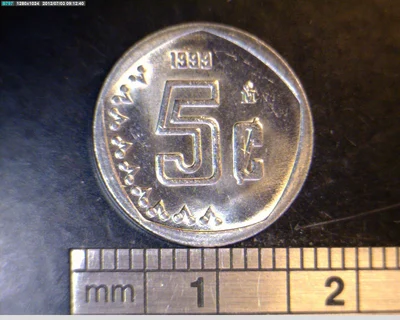
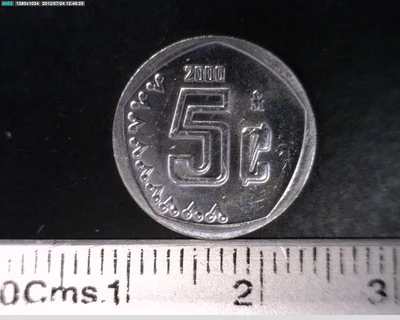
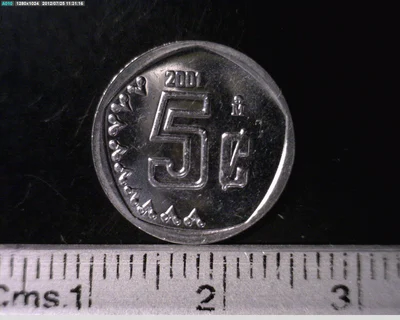
5 centavos Acero inoxidable · 5 Centavos Acero Inoxidable
Frequently asked questions
How much is a 2002 Mexican 5 centavos coin worth?
In circulated condition it's worth a few US cents, basically face value, since it's a common stainless steel circulation coin with no precious metal. A flawless uncirculated example or one in original Banxico packaging brings a small premium of roughly one to two dollars. Only a genuine, verified mint error can push the value significantly higher.
Is the 2002 5 centavos coin rare?
No. It was a regular circulating coin struck in large numbers by the Casa de Moneda de México, so millions exist. Age (a couple of decades) does not make it rare. The only versions worth a premium are top-grade uncirculated pieces and genuine mint errors, which are far less common than online posts suggest.
Where can I sell a 2002 Mexican 5 centavos?
The safest options are a verified numismatic shop from the [Pesoteca directory](/tiendas), which appraises it in person, or the [Pesoteca buy and sell forum](/foro/compra-venta) between collectors. Photograph the front, back, and edge, and check the grade first. Avoid dumping it to the first bidder on social media.
How can I tell if my 2002 5 centavos is genuine?
Weigh it with a jewelry scale (it should be 1.58 grams) and measure the diameter with calipers (15.5 mm), then compare to the specifications above. Fakes usually have the wrong weight or size, flat relief, or off coloring. For a coin this common, counterfeits are uncommon, but these checks confirm it quickly.
Conversation
0 comments
Loading comments…