
1999 Mexico 5 Centavos (Stainless Steel): Value Guide
Prices updated: August 2026
Centavos stainless steel 1999.
Centavos stainless steel 1999.
Design
Banxico
Reverse
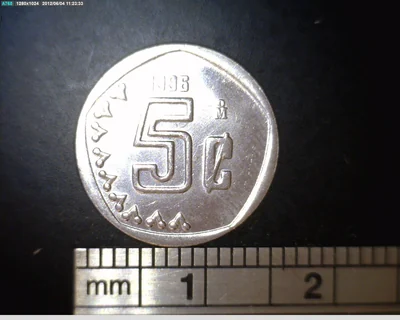
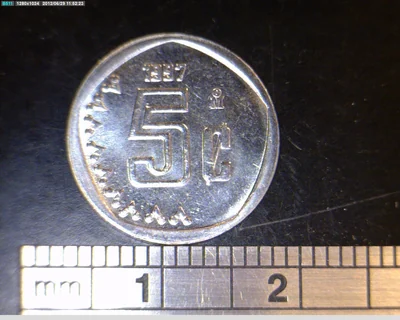
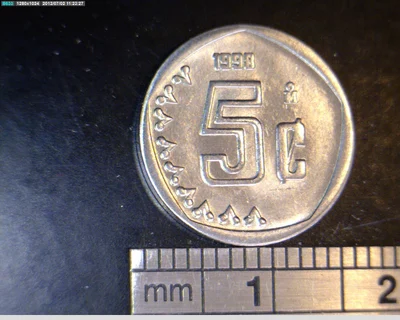
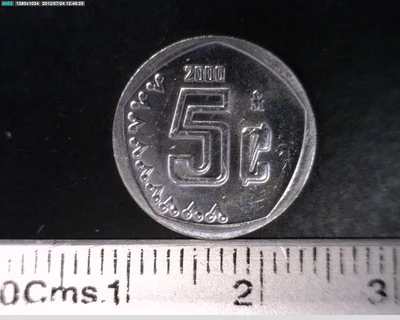
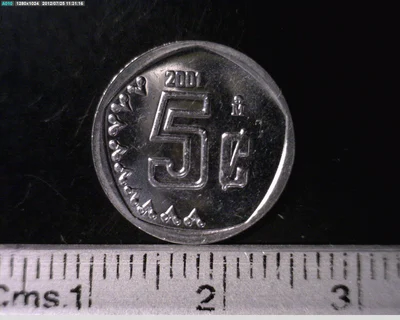
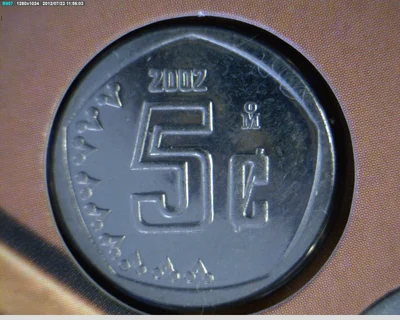
The number 5 as the main motif and face value at center, accompanied by the centavos symbol (¢) to its right. Above, the year of minting, and to the right the M with a small circle, the symbol of the Casa de Moneda de México. To the left, parallel to an inscribed pentagon, a stylization of the solar rays of the Ring of the Quincunxes of the Sun Stone (Aztec Calendar).
Obverse
Obverse with the Mexican National Coat of Arms and the legend "ESTADOS UNIDOS MEXICANOS" per official convention. Struck by the Casa de Moneda de México under Banxico decree.
How much is the 1999 Mexico 5 Centavos (Stainless Steel): Value Guide worth?
The market value of the 1999 Mexico 5 Centavos (Stainless Steel): Value Guide is not yet documented with enough data to give a firm range. Weigh and measure your piece, compare it against the specifications, and check the forum for a second opinion.
The real price depends on four factors: the grade of preservation (a circulated piece is worth the low end of the range; an uncirculated one, or one still in its official blister pack, the high end), the finish (satin vs mirror/proof), the rarity within the series based on the mintage, and the metal spot price on the day of the deal when the piece is silver or gold. Check the value-by-grade table above and compare with equivalent pieces before buying or selling.
Where to buy or sell this coin?
Browse the national directory of numismatic shops or the community forum to trade directly with other collectors.
Description
If you inherited or found a 1999 Mexican 5 centavos, here is the honest answer: it is worth a few dollars at most, not a fortune. It contains no silver or gold. But among the stainless steel 5 centavos coins, the 1999 is a low-mintage date, which gives it a small edge with collectors building the full set.
What it's actually worth in 2026
This is a numismatic-value coin, not a bullion coin. It is stainless steel, so there is no melt value to speak of. In circulated condition it trades for roughly the equivalent of a few dollars (Numista lists it around 3 pesos in low grade). A clean, uncirculated example brings a bit more, but you are still talking single-digit dollars, not hundreds.
Do not confuse this with the viral stories about 5 centavos coins "worth millions." Those refer to the older, larger brass 5 centavos featuring Josefa Ortiz de Domínguez, a completely different coin. The 1999 stainless steel piece is not one of them.
| Coin | Year | Mintage | Approx. value (USD) |
|---|---|---|---|
| 5 Centavos, stainless steel | 1999 | 9,949,000 | A few dollars circulated; slightly more uncirculated |
| 5 Centavos, stainless steel | 1998 | 64,000,000+ | Under 1 dollar |
Why the 1999 date matters
The reason collectors single out the 1999 is the mintage. According to Numista, only 9,949,000 pieces were struck in 1999, compared to more than 64 million in 1998. Production collapsed because banks had almost stopped ordering the denomination: by then five centavos bought nothing. That makes 1999 a minor key date within this family. It is scarcer than the early years, but not genuinely rare, so you can still find one without much trouble.
This coin belongs to what Mexico's central bank calls Family C of circulating coinage, the last run of the 5 centavos denomination before it disappeared from change entirely.
What the coin looks like (and how to identify it)
This is one of the smallest coins Mexico ever circulated: 15.5 mm across, 1.58 grams, with a smooth (plain) edge. It is easy to lose and easy to mistake for pocket junk.
- Obverse: the Mexican national coat of arms (an eagle on a cactus) with the legend ESTADOS UNIDOS MEXICANOS.
- Reverse: a large numeral 5 as the face value with the centavos symbol, the year, and an "M" inside a small circle (the mint mark of the Casa de Moneda de México). To the left is a stylized version of the solar rays from the Sun Stone (Piedra del Sol), the Aztec calendar stone.
It does not commemorate any historical figure.
Steel vs. brass: which one do you have?
This matters because the older brass version is the one people confuse with big money. Quick check:
- Stainless steel (Family C, from 1996 onward): silver-colored, small (15.5 mm), light (1.58 g), with the numeral 5 and the Sun Stone rays. The 1999 is this type.
- Old brass version: gold-colored, larger, and shows the portrait of Josefa Ortiz de Domínguez.
If yours is silver-colored and dated 1999, it is the stainless steel coin described here.
Where to sell it
Because each coin is worth so little, these usually change hands in lots or as part of a complete set rather than one at a time. If you are assembling the full run of stainless steel 5 centavos, the 1999 is the date worth setting aside in good condition. To buy, sell, or get an honest appraisal, use the Pesoteca store directory, where verified numismatists in Mexico are listed.
Have a jar of these small coins and want to know which dates are worth keeping? Post the years you have on the Pesoteca forum and let the community flag the key dates before you spend or sell them.
Historical context
This 5-centavo piece of 1999 belongs to family B without the N$ prefix issued by Banxico. The 5 centavos is the smallest denomination of the post-reform Mexican system. They never bought anything on their own: they serve to square the last cent when paying in cash. In many shops the coin is accepted but not returned as change because it doesn't fit into the final price.
Hunting the 5-centavo coin in circulation is easy because the cost of minting is high relative to its face value. Banxico has kept the denomination more for the system's continuity than for usefulness in exchange.
In 1999 annual inflation closed at 12.3% according to INEGI and the average exchange rate was 9.56 pesos per dollar according to Banxico's FIX. The last full year of Zedillo's term. UNAM went on strike for nearly ten months and Banxico consolidated its operational autonomy. In June 2000 the N$ symbol would drop from the dies of coins and banknotes. The country was under the Presidency of Ernesto Zedillo Ponce de León (PRI).
Catalog reference: KM#546. The piece is part of the official Banxico Colección Numismática catalog and follows the convention of the PSM System, one ID per distinct physical piece, not per design shared with other years of the same series.
This piece belongs to the era
Nuevos Pesos y actualidad →Explore all the Mexican coins of this era, their historical context and how they connect to the monetary system of the period.
Value range of this piece
Value range without enough data for this piece.
See the full breakdown by grade (VG, F, VF, EF, AU, MS-60, MS-63, MS-65) for the whole series →
Same denomination, other years
5 centavos Acero inoxidable · 5 Centavos Acero Inoxidable
Frequently asked questions
How much is the 1999 Mexican 5 centavos worth?
It carries numismatic value, not metal value: it is stainless steel with no silver or gold. Circulated examples trade for roughly a few dollars (Numista lists it around 3 pesos in low grade), and uncirculated pieces bring slightly more. Do not expect thousands. The viral '5 centavos worth millions' stories refer to the old brass coins with Josefa Ortiz de Domínguez, not this steel one. For real buy and sell prices, check the Pesoteca store directory.
Is the 1999 5 centavos rare?
It is a scarcer date than the rest of the family. Numista reports 9,949,000 pieces struck in 1999, compared to more than 64 million in 1998. Production dropped because banks stopped ordering the denomination. It is scarce, but not impossible to find.
Where can I sell this coin?
Because it is worth little per piece, it usually moves in lots or as part of a complete set. To find serious dealers and collectors near you, check the Pesoteca store directory (/tiendas), which lists verified numismatists in Mexico.
How do I tell if my 5 centavos is steel and not brass?
The steel version (Family C, from 1996) is silver-colored, small (15.5 mm) and light (1.58 g), with the numeral 5 and the Sun Stone rays on the reverse. The old brass version is gold-colored, larger, and shows the portrait of Josefa Ortiz de Domínguez. If yours is silver-colored and dated 1999, it is the steel coin.
Conversation
0 comments
Loading comments…