
Mexican 5 Centavos 1996 (Stainless Steel): What It's Worth
Prices updated: August 2026
Centavos stainless steel 1996.
Centavos stainless steel 1996.
Design
Banxico
Reverse
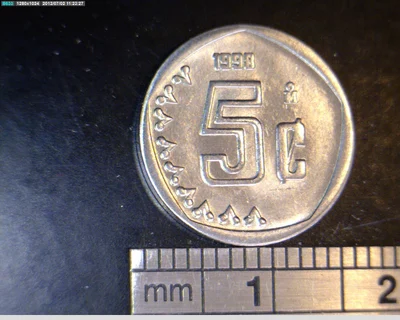
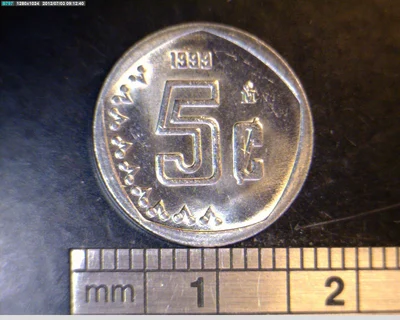
Reverse: the face value "5" next to an ear of corn, on a plain background. It is the agricultural motif that Banxico used in the stainless steel centavos series of the Nuevos Pesos (1992-2009). Below or around it appears the denomination legend. It is not a generic reverse: the ear of corn is the element that visually identifies this piece.
Obverse
Obverse with the Mexican National Coat of Arms and the legend "ESTADOS UNIDOS MEXICANOS" per official convention. Struck by the Mexico City Mint under Banxico decree.
How much is the Mexican 5 Centavos 1996 (Stainless Steel): What It's Worth worth?
The market value of the Mexican 5 Centavos 1996 (Stainless Steel): What It's Worth is not yet documented with enough data to give a firm range. Weigh and measure your piece, compare it against the specifications, and check the forum for a second opinion.
The real price depends on four factors: the grade of preservation (a circulated piece is worth the low end of the range; an uncirculated one, or one still in its official blister pack, the high end), the finish (satin vs mirror/proof), the rarity within the series based on the mintage, and the metal spot price on the day of the deal when the piece is silver or gold. Check the value-by-grade table above and compare with equivalent pieces before buying or selling.
Where to buy or sell this coin?
Browse the national directory of numismatic shops or the community forum to trade directly with other collectors.
Description
If you found a small Mexican coin marked "5" with a stalk of corn on the back and the date 1996, here is the honest answer: in circulated condition it is worth face value, essentially nothing to a collector. More than 104 million were struck. The only versions with any premium are pristine uncirculated pieces, and even those trade for a few dollars, not a fortune.
This is one of the most common Mexican coins in existence. If you inherited a jar of pesos and this is in it, do not expect a payday from this particular piece. That said, here is exactly what it is, how to spot the rare exceptions, and where to sell if you have a clean example.
What this coin actually is
The 5 centavos of 1996 is a stainless steel coin Mexico issued after the 1992 "Nuevos Pesos" currency reform, when the country dropped three zeros from the peso. "Centavos" are cents: 100 centavos equal 1 peso. So this coin is worth five hundredths of a peso, a tiny denomination even in Mexico.
The specs, exactly as recorded:
- Metal: stainless steel (no silver, no precious metal at all)
- Weight: 1.58 grams
- Diameter: 15.5 mm
- Edge: plain (smooth)
- Catalog reference: KM 546
- Mintage (1996): 104,831,000 pieces
The front (obverse) shows the Mexican coat of arms: an eagle perched on a cactus, devouring a serpent. The back (reverse) shows the number 5 next to a stalk of corn, the agricultural motif Mexico used across several centavo denominations in this period.
What it's worth in 2026
Because it is stainless steel, there is no melt value to fall back on. A silver coin has a price floor from its metal; this one does not. Its entire value comes from condition and collector demand, and demand for a coin with a 104-million mintage is low.
| Condition | Approximate value (USD) |
|---|---|
| Worn / circulated | Face value (a fraction of a cent) |
| Uncirculated (UNC), pristine | Roughly 5 to 7 dollars from a dealer |
The UNC premium exists more for convenience than rarity. A dealer in Mexico may ask around 100 to 120 pesos for a flawless example, but that reflects the hassle of sourcing a perfect one, not genuine scarcity. For a pocket-worn coin, there is no premium.
Is it rare? No.
This is one of the most common coins Mexico produced in that era. With over 104 million struck, there are enormous quantities still floating around. Real rarity in numismatics comes from low mintage, few survivors, and strong demand. This coin fails all three tests.
The only things that would make a specific example worth more:
- True uncirculated condition (never handled, full luster). Even then, only a few dollars.
- A verified minting error (off-center strike, double strike, defective planchet). Errors are the one wildcard on a common coin.
There is no famous, documented error specific to the 1996 issue. If you think you have one, inspect it under a loupe before assuming it is valuable. Most "errors" people spot are actually post-mint damage, which adds nothing.
How to tell if yours is genuine
Counterfeiting a five-cent stainless steel coin makes no economic sense, so fakes are essentially nonexistent. Still, to confirm you have the right coin:
- Weight: should be close to 1.58 grams.
- Diameter: 15.5 mm, with a plain (smooth) edge.
- Design: coat of arms on the front, the number 5 with a corn stalk on the back.
- Magnet test: stainless steel is mildly magnetic. It should not look like bright silver.
Anything far outside those measurements is a different coin or altered, but with a piece this common, there is little reason for anyone to tamper with it.
Where to buy or sell
You will not see this coin at a serious auction house except inside bulk lots or as a certified UNC piece. For a single worn example, the realistic market is other collectors and small dealers.
If you want to buy or sell, start with the Pesoteca store directory, which lists numismatic shops and contacts. If you are assembling the complete run of this issue, check the full stainless steel 5 centavos series to see every year. And if you are new to sorting inherited coins, the difference between a common piece like this and a genuinely valuable one comes down to mintage, grade, and demand, the same factors we apply to every coin in the catalog.
Have a jar of mixed Mexican coins and want to know which ones are actually worth setting aside? Post clear photos of your best pieces in the Pesoteca forum and we will help you sort the common from the keepers.
Historical context
This 5 centavos piece of 1996 belongs to the B family without the N$ prefix issued by Banxico. The 5 centavos is the smallest denomination of the post-reform Mexican system. They never bought anything on their own: they serve to settle the last cent when paying in cash. In many shops the coin is accepted but not given back as change because it doesn't fit the final price.
Hunting the 5 centavos in circulation is easy because the minting cost is high relative to the face value. Banxico has kept the denomination more for the continuity of the system than for its usefulness in exchange.
In 1996 annual inflation closed at 27.7% according to INEGI and the average exchange rate was 7.60 pesos per dollar according to Banxico's FIX. It was a year of incipient recovery. GDP grew 5.2% and the peso stabilized above seven per dollar. Banxico kept the "corto" (reserve-requirement rule) as its main monetary policy tool. The country was under the Presidency of Ernesto Zedillo Ponce de León (PRI).
Catalog reference: KM#546. The piece is part of the official Banxico Numismatic Collection catalog and follows the convention of the PSM System, one ID per distinct physical piece, not per design shared with other years of the same series.
This piece belongs to the era
Nuevos Pesos y actualidad →Explore all the Mexican coins of this era, their historical context and how they connect to the monetary system of the period.
Value range of this piece
Value range without enough data for this piece.
See the full breakdown by grade (VG, F, VF, EF, AU, MS-60, MS-63, MS-65) for the whole series →
Same denomination, other years
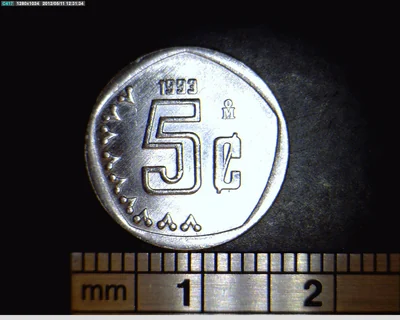
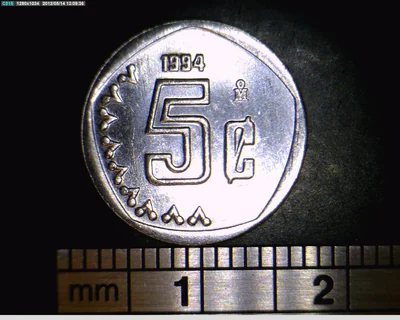
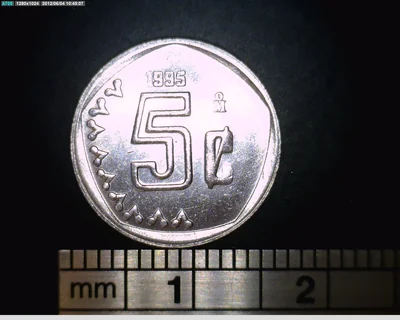
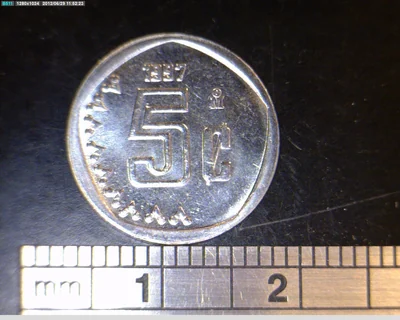
5 centavos Acero inoxidable · 5 Centavos Acero Inoxidable
Frequently asked questions
How much is a 1996 Mexican 5 centavos worth?
In circulated condition it is worth face value, essentially nothing to a collector, because more than 104 million were made. Value only appears in pristine uncirculated (UNC) pieces, where a dealer might ask around 5 to 7 dollars. A worn pocket coin carries no premium.
Is the 1996 Mexican 5 centavos rare?
No, it is one of the most common Mexican coins. The 1996 mintage was 104,831,000 pieces (catalog reference KM 546), so huge numbers are still circulating. Only uncirculated examples or verified minting errors hold any collector interest.
What metal is the 1996 5 centavos made of, and does it contain silver?
It is stainless steel, with no silver or precious metal. That means it has no melt value: its worth depends entirely on condition and collector demand, not on metal content. It is mildly magnetic, which helps confirm it is steel.
Where can I sell a 1996 Mexican 5 centavos?
Because it is so common, you will not find it at serious auctions except in bulk lots or as a certified UNC piece. To buy or sell, start with the Pesoteca store directory at /tiendas, which lists numismatic shops and contacts. Circulated coins usually move best directly between collectors.
Conversation
0 comments
Sources
- Ejemplar de la Coleccion Numismatica Banco de Mexico . inv. 19043
- Ejemplar de la Coleccion Numismatica Banco de Mexico . inv. 19040
- Ejemplar de la Coleccion Numismatica Banco de Mexico . inv. 19041
- Ejemplar de la Coleccion Numismatica Banco de Mexico . inv. 19042
- Ejemplar de la Coleccion Numismatica Banco de Mexico . inv. 19100
Images for informational and educational purposes, attributed to their original source. Reference values; the real price depends on the grade, the specific variant and demand.
Loading comments…