
1998 Mexican 5 Centavos (Stainless Steel): Value Guide
Prices updated: August 2026
Centavos stainless steel 1998.
Centavos stainless steel 1998.
Design
Banxico
Reverse
Reverse of the 5 stainless steel 1998 piece. Detail of the die cataloged by Banxico in its Colección Numismática.
Obverse
Obverse with the Mexican National Coat of Arms and the legend "ESTADOS UNIDOS MEXICANOS" per official convention. Struck by the Mexico City Mint under Banxico decree.
How much is the 1998 Mexican 5 Centavos (Stainless Steel): Value Guide worth?
The market value of the 1998 Mexican 5 Centavos (Stainless Steel): Value Guide is not yet documented with enough data to give a firm range. Weigh and measure your piece, compare it against the specifications, and check the forum for a second opinion.
The real price depends on four factors: the grade of preservation (a circulated piece is worth the low end of the range; an uncirculated one, or one still in its official blister pack, the high end), the finish (satin vs mirror/proof), the rarity within the series based on the mintage, and the metal spot price on the day of the deal when the piece is silver or gold. Check the value-by-grade table above and compare with equivalent pieces before buying or selling.
Where to buy or sell this coin?
Browse the national directory of numismatic shops or the community forum to trade directly with other collectors.
Description
If you inherited or found a 1998 Mexican 5 centavos coin, the honest answer is this: a worn one is worth cents, not dollars. In 2026, the only versions that bring real money are pristine uncirculated pieces with full original shine, and even those top out at a few dollars. Here's exactly what you have and how to check it.
What it's worth right now
This is one of the smallest coins Mexico put into daily circulation in the 1990s, and millions were made. That kills most of the value. Rarity drives price, and a coin that passed through thousands of pockets is the opposite of rare.
| Condition | What it looks like | Typical value (USD) |
|---|---|---|
| Circulated (worn, dull, scratched) | Grayish, no shine, everyday wear | A few cents to 0.25 |
| About uncirculated | Light handling, most shine intact | 0.50 to 1.50 |
| Uncirculated (full original luster) | Mint bright, no scratches | 2 to 5 |
Those are collector prices between hobbyists, not what a coin shop pays you over the counter. Expect a dealer to offer less, since they need resale margin. If someone tells you this coin is "worth hundreds," they are wrong.
What you actually have
The 1998 5 centavos is struck in stainless steel, weighs 1.58 grams, and measures 15.5 millimeters across, with a smooth (plain) edge. It came out of the Casa de Moneda de México (the Mexican Mint), the oldest mint in the Americas.
It belongs to the fractional coins introduced with the Nuevo Peso (New Peso) in 1993, when Mexico revalued its currency by dropping three zeros. Stainless steel was chosen for a simple reason: these low-value coins were cheap to make and wore out fast, so there was no point using anything better. That's also why almost none of them survived looking good. They were tools for making change, not keepsakes.
Why condition is the whole game here
With a common coin like this, grade is everything. Stainless steel scratches and dulls easily, so an uncirculated example with its original mint brightness stands out sharply from the pile of worn pieces that still turn up in drawers and coin jars.
If you're building a complete set of 1990s Mexican fractional coins, the 1998 5 centavos is an affordable slot to fill, as long as you hold out for a clean one. Buying a worn example makes no sense when uncirculated pieces cost only a couple of dollars more.
The "error coin worth thousands" myth
You'll see social media posts claiming pocket change like this is secretly worth a fortune because of a "minting error." Be skeptical. Genuine mint errors (off-center strikes, die rotation, double strikes) do exist and can multiply a coin's value, but the vast majority of what people flag as errors is post-mint damage: dents, corrosion, or wear that happened after the coin left the mint. That damage lowers value, it doesn't raise it.
If you think you have a real error, don't sell it blind. Post clear photos of the front, back, and edge in the Pesoteca forum and let collectors weigh in before you list it anywhere.
How to tell if yours is genuine
Fakes of a coin this cheap are uncommon, but you can verify it in two minutes:
- Weigh it on a jewelry scale. It should read 1.58 grams.
- Measure the diameter with calipers. It should be 15.5 millimeters.
- Check the edge: it should be smooth, with no reeding.
- Look at the relief: genuine strikes have crisp detail. Flat, mushy design or uneven coloring points to a fake.
If weight or diameter is off, treat the coin with suspicion.
Where to sell it
For a common circulated piece, honestly, it isn't worth much effort to sell one coin. Value shows up when you have a full run of dates or a genuine uncirculated example. When you're ready:
- A verified numismatic shop from the Pesoteca directory can appraise it on the spot, no middleman markup.
- The Pesoteca buy-and-sell forum connects you directly with collectors who want specific dates and grades.
- Photograph the front, back, and edge, and compare your coin's condition to the table above before you accept any offer.
Don't dump it on the first Facebook buyer who lowballs you.
Have a jar of 1990s Mexican coins and not sure which ones are keepers? Post photos of your best pieces in the Pesoteca forum and we'll help you sort the pocket change from the ones worth grading.
Historical context
This 1998 5 centavos piece belongs to the family B without the N$ prefix issued by Banxico. The 5 centavos is the smallest denomination of the post-reform Mexican system. They never bought anything on their own: they serve to square the last centavo when paying in cash. At many shops the coin is accepted but not given back as change because it doesn't fit into the final price.
Hunting the 5 centavos in circulation is easy because the minting cost is high relative to the face value. Banxico has kept the denomination more for system continuity than for usefulness in exchange.
In 1998 annual inflation closed at 18.6% according to INEGI and the average exchange rate was 9.14 pesos per dollar according to Banxico's FIX. Contagion from the Russian and Asian crisis. The peso jumped from seven to more than nine per dollar in the second half. Fobaproa became the political debate of the year. The country was under the presidency of Ernesto Zedillo Ponce de León (PRI).
Catalog reference: KM#546. The piece is part of the official Banxico Colección Numismática catalog and follows the convention of the Sistema PSM, one ID per distinct physical piece, not per design shared with other years of the same series.
This piece belongs to the era
Nuevos Pesos y actualidad →Explore all the Mexican coins of this era, their historical context and how they connect to the monetary system of the period.
Value range of this piece
Value range without enough data for this piece.
See the full breakdown by grade (VG, F, VF, EF, AU, MS-60, MS-63, MS-65) for the whole series →
Same denomination, other years
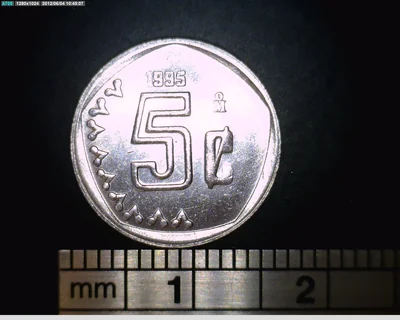
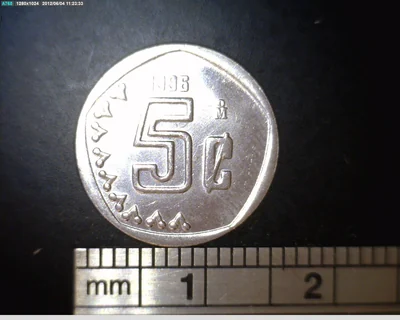
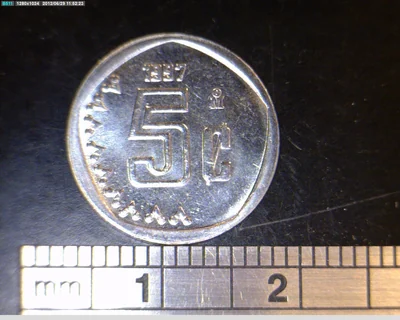
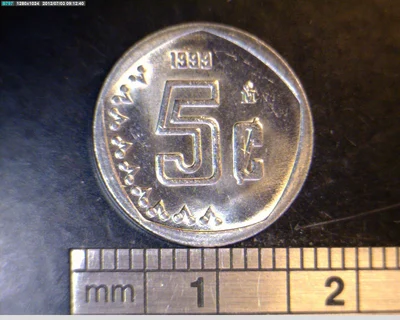
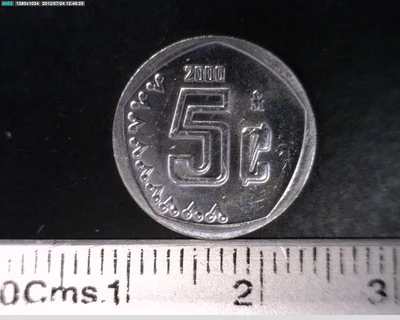
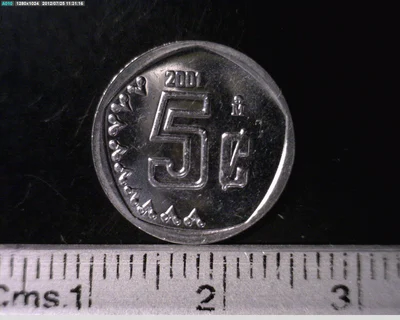
5 centavos Acero inoxidable · 5 Centavos Acero Inoxidable
Frequently asked questions
How much is a 1998 Mexican 5 centavos worth?
A circulated, worn 1998 5 centavos is worth only a few cents to about 0.25 USD. A pristine uncirculated example with full original shine can bring 2 to 5 USD between collectors. There is no version worth hundreds, despite what social media claims.
Is the 1998 5 centavos rare?
No. Millions were struck for daily circulation, so worn examples are extremely common. The only versions with any real value are truly uncirculated pieces with untouched mint luster, which are harder to find because stainless steel scratches and dulls easily.
Where can I sell a 1998 Mexican 5 centavos?
The safest options are a verified numismatic shop from the Pesoteca directory, which appraises it on the spot, or the Pesoteca buy-and-sell forum where collectors want specific dates and grades. Photograph the front, back, and edge, and check the value range in this guide before accepting any offer.
How can I tell if my 1998 5 centavos is genuine?
Weigh it (should be 1.58 grams) and measure the diameter (should be 15.5 millimeters) with a jewelry scale and calipers. The edge should be smooth with no reeding. Fakes usually have the wrong weight or size, flat relief, or uneven coloring.
Conversation
0 comments
Loading comments…