
5 Centavos 1997 (Stainless Steel): What It's Worth
Prices updated: August 2026
Centavos stainless steel 1997.
Centavos stainless steel 1997.
Design
Banxico
Reverse
Reverse of the 5 Stainless Steel 1997 piece. Detail of the die cataloged by Banxico in its Numismatic Collection.
Obverse
Obverse with the Mexican National Coat of Arms and the legend "ESTADOS UNIDOS MEXICANOS" per official convention. Struck by the Mexican Mint under a Banxico decree.
How much is the 5 Centavos 1997 (Stainless Steel): What It's Worth worth?
The market value of the 5 Centavos 1997 (Stainless Steel): What It's Worth is not yet documented with enough data to give a firm range. Weigh and measure your piece, compare it against the specifications, and check the forum for a second opinion.
The real price depends on four factors: the grade of preservation (a circulated piece is worth the low end of the range; an uncirculated one, or one still in its official blister pack, the high end), the finish (satin vs mirror/proof), the rarity within the series based on the mintage, and the metal spot price on the day of the deal when the piece is silver or gold. Check the value-by-grade table above and compare with equivalent pieces before buying or selling.
Where to buy or sell this coin?
Browse the national directory of numismatic shops or the community forum to trade directly with other collectors.
Description
If you inherited or found a 1997 Mexican 5 centavos coin, here's the honest answer: in worn condition it's worth pennies, a fraction of a US dollar. The value only climbs if you have a flawless, uncirculated example, and even then we're talking a few dollars, not a fortune. No myth here, just the facts on this small stainless steel coin.
Quick answer: is the 1997 5 centavos worth anything?
Most 1997 5 centavos coins are common circulation pieces worth close to face value, which is 5 centavos (five hundredths of a Mexican peso, roughly a fraction of a US cent). Their collector value comes almost entirely from condition. A worn one is pocket change. A pristine, uncirculated example with full mint luster can sell for a couple of dollars to a small group of collectors completing a set. This is not a rare coin and not a silver coin.
What this coin actually is
The 5 centavos of 1997 is one of the smallest coins in Mexican circulation after the 1993 currency reform, when Mexico dropped three zeros from the peso. It was struck at the Casa de Moneda de México (the Mexican Mint) and belongs to the family of small fractional coins that accompanied the "nuevos pesos" (new pesos) and later the pesos without the "nuevo" prefix.
Here are the exact specifications so you can identify and verify yours:
| Feature | Detail |
|---|---|
| Denomination | 5 centavos |
| Year | 1997 |
| Metal | Stainless steel |
| Weight | 1.58 grams |
| Diameter | 15.5 mm |
| Edge | Plain (smooth) |
| Obverse | National Coat of Arms with "Estados Unidos Mexicanos" |
| Reverse | Denomination and year |
Mexico switched this denomination to stainless steel for a simple reason: to cut the cost of producing the smallest coins, which barely circulated and mostly piled up in drawers and piggy banks.
Why condition is the whole story
Because almost nobody saved these coins carefully, finding one without wear, with its original shine and no staining from the steel itself, is harder than it sounds. That is exactly why a top-grade example carries a premium.
- Circulated (worn, dull, scratched): essentially face value, pennies.
- Uncirculated (UNC, full luster, no wear): a small premium, typically a couple of US dollars to a collector who needs it to complete a 1990s fractional set.
Stainless steel resists corrosion better than copper, but it can still show spots and dull over time, which knocks down the grade. A clean, spot-free UNC coin is the one worth setting aside.
Coins people think are worth millions but aren't
Small modern Mexican coins like the 5 centavos generate a lot of "is this rare?" hope online, and the honest answer is almost always no. A 1997 stainless steel 5 centavos is a mass-produced circulation coin. Age alone does not make it valuable, and this coin is not old by numismatic standards. The pieces that command real money are gold and silver coins like the Centenario gold coin or scarce dated silver types, not steel fractions from the late 1990s. If a listing tells you this coin is worth hundreds, that's a seller fishing for a beginner.
The one exception is a genuine, verifiable mint error (off-center strike, die rotation, double strike). Real errors can multiply the value. But most "errors" shared on social media are post-mint damage: dings, corrosion, or wear, not a factory mistake.
How to check what yours is worth
- Grade it honestly. Compare your coin to UNC references. Any wear on the high points of the coat of arms drops it out of the top grade.
- Verify it's genuine. Weigh it on a jewelry scale (should be 1.58 grams) and measure the diameter with a caliper (15.5 mm). Fakes usually have the wrong weight or diameter, flat relief, or off colors.
- Photograph it clearly: obverse, reverse, and edge, in good light.
- Check for errors before assuming you have one. Corrosion and damage are not errors.
Where to sell it
For a coin in this value range, keep it simple and safe:
- A verified numismatic shop from the Pesoteca directory will appraise it on the spot, no middleman markup.
- The Pesoteca buy-and-sell forum connects you directly with collectors who may need this exact piece for a set.
Check the price range in this page before you sell, and skip dumping it on the first social media offer. For a common circulation coin, don't spend money on professional grading (it costs more than the coin is worth).
Think you might have a genuine mint error on your 1997 5 centavos? Post clear photos in the Pesoteca forum and let the community confirm it before you get your hopes up.
Historical context
This 5 centavos piece from 1997 belongs to the family B without the N$ prefix issued by Banxico. The 5 centavos is the smallest denomination of the post-reform Mexican system. They never bought anything on their own: they serve to settle the last cent when paying in cash. In many businesses the coin is accepted but not given back as change because it doesn't fit into the final price.
Hunting the 5 centavos in circulation is easy because the minting cost is high relative to the face value. Banxico has kept the denomination more for the continuity of the system than for usefulness in exchange.
In 1997 annual inflation closed at 15.7% according to INEGI and the average exchange rate was 7.92 pesos per dollar according to Banxico's FIX. Historic midterm elections: the PRI lost its majority in the Chamber of Deputies and Cuauhtémoc Cárdenas won the first popular election for Head of Government of the Federal District. The country was under the Presidency of Ernesto Zedillo Ponce de León (PRI).
Catalog reference: KM#546. The piece is part of the official Banxico Colección Numismática catalog and follows the convention of the PSM System, one ID per distinct physical piece, not per design shared with other years of the same series.
This piece belongs to the era
Nuevos Pesos y actualidad →Explore all the Mexican coins of this era, their historical context and how they connect to the monetary system of the period.
Value range of this piece
Value range without enough data for this piece.
See the full breakdown by grade (VG, F, VF, EF, AU, MS-60, MS-63, MS-65) for the whole series →
Same denomination, other years
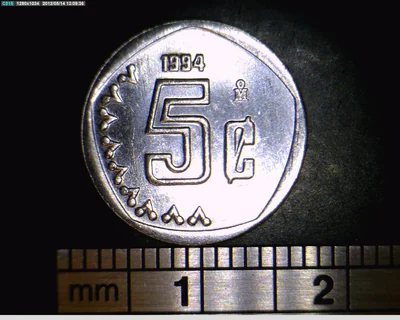
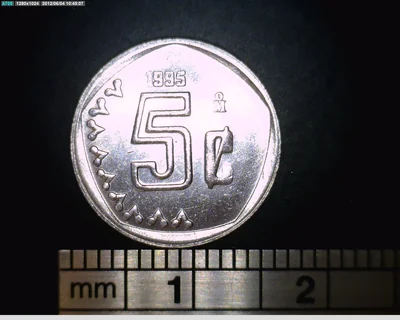
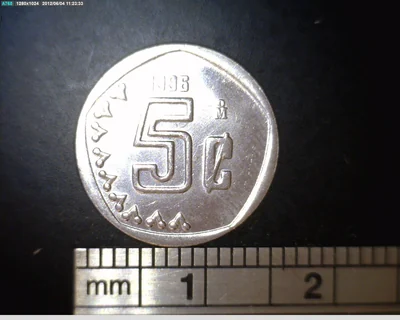
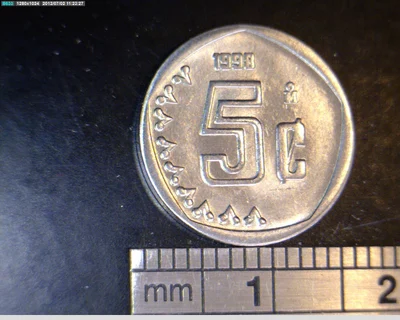
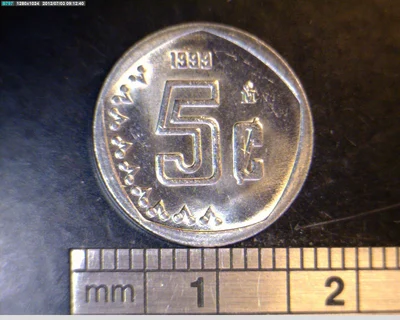
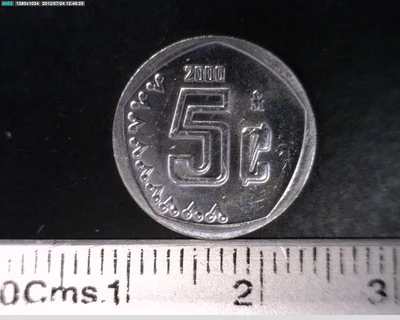
5 centavos Acero inoxidable · 5 Centavos Acero Inoxidable
Frequently asked questions
How much is a 1997 Mexican 5 centavos coin worth?
In circulated condition it's worth about face value, a fraction of a US cent. The value only rises for a truly uncirculated (UNC) example with full mint luster and no staining, which might bring a couple of US dollars from a collector completing a 1990s set. It is not a silver coin and not rare.
Is the 1997 5 centavos coin rare?
No. It's a mass-produced stainless steel circulation coin from the Casa de Moneda de México. What's scarce is finding one in flawless uncirculated condition, since almost nobody saved them carefully. Age and low mintage folklore aside, this is a common coin whose value depends entirely on grade.
Where can I sell my 1997 5 centavos coin?
The safest options are a [verified numismatic shop in the Pesoteca directory](/tiendas), which appraises it on the spot, or the [Pesoteca buy-and-sell forum](/foro/compra-venta) where collectors trade directly. Photograph the obverse, reverse, and edge, and check the value range on this page before selling. Avoid selling to the first random online offer.
How do I tell if my 1997 5 centavos is genuine?
Weigh it on a jewelry scale (it should be 1.58 grams) and measure the diameter with a caliper (15.5 mm). Genuine coins are stainless steel with a plain edge. Fakes typically have the wrong weight or diameter, flat relief, or poorly distributed color.
Conversation
0 comments
Sources
- Ejemplar de la Coleccion Numismatica Banco de Mexico . inv. 20023
- Ejemplar de la Coleccion Numismatica Banco de Mexico . inv. 20025
- Ejemplar de la Coleccion Numismatica Banco de Mexico . inv. 20024
- Ejemplar de la Coleccion Numismatica Banco de Mexico . inv. 20027
- Ejemplar de la Coleccion Numismatica Banco de Mexico . inv. 20026
Images for informational and educational purposes, attributed to their original source. Reference values; the real price depends on the grade, the specific variant and demand.
Loading comments…