
50 Centavos 1975 (Cuauhtémoc): What It's Worth
Prices updated: August 2026
Centavos cupronickel 1975.
Centavos cupronickel 1975.
Design
Banxico
Reverse
Reverse of the 50 Cupronickel 1975 piece. Die detail cataloged by Banxico in its Numismatic Collection.
Obverse
Obverse with the Mexican National Coat of Arms and legend "ESTADOS UNIDOS MEXICANOS" per official convention. Struck by the Mexican Mint under Banxico decree.
How much is the 50 Centavos 1975 (Cuauhtémoc): What It's Worth worth?
The market value of the 50 Centavos 1975 (Cuauhtémoc): What It's Worth is not yet documented with enough data to give a firm range. Weigh and measure your piece, compare it against the specifications, and check the forum for a second opinion.
The real price depends on four factors: the grade of preservation (a circulated piece is worth the low end of the range; an uncirculated one, or one still in its official blister pack, the high end), the finish (satin vs mirror/proof), the rarity within the series based on the mintage, and the metal spot price on the day of the deal when the piece is silver or gold. Check the value-by-grade table above and compare with equivalent pieces before buying or selling.
Where to buy or sell this coin?
Browse the national directory of numismatic shops or the community forum to trade directly with other collectors.
Description
If you inherited a Mexican 50 centavos coin from 1975 with a warrior's face on it, here is the honest answer: in worn condition it is worth cents, not dollars. This is a common circulation coin made of cupronickel, not silver. A pristine, uncirculated example can bring a few dollars, and that is the ceiling for the vast majority.
Quick answer: is the 1975 50 Centavos worth money?
Most 1975 50 centavos coins you find in a jar or an old box are worth between a few cents and about 1 to 3 US dollars. The face shown is Cuauhtémoc, the last Mexica (Aztec) ruler, and this design circulated heavily through the 1970s. Because millions passed hand to hand, they are easy to find and rarely valuable.
The money is in grade. A coin still carrying original mint luster, with the details of Cuauhtémoc's profile sharp and no wear, is genuinely harder to find than people assume. That kind of example can bring several dollars from a collector building a full set of 1970s Mexican circulation coins.
What you actually have (specifications)
Know the coin before you value it. Weigh it on a jewelry scale and measure it with calipers, then compare to these numbers.
| Feature | Detail |
|---|---|
| Denomination | 50 centavos (half a peso, old pesos) |
| Year | 1975 |
| Metal | Cupronickel (copper-nickel alloy, no silver) |
| Weight | 6.5 grams |
| Diameter | 25 mm |
| Edge | Plain (smooth) |
| Obverse | National coat of arms, eagle devouring a serpent |
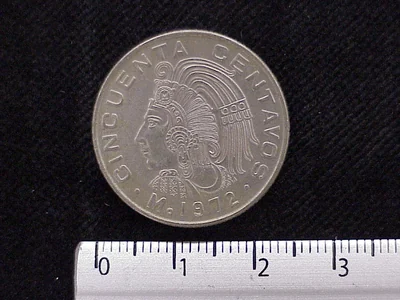
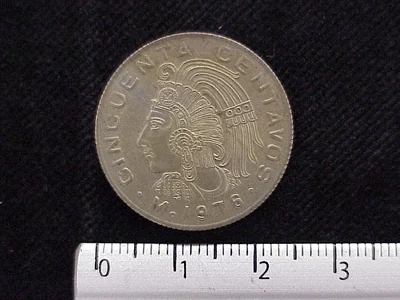
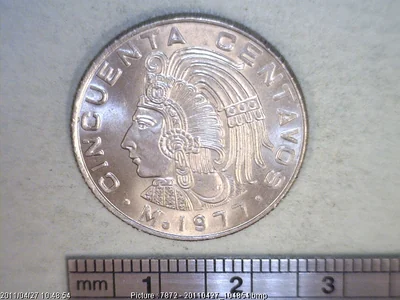
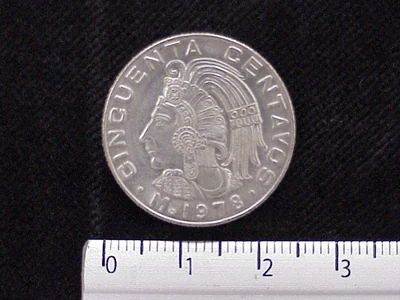
| Reverse | Profile of Cuauhtémoc, his name, and the year |
| Mint | Casa de Moneda de México (Mexican Mint) |
"Centavos" means cents. Fifty centavos was half of one old peso. These old pesos were later replaced in a 1993 currency reform, so this denomination no longer circulates in its 1975 form.
Why it is not silver, and why that matters
US readers often ask first: is it silver? No. The 1975 50 centavos is cupronickel, a copper and nickel alloy with no precious metal. That means it has no bullion floor. Its entire value comes from collector demand and condition, not melt value. Do not let anyone tell you an old Mexican coin is automatically valuable because it is old. Age alone is worthless here.
Where the real value hides: high grade
Because this was an everyday coin used in markets and corner stores, almost every survivor shows wear. Finding one with:
- Full original brilliance
- Crisp, undamaged relief on Cuauhtémoc's profile
- No scratches, corrosion, or cleaning marks
is the difference between a coin worth pennies and one a collector will pay for. If yours looks freshly minted, it is worth having graded before you sell.
Mint errors: real ones can multiply the value
Genuine, verifiable striking errors (off-center strikes, die rotation, double strikes, recognized varieties) can raise the price well above a normal example. Be skeptical: most "errors" people post online are post-mint damage, dents, or corrosion, not factory mistakes. Real errors are consistent and repeatable in the strike, not random gouges. If you think you have one, get a second opinion before you assume it is worth a fortune.
How to tell if yours is genuine
Counterfeits of a low-value circulation coin are uncommon, but here is how to check:
- Weigh it. A genuine coin is 6.5 grams. Off weight is a red flag.
- Measure it. Diameter should be 25 mm.
- Look at the relief. Real coins have crisp, sharp detail; fakes often look flat or mushy.
- Check the edge (plain, no reeding).
If weight, diameter, and detail all match the table above, you almost certainly have a real coin.
Where to sell it
Since the base value is low, do not overpay for grading or shipping unless the coin is exceptional. Your options:
- A verified numismatic dealer, who can value it on the spot.
- A collector marketplace or forum, where set builders look for clean examples.
Photograph the obverse, reverse, and edge in good light before you sell. Do not dump it to the first buyer on social media. For a common coin the difference is small, but for a high-grade or possible-error piece it matters.
Think you have one in mint condition, or spotted something odd on the strike? Post clear photos of both sides in the Pesoteca forum and let collectors weigh in before you sell. You can also check the buy and sell board or the verified dealer directory to find a fair price near you.
Historical context
Cent coins form the base of the Mexican monetary system. Banxico has modified their diameters, materials and alloys several times over the past decades to optimize minting costs. The 50-cent Cupronickel piece struck in 1975 belongs to the Banxico Numismatic Collection catalog documented on its official site.
For Mexican collectors, cent pieces gain value when they capture a change of material, a die error or an atypically low mintage. Banxico publishes annual mintages in CM10 since the year 2000. For earlier pieces the data may not be available. This entry follows the convention of the PSM System, one ID per distinct physical piece, not per shared design.
This piece belongs to the era
México Moderno (pre-1992) →Explore all the Mexican coins of this era, their historical context and how they connect to the monetary system of the period.
Value range of this piece
Value range without enough data for this piece.
See the full breakdown by grade (VG, F, VF, EF, AU, MS-60, MS-63, MS-65) for the whole series →
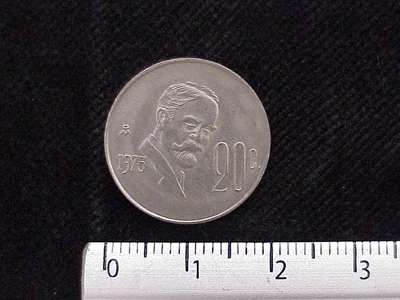
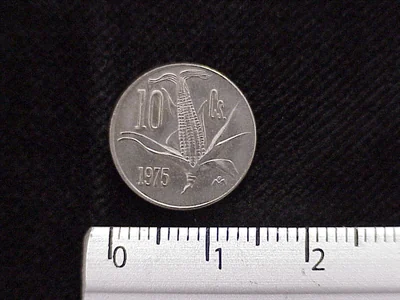
Other denominations from 1975
Centavos Mexicanos · Cuproníquel
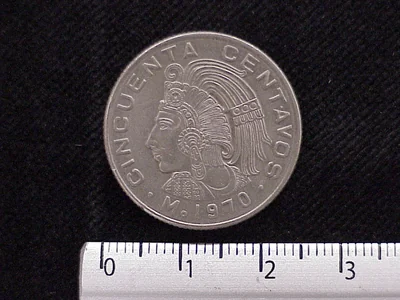
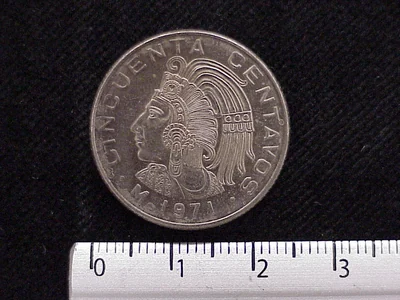
Same denomination, other years
50 centavos Cuproníquel · Centavos Mexicanos
Frequently asked questions
How much is a 1975 Mexican 50 centavos coin worth?
Worn examples are worth only a few cents to about 1 to 3 US dollars. It is a common cupronickel coin with no silver content, so almost all of the value comes from condition. A pristine, uncirculated coin with full detail on Cuauhtémoc's profile can bring several dollars from a collector, and genuine mint errors can be worth more.
Is the 1975 50 centavos rare or made of silver?
It is neither rare nor silver. It was a heavily used circulation coin struck in cupronickel (a copper-nickel alloy), so millions exist. What is genuinely hard to find is a truly uncirculated example with original luster and no wear, which is where any real collector value lies.
Where can I sell my 1975 Mexican 50 centavos?
Try a verified numismatic dealer, who can appraise it in person, or a collector forum and buy/sell board. Photograph the obverse, reverse, and edge first, and check its grade against the specifications above. For a common coin the price is low, so avoid selling to the first random buyer on social media.
How do I tell if my 1975 50 centavos is genuine?
Weigh it (should be 6.5 grams) and measure the diameter (25 mm) with a jewelry scale and calipers, then compare to the specification table. Genuine coins have sharp, crisp relief and a plain edge. Fakes often show wrong weight or diameter, flat detail, or uneven color.
Conversation
0 comments
Sources
- Ejemplar de la Coleccion Numismatica Banco de Mexico . inv. 11932
- Ejemplar de la Coleccion Numismatica Banco de Mexico . inv. 11933
- Ejemplar de la Coleccion Numismatica Banco de Mexico . inv. 11934
- Ejemplar de la Coleccion Numismatica Banco de Mexico . inv. 17143
- Ejemplar de la Coleccion Numismatica Banco de Mexico . inv. 17323
Images for informational and educational purposes, attributed to their original source. Reference values; the real price depends on the grade, the specific variant and demand.
Loading comments…