
Mexican 50 Centavos 1978 (Cuauhtémoc): What It's Worth
Prices updated: August 2026
Centavos cupronickel 1978.
Centavos cupronickel 1978.
Design
Banxico
Reverse
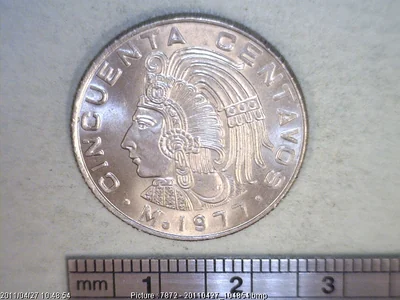
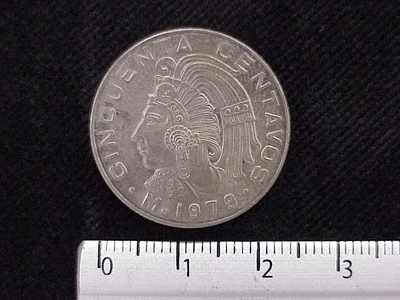
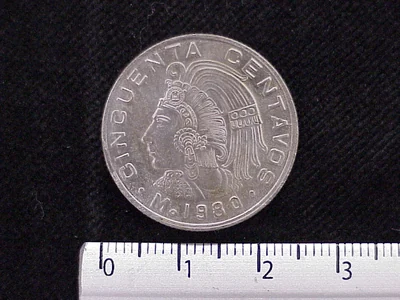
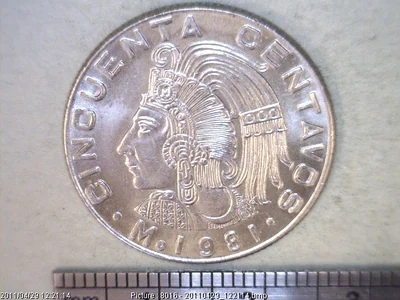
Bust of Cuauhtemoc, the last Mexica tlatoani, facing left with a feather headdress. The value "50 centavos" surrounds the upper part. (KM 452, 1970-1983 series.)
Obverse
Obverse with the Mexican National Coat of Arms and the legend "ESTADOS UNIDOS MEXICANOS" per official convention. Struck by the Mexican Mint under a Banxico decree.
How much is the Mexican 50 Centavos 1978 (Cuauhtémoc): What It's Worth worth?
The market value of the Mexican 50 Centavos 1978 (Cuauhtémoc): What It's Worth is not yet documented with enough data to give a firm range. Weigh and measure your piece, compare it against the specifications, and check the forum for a second opinion.
The real price depends on four factors: the grade of preservation (a circulated piece is worth the low end of the range; an uncirculated one, or one still in its official blister pack, the high end), the finish (satin vs mirror/proof), the rarity within the series based on the mintage, and the metal spot price on the day of the deal when the piece is silver or gold. Check the value-by-grade table above and compare with equivalent pieces before buying or selling.
Where to buy or sell this coin?
Browse the national directory of numismatic shops or the community forum to trade directly with other collectors.
Description
If you inherited or found a 1978 Mexican 50 centavos coin, here is the honest answer: in circulated condition it is worth cents, not dollars. With 85,400,000 pieces struck, this is one of the most common Mexican coins from the era. The four-figure prices you see online refer to error varieties or top-graded certified examples, not the coin sitting in your drawer.
What this coin actually is
This is a 50 centavos piece from the "Cuauhtémoc" series, named for the figure on the reverse. Cuauhtémoc was the last tlatoani (ruler) of the Mexica (Aztec) empire, shown facing left in a feathered headdress, with the value "50 centavos" above. The obverse carries the Mexican national coat of arms: an eagle on a cactus devouring a serpent.
In international catalogs it is listed as KM 452. The whole family circulated from 1970 to 1983 before Mexico switched the denomination to stainless steel.
Metal, weight, and specs
This coin contains no silver and no gold, so it has no precious-metal (melt) value. It is cupronickel: 75 percent copper, 25 percent nickel.
| Spec | Detail |
|---|---|
| Metal | Cupronickel (75% copper, 25% nickel) |
| Weight | 6.5 g |
| Diameter | 25 mm |
| Edge | Reeded (vertical lines, not smooth) |
| Catalog | KM 452 |
| Mintage (1978) | 85,400,000 |
A quick check on the edge: this coin should have a reeded edge. If a listing describes it as smooth-edged, that reference is wrong. The standard specification for KM 452 is a reeded edge.
What it's really worth
Here is the honest part. This coin is not rare. A mintage of 85.4 million means these circulated across the whole country for years and survive in huge numbers today.
- Circulated (worn): essentially face value to a few cents in USD. Entry-level collector value at best.
- Uncirculated: still only a few pesos (well under a dollar) according to Numista pricing.
- Certified high grade or genuine error varieties: this is where the eye-catching numbers come from, and only for those specific pieces.
The "worth thousands" headlines you see on social media are clickbait. They apply to error coins or examples certified in the very top grades, not the everyday coin most people have.
Common myths to ignore
Being old does not make a coin valuable. A 1978 coin is common precisely because it was minted by the tens of millions. Value here is driven by condition and by rare error varieties, not by the date. Before you believe any figure, compare it against completed, real sales, not asking prices on marketplaces, which are routinely inflated and rarely close at those numbers.
How to check what yours is worth
- Grade it honestly. Look for wear on Cuauhtémoc's headdress and the eagle. Sharp, lustrous, mark-free surfaces point to uncirculated; anything worn is a circulated piece worth cents.
- Check for errors. Off-center strikes, doubled dies, or wrong-metal planchets are what actually command a premium. If you suspect one, it is worth a professional look.
- Compare closed sales. Use completed listings and catalog references, not the highest asking price you can find.
- Get it appraised or sold properly. Use the Pesoteca store directory to find verified dealers and numismatists, a far better reference than a random marketplace listing.
If yours is well preserved, the best move is to keep it toward a full set: the Mexican centavos series or the pre-1992 modern era block. This 1978 issue is one of the more accessible pieces for starting that collection, and it closes out the cupronickel Cuauhtémoc run before the switch to stainless steel.
Got a 1978 50 centavos and think it might be an error variety? Post clear photos of both sides and the edge in the Pesoteca forum and we'll help you tell a common coin from a genuine rarity.
Historical context
Centavo coins form the base of the Mexican monetary system. Banxico has modified their diameters, materials and alloys several times over the last few decades to optimize minting costs. The 50 centavos Cupronickel piece minted in 1978 belongs to the Banxico Numismatic Collection catalog documented on its official site.
For Mexican collectors, centavo pieces have value when they capture a material change, a die error or an atypically low mintage. Banxico publishes the annual mintages in CM10 since the year 2000. For earlier pieces the data may not be available. This entry follows the convention of the PSM System, one ID per distinct physical piece, not per shared design.
This piece belongs to the era
México Moderno (pre-1992) →Explore all the Mexican coins of this era, their historical context and how they connect to the monetary system of the period.
Value range of this piece
Value range without enough data for this piece.
See the full breakdown by grade (VG, F, VF, EF, AU, MS-60, MS-63, MS-65) for the whole series →
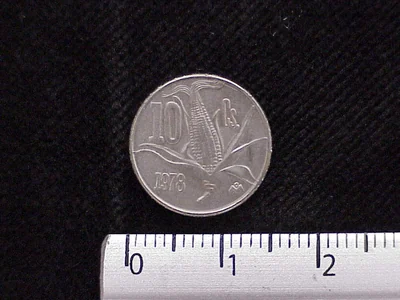
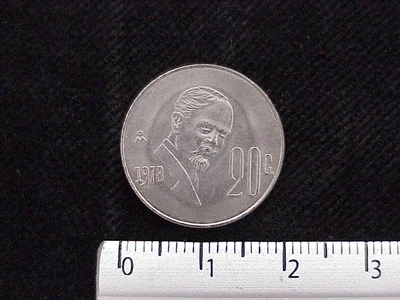
Other denominations from 1978
Centavos Mexicanos · Cuproníquel
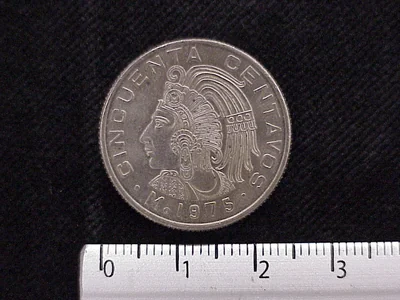
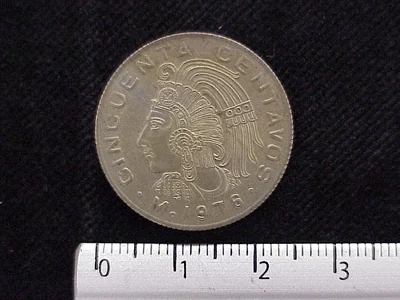
Same denomination, other years
50 centavos Cuproníquel · Centavos Mexicanos
Frequently asked questions
How much is a 1978 Mexican 50 centavos coin worth?
In most cases, only cents. With 85,400,000 pieces minted it is very common. Circulated examples are worth entry-level collector value at best, and even uncirculated pieces run only a few pesos (well under a dollar) per Numista. The thousands-of-pesos figures online are for error varieties or top-graded certified coins, not the everyday piece.
Is the 1978 50 centavos coin rare or made of silver?
It is neither rare nor silver. The 1978 mintage was 85.4 million coins, so they are easy to find. The coin is cupronickel (75 percent copper, 25 percent nickel), weighs 6.5 g, and measures 25 mm. It has no precious-metal content, so there is no melt value.
Where can I sell my 1978 Mexican 50 centavos coin?
Use the Pesoteca store directory (/tiendas) to find verified local dealers and numismatists. That is a better reference than a single marketplace listing, where inflated asking prices are common and rarely turn into real sales.
How do I tell if my 1978 50 centavos is genuinely valuable?
Condition drives value, not the date. A normally circulated coin is worth cents. Real premiums go to certified high-grade uncirculated examples or genuine error varieties (off-center strikes, doubled dies, wrong planchet). Compare against real completed sales, and get suspected errors checked by a professional.
Conversation
0 comments
Sources
- Ejemplar de la Coleccion Numismatica Banco de Mexico . inv. 11943
- Ejemplar de la Coleccion Numismatica Banco de Mexico . inv. 11945
- Ejemplar de la Coleccion Numismatica Banco de Mexico . inv. 11944
- Ejemplar de la Coleccion Numismatica Banco de Mexico . inv. 11946
- Ejemplar de la Coleccion Numismatica Banco de Mexico . inv. 15741
Images for informational and educational purposes, attributed to their original source. Reference values; the real price depends on the grade, the specific variant and demand.
Loading comments…