
Mexican 50 Centavos 1994 (Aluminum Bronze): Value Guide
Prices updated: August 2026
Centavos aluminum bronze 1994.
Centavos aluminum bronze 1994.
Design
Banxico
Reverse
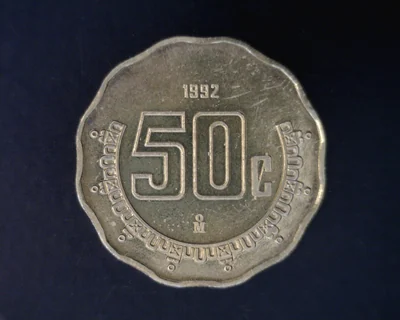
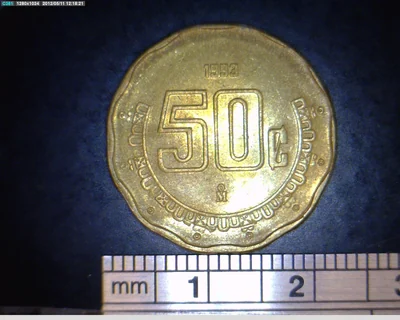
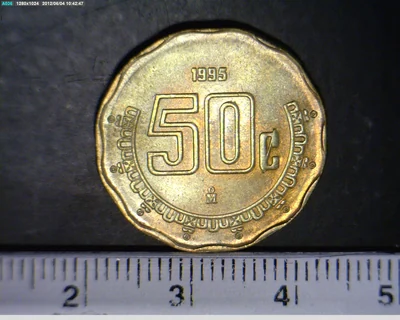
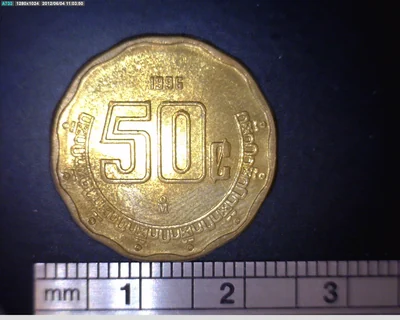
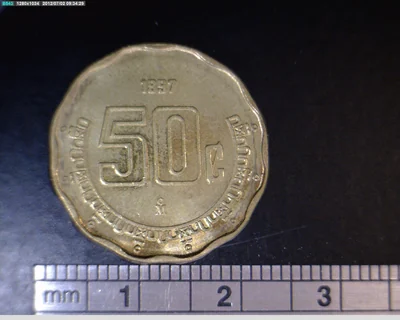
Value "50" at the center, year at the top, and mint mark Mo (Mexican Mint) at the bottom. On the lower edge it bears stylized motifs of the Ring of Acceptance of the Sun Stone (Aztec calendar), a characteristic feature of the entire 1992-2009 dodecagonal series.
Obverse
Obverse with the Mexican National Coat of Arms and the legend "ESTADOS UNIDOS MEXICANOS" per official convention. Struck by the Mexican Mint under Banxico decree.
How much is the Mexican 50 Centavos 1994 (Aluminum Bronze): Value Guide worth?
The market value of the Mexican 50 Centavos 1994 (Aluminum Bronze): Value Guide is not yet documented with enough data to give a firm range. Weigh and measure your piece, compare it against the specifications, and check the forum for a second opinion.
The real price depends on four factors: the grade of preservation (a circulated piece is worth the low end of the range; an uncirculated one, or one still in its official blister pack, the high end), the finish (satin vs mirror/proof), the rarity within the series based on the mintage, and the metal spot price on the day of the deal when the piece is silver or gold. Check the value-by-grade table above and compare with equivalent pieces before buying or selling.
Where to buy or sell this coin?
Browse the national directory of numismatic shops or the community forum to trade directly with other collectors.
Description
If you inherited or found a 1994 Mexican 50 centavos, here is the honest answer: a circulated one is worth about its face value, a few cents. Mexico struck 100,000,000 of them, so it is extremely common. Only a top-grade, uncirculated example reaches around 22 USD. The date 1994 adds nothing on its own.
What it is worth in 2026
This coin is made of aluminum bronze, a copper-aluminum alloy with a gold-like color. It contains no silver and no gold, so there is no precious-metal floor under it. Its only value is numismatic, and that only kicks in when the coin is in high grade.
- Circulated (worn, seen use): essentially face value, a few US cents.
- Extra Fine (EF, light wear): we have seen a European dealer offer one near 12 euros. That is the ceiling for a nice circulated piece, and it is optimistic.
- Uncirculated (MS, mint state): NGC references put the range from a few cents up to roughly 22 USD depending on grade.
The pattern is simple: you get paid for condition, not for the year.
| Coin | Year | Grade | Value (USD) |
|---|---|---|---|
| 50 Centavos aluminum bronze | 1994 | Circulated | Face value, a few cents |
| 50 Centavos aluminum bronze | 1994 | EF (Extra Fine) | Around 12 to 14 |
| 50 Centavos aluminum bronze | 1994 | MS (Uncirculated) | Up to about 22 |
Specifications (keep these to verify yours)
- Metal: aluminum bronze (copper-aluminum alloy, gold-colored)
- Weight: 4.39 g
- Diameter: 22 mm
- Shape: dodecagonal, 12 sides (scalloped edge)
- Edge: plain (smooth)
- Mint mark: Mo (Casa de Moneda de México, the Mexican Mint)
- Reported mintage: 100,000,000 (Numiscorner)
The obverse carries the Mexican coat of arms (an eagle on a cactus with a serpent). The reverse shows the value 50 at center, the year at the top, and the Mo mint mark below. The lower border has stylized motifs taken from the Acceptance Ring of the Piedra del Sol, the Aztec Sun Stone often called the Aztec calendar. That Aztec detail is the signature of the whole series and separates it from older round 50 centavos coins.
Why it has 12 sides
This is a dodecagonal coin, a 12-sided design the Banco de México used for the 50 centavos of the "nuevos pesos" (new pesos) era from 1992 to 2009. The shape lets you identify the series at a glance, without even reading the date. If your coin is round, it belongs to an earlier or later type, not this one.
Is it rare? No
With 100,000,000 pieces struck for 1994, this is a common coin. It circulated for years and still turns up in drawers, jars and inherited coin lots. That abundance is exactly why a worn example is worth pocket change. Rarity drives price in numismatics, and there is no scarcity here.
The one thing that can add value: grade
Because the coin is so common, only truly uncirculated examples with full luster and no wear command a premium. If your coin has scratches, dark toning, or visible wear on the high points, treat it as a circulated piece worth face value. A crisp, unhandled coin is the only version worth grading or selling individually.
How to tell if yours is genuine
Counterfeits of a low-value coin like this are rare, since there is little profit in faking it. Still, check the physical facts:
- Aluminum bronze, gold color, 4.39 g, 22 mm, 12 sides, plain edge.
- Reverse shows the 50, the year 1994, the Mo mint mark, and the Sun Stone border.
- Any weight or shape that does not match is a red flag.
A cheap digital scale and a caliper settle almost every question.
Where to sell it
Because it is common and low value, the smart move is to sell it as part of a larger lot of Mexican coins, or to hold out for a genuine uncirculated example if you are buying. Check the Pesoteca store directory to reach dealers who buy and sell Mexican circulating coinage. You can also compare it with the full 50 centavos series and read up on the new pesos era it belongs to.
Have a whole box of Mexican coins and no idea which ones matter? Post photos in the Pesoteca forum and we will help you sort the pocket change from the pieces worth appraising.
Historical context
Context of the fifty-centavo piece of the year 1994
This fifty-centavo coin (KM#549) was struck by the Mexican Mint in 1994, under the presidency of Carlos Salinas de Gortari. It is part of the family of circulating coins in a bronze and aluminum with nickel alloy that Banxico issued between 1992 and 2009, with 22 mm in diameter and 3.10 g in weight.
The year in Mexico. It is the year of the Zapatista uprising in Chiapas on January 1, of the assassination of Luis Donaldo Colosio on March 23, and of the December error, the devaluation of December 20 that took the peso from 3.44 to more than 5.30 per dollar in three weeks. It was also the year the autonomy of the Bank of Mexico took effect, on April 1, 1994. That year, according to INEGI's INPC, annual inflation closed at 7.05% and the Bank of Mexico's FIX exchange rate closed the year at 5.33 pesos per dollar.
How it circulated. In 1994 these pieces circulated during the Tequila crisis. In December the purchasing power of the centavo collapsed with the devaluation, although the coins remained in use to complete exact payments in shops and transport.
Numismatic note. The year 1994 is the last with Salinas in charge. The dies changed little, but the economic context turned these pieces into witnesses of one of the country's harshest financial crises. The obverse design is Banxico's official National Coat of Arms and the reverse shows the face value alongside the year of minting. Between years the design remains identical and only the engraved date changes, so the visible difference is minimal. The internal die variations, when they exist, are documented in the Bank of Mexico catalog.
This piece belongs to the era
Nuevos Pesos y actualidad →Explore all the Mexican coins of this era, their historical context and how they connect to the monetary system of the period.
Value range of this piece
Value range without enough data for this piece.
See the full breakdown by grade (VG, F, VF, EF, AU, MS-60, MS-63, MS-65) for the whole series →
Same denomination, other years
50 centavos Aluminio-bronce · 50 Centavos Bronce Aluminio
Frequently asked questions
How much is the 1994 Mexican 50 centavos worth?
It depends entirely on condition. A circulated coin is worth its face value or a few US cents, because 100,000,000 were struck. An Extra Fine example has sold for around 12 to 14 dollars, and NGC references top out near 22 USD for a high-grade uncirculated piece. You are paid for the grade, not for the 1994 date.
Is the 1994 50 centavos rare?
No. The reported mintage for 1994 is 100,000,000 pieces (Numiscorner), so it is very common. It still shows up in circulation and in loose coin collections, which makes it easy and cheap to find.
Is it made of silver or gold?
Neither. It is aluminum bronze, a copper-aluminum alloy with a gold-like color. It weighs 4.39 g and measures 22 mm. Because it holds no precious metal, it has no melt value, only a possible numismatic value in top grade.
Where can I sell my 1994 50 centavos?
Since it is common and low value, sell it as part of a larger lot of Mexican coins rather than one at a time, or hold out for an uncirculated example if you are collecting. Check the Pesoteca store directory at /tiendas to contact dealers who buy and sell Mexican circulating coinage.
Conversation
0 comments
Sources
- Ejemplar de la Coleccion Numismatica Banco de Mexico . inv. 18613
- Ejemplar de la Coleccion Numismatica Banco de Mexico . inv. 18614
- Ejemplar de la Coleccion Numismatica Banco de Mexico . inv. 18615
- Ejemplar de la Coleccion Numismatica Banco de Mexico . inv. 18617
- Ejemplar de la Coleccion Numismatica Banco de Mexico . inv. 18616
Images for informational and educational purposes, attributed to their original source. Reference values; the real price depends on the grade, the specific variant and demand.
Loading comments…