
1996 Mexico 50 Centavos (Aluminum-Bronze): Value Guide
Prices updated: August 2026
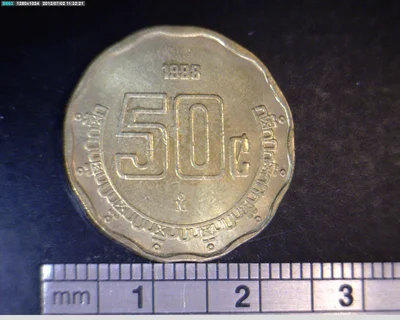
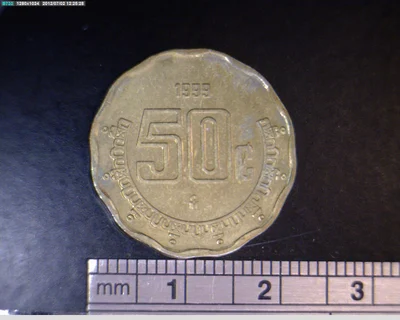
Centavos aluminum bronze 1996.
Centavos aluminum bronze 1996.
Design
Banxico
Reverse
Reverse of the 50 Aluminum Bronze 1996 piece. Detail of the die cataloged by Banxico in its Numismatic Collection.
Obverse
Obverse with the Mexican National Coat of Arms and the legend "ESTADOS UNIDOS MEXICANOS" per official convention. Struck by the Mexican Mint under Banxico decree.
How much is the 1996 Mexico 50 Centavos (Aluminum-Bronze): Value Guide worth?
The market value of the 1996 Mexico 50 Centavos (Aluminum-Bronze): Value Guide is not yet documented with enough data to give a firm range. Weigh and measure your piece, compare it against the specifications, and check the forum for a second opinion.
The real price depends on four factors: the grade of preservation (a circulated piece is worth the low end of the range; an uncirculated one, or one still in its official blister pack, the high end), the finish (satin vs mirror/proof), the rarity within the series based on the mintage, and the metal spot price on the day of the deal when the piece is silver or gold. Check the value-by-grade table above and compare with equivalent pieces before buying or selling.
Where to buy or sell this coin?
Browse the national directory of numismatic shops or the community forum to trade directly with other collectors.
Description
If you inherited or found a 1996 Mexican 50 centavos coin, here is the honest answer: in circulated condition it is worth face value, essentially a few US cents. Even a pristine, uncirculated example rarely clears a dollar or two. This is a modern circulation coin, not a rarity. But a couple of specific factors can change that, so read on before you sell it or spend it.
What this coin actually is
The 1996 50 centavos belongs to the aluminum-bronze 50 centavos series, part of Mexico's "Nuevos Pesos" reform era. It was struck at the Casa de Moneda de México (the Mexican Mint) under Banxico (the Bank of Mexico) decree. The design is standard: the front (anverso) carries the Mexican coat of arms and the legend "ESTADOS UNIDOS MEXICANOS", and the back (reverso) shows the denomination.
One peso equals 100 centavos, so 50 centavos is a half-peso piece. At current exchange rates, that is roughly 2 to 3 US cents in raw face value.
Specifications
| Feature | Detail |
|---|---|
| Denomination | 50 centavos |
| Year | 1996 |
| Metal | Aluminum-bronze |
| Weight | 4.39 grams |
| Diameter | 22 mm |
| Edge | Smooth (plain) |
| Mint | Casa de Moneda de México |
Aluminum-bronze contains no silver and no gold. That matters because it means this coin has no bullion floor. Unlike a silver Onza Libertad or a gold Centenario, there is no precious metal to fall back on. The value is purely collector demand, and for a common modern date, that demand is low.
What it is worth in 2026
Be realistic. This is a high-mintage circulation coin, and hundreds of millions of similar centavos entered daily use in the late 1990s.
- Worn or circulated: face value, a few US cents. Not worth selling individually.
- Uncirculated (no wear, original luster): roughly 1 to 2 US dollars to a Mexican-series collector.
- In an original Banxico mint set or blister pack: more, because the packaging and set completeness carry the premium, not the single coin.
Do not expect the "old coin equals fortune" outcome. A 1996 date is not old in numismatic terms, and nothing about the standard issue makes it scarce.
The one thing that could make yours valuable
Genuine, verifiable mint errors are the only realistic path to a real premium on a coin like this. Off-center strikes, die rotations, double strikes, and documented die varieties can multiply the value if a grading service confirms them.
Here is the honest caveat: the vast majority of "errors" people post online are post-mint damage. Corrosion, impact dents, scratches, and machine damage from decades in a cash drawer are not mint errors and add nothing to value. A true error happened at the moment of striking. If you think you have one, get a second opinion before you get excited.
How to check what yours is worth
- Grade it honestly. Wear is the biggest value driver here. Compare your coin against our Mexican coin grading guide. A coin with luster and no wear is worth far more than one that has been in circulation.
- Weigh and measure it. Use a jewelry scale and a caliper. A genuine piece weighs 4.39 grams and measures 22 mm. Off measurements point to a fake or a foreign lookalike.
- Photograph both sides and the edge. Good, sharp photos are what any buyer or appraiser needs before quoting a price.
- Check for genuine errors using the caution above.
Where to sell it
For a coin in this value range, your options are simple. A verified numismatic shop from the Pesoteca directory will appraise it on the spot and pay fair value without middleman markups. For collector-to-collector deals, the Pesoteca buy-and-sell forum connects you with people who actually want Mexican series coins. If it is in uncirculated mint packaging, that packaging is worth listing intact rather than breaking it open.
Avoid dumping it to the first bidder on social media. Even at a few dollars, an informed sale beats a rushed one.
Have a 1996 50 centavos with an unusual strike or in a sealed mint pack? Post clear photos of both sides in the Pesoteca forum and let the community tell you if you have a common coin or something better.
Historical context
Context of the fifty-centavos piece from the year 1996
This fifty-centavos coin (KM#549) was struck by the Mexican Mint in 1996, under the presidency of Ernesto Zedillo Ponce de Leon. It is part of the family of circulating coins in a bronze-and-aluminum-with-nickel alloy that Banxico issued between 1992 and 2009, with a 22 mm diameter and 3.10 g weight.
The year in Mexico. It is the first year the term Nuevo Peso disappears from the official nomenclature. On October 15, 1996 Congress approved the decree that returned to the currency its historical name. It was also the year of the signing of the provisional Ceasefire between the government and the EZLN in San Andres Larrainzar. That year, according to INEGI's INPC, annual inflation closed at 27.70% and the Bank of Mexico's FIX exchange rate closed the year at 7.85 pesos per dollar.
How it circulated. In 1996 these pieces circulated in a country in recovery. Inflation was still high but beginning to ease. They served to pay a bus fare, a tip or make change at street markets. Public school still cost the same symbolic peso.
Numismatic note. The year 1996 is the first minting without the N. The dies were adjusted to remove the abbreviation from the reverse, which produces a subtle difference from the earlier dies. The obverse design is the official Banxico National Coat of Arms and the reverse shows the face value alongside the year of minting. Between years the design remains identical and only the engraved date changes, so the visible difference is minimal. Internal die variations, when they exist, are documented in the Bank of Mexico catalog.
This piece belongs to the era
Nuevos Pesos y actualidad →Explore all the Mexican coins of this era, their historical context and how they connect to the monetary system of the period.
Value range of this piece
Value range without enough data for this piece.
See the full breakdown by grade (VG, F, VF, EF, AU, MS-60, MS-63, MS-65) for the whole series →
Same denomination, other years
50 centavos Aluminio-bronce · 50 Centavos Bronce Aluminio
Frequently asked questions
How much is a 1996 Mexican 50 centavos worth?
In circulated condition it is worth face value, a few US cents. An uncirculated example with full luster typically brings 1 to 2 US dollars from a Mexican-series collector. It is aluminum-bronze with no silver or gold, so there is no metal value to fall back on.
Is the 1996 50 centavos rare?
No. It is a common high-mintage circulation coin from the Nuevos Pesos era. The only versions worth a real premium are genuine, grading-service-verified mint errors or coins still in original Banxico mint packaging.
Where can I sell a 1996 Mexican 50 centavos?
A [verified numismatic shop in the Pesoteca directory](/tiendas) will appraise and buy it in person, or you can list it on the [Pesoteca buy-and-sell forum](/foro/compra-venta) among collectors. Photograph the front, back, and edge, and check the value range on this page before selling.
How do I tell if a 1996 50 centavos is genuine?
Weigh it on a jewelry scale and measure it with a caliper. A real coin weighs 4.39 grams and measures 22 mm. Fakes usually show wrong weight or diameter, flat relief, or off coloring. Compare your coin to the specifications listed above.
Conversation
0 comments
Sources
- Ejemplar de la Coleccion Numismatica Banco de Mexico . inv. 19025
- Ejemplar de la Coleccion Numismatica Banco de Mexico . inv. 19026
- Ejemplar de la Coleccion Numismatica Banco de Mexico . inv. 19027
- Ejemplar de la Coleccion Numismatica Banco de Mexico . inv. 19028
- Ejemplar de la Coleccion Numismatica Banco de Mexico . inv. 19029
Images for informational and educational purposes, attributed to their original source. Reference values; the real price depends on the grade, the specific variant and demand.
Loading comments…