
Mexican 50 Centavos 1998 (Aluminum Bronze): Value & Facts
Prices updated: August 2026
Centavos aluminum bronze 1998.
Centavos aluminum bronze 1998.
Design
Banxico
Reverse
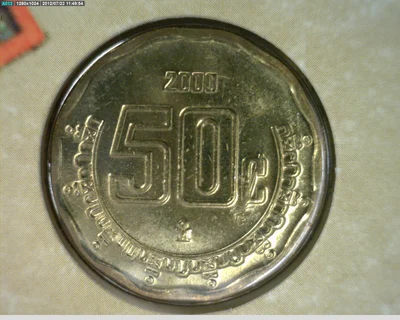
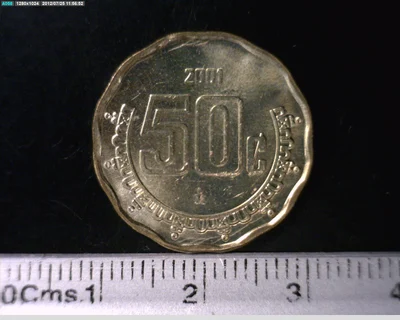
Reverse of the 50 Bronze Aluminum 1998 piece. Detail of the die cataloged by Banxico in its Numismatic Collection.
Obverse
Obverse with the Mexican National Coat of Arms and the legend "ESTADOS UNIDOS MEXICANOS" per official convention. Struck by the Mexican Mint under Banxico decree.
How much is the Mexican 50 Centavos 1998 (Aluminum Bronze): Value & Facts worth?
The market value of the Mexican 50 Centavos 1998 (Aluminum Bronze): Value & Facts is not yet documented with enough data to give a firm range. Weigh and measure your piece, compare it against the specifications, and check the forum for a second opinion.
The real price depends on four factors: the grade of preservation (a circulated piece is worth the low end of the range; an uncirculated one, or one still in its official blister pack, the high end), the finish (satin vs mirror/proof), the rarity within the series based on the mintage, and the metal spot price on the day of the deal when the piece is silver or gold. Check the value-by-grade table above and compare with equivalent pieces before buying or selling.
Where to buy or sell this coin?
Browse the national directory of numismatic shops or the community forum to trade directly with other collectors.
Description
If you found a 1998 Mexican 50 centavos coin, here's the honest answer up front: in worn or average condition it's worth face value, which is under three US cents. This is a common circulation coin, not silver, not rare. A pristine, uncirculated example can bring a few US dollars from a collector, and that's the ceiling for the normal date.
The myth that any "old" foreign coin is worth a fortune runs into reality fast with this one. It was struck in the tens of millions for everyday use in México. Age alone doesn't make a coin valuable. Rarity, demand, and grade do, and this piece is short on the first two.
What this coin actually is
This is a 50 centavos piece from México's current currency system (the "Nuevos Pesos" era that began in 1993). Centavos are the fractional unit, like US cents, so 50 centavos is half a Mexican peso. It is not a silver coin and never was.
Here are the exact specifications, which matter for spotting fakes and confirming what you have:
| Specification | Detail |
|---|---|
| Denomination | 50 centavos |
| Year | 1998 |
| Metal | Aluminum bronze (no silver, no gold) |
| Weight | 4.39 grams |
| Diameter | 22 mm |
| Edge | Smooth (plain) |
| Mint | Casa de Moneda de México |
| Finish | Satin |
The front (obverse) carries the Mexican national coat of arms (an eagle on a cactus, holding a snake) with the legend "ESTADOS UNIDOS MEXICANOS," the official name of the country. The back (reverse) shows the denomination. It was issued under Banxico (the Bank of México) decree and cataloged in the official numismatic collection.
What it's worth in USD
Because it is aluminum bronze, this coin has no meaningful melt value. Its worth is driven entirely by condition and collector demand, and demand for a modern circulation date like this is low.
| Condition | Realistic value (USD) |
|---|---|
| Circulated (worn) | Face value, roughly 2 to 3 cents |
| About uncirculated | Under 1 dollar |
| Uncirculated / gem | Roughly 1 to 5 dollars to a collector |
| Original Banxico mint packaging (blister) | Small premium over loose examples |
If your coin came sealed in an original Banxico blister pack, keep it that way. Sealed mint packaging is the only common way this date carries a modest premium.
Where the real money is (and isn't)
Don't confuse this everyday coin with México's genuinely valuable pieces. The Centenario (a 50 pesos gold coin containing 1.2 troy ounces of gold) and the Onza Libertad (a one troy ounce silver bullion coin) trade on their precious metal content and can be worth hundreds or thousands of dollars. This 50 centavos is neither. If you inherited a mixed box of Mexican coins, sort the heavy gold and silver pieces from the light copper-colored ones like this first.
Are there valuable error coins?
Genuine mint errors (off-center strikes, die rotation, double strikes, verified varieties) can multiply the value of an otherwise common coin. The catch: most "errors" people post online are post-mint damage, like corrosion, scratches, or coins that were hit or altered after leaving the mint. That damage lowers value, it doesn't raise it. If you think you have a true error, get it looked at before you assume it's worth money.
How to check what yours is worth
- Confirm it's genuine. Weigh it on a jewelry scale (should be 4.39 g) and measure the diameter with calipers (22 mm). Fakes and altered coins usually miss on weight, diameter, flat relief, or off color.
- Grade the condition. Look at wear on the high points and the sharpness of detail. Our coin grading guide walks you through it.
- Compare to real sale prices, not asking prices. Facebook listings mean little; sold results and dealer offers are what count.
Where to sell it
For a coin in this value range, don't overspend on shipping or grading fees that exceed the coin's worth. To sell fairly:
- Use a verified shop from the Pesoteca dealer directory for an in-person appraisal.
- List it in the Pesoteca buy-and-sell forum where collectors trade directly.
- Photograph the front, back, and edge clearly before you offer it anywhere.
You can also compare it against the full 50 Centavos Aluminum Bronze series to see if another date in your group is scarcer.
Have a whole jar or an inherited box of Mexican coins and not sure what's actually worth keeping? Post clear photos in the Pesoteca forum and let collectors help you sort the common from the valuable.
Historical context
Context of the fifty-centavo piece of 1998
This fifty-centavo coin (KM#549) was struck by the Mexican Mint in 1998, under the presidency of Ernesto Zedillo Ponce de León. It is part of the family of circulating coins in bronze and aluminum alloy with nickel that Banxico issued between 1992 and 2009, with a 22 mm diameter and a weight of 3.10 g.
The year in Mexico. It is the year Mexico felt the first effects of the 1997 Asian crisis and the Russian crisis of August 1998. The peso depreciated from 8.07 to 9.87 per dollar over the year and inflation closed at 18.61%, above Banxico's official target. That year, according to INEGI's INPC, annual inflation closed at 18.61% and the Bank of Mexico's FIX exchange rate closed the year at 9.87 pesos per dollar.
How it circulated. In 1998 these pieces circulated under renewed inflationary pressure. The single Metro ticket rose from 1.50 to 2 pesos in March. These coins were still useful for making exact change, though their everyday purchasing power had shrunk.
Numismatic note. The 1998 die corresponds to a phase of matrices worn down by the mass strikings of previous years. Some pieces show slight relief variations in the eagle on the obverse. The obverse design is Banxico's official National Coat of Arms and the reverse shows the face value alongside the year of minting. Between years the design stays identical and only the engraved date changes, so the visible difference is minimal. Internal die variations, when they exist, are documented in the Bank of Mexico's catalog.
This piece belongs to the era
Nuevos Pesos y actualidad →Explore all the Mexican coins of this era, their historical context and how they connect to the monetary system of the period.
Value range of this piece
Value range without enough data for this piece.
See the full breakdown by grade (VG, F, VF, EF, AU, MS-60, MS-63, MS-65) for the whole series →
Same denomination, other years
50 centavos Aluminio-bronce · 50 Centavos Bronce Aluminio
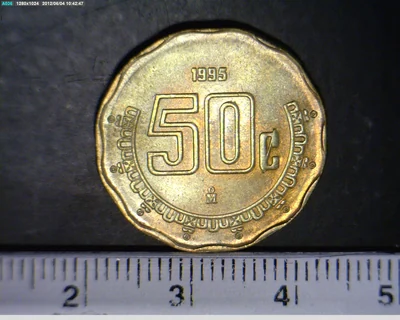
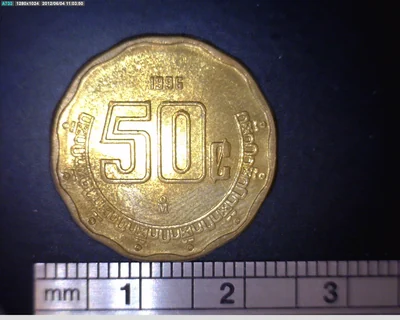
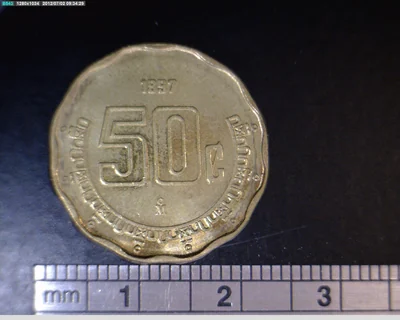
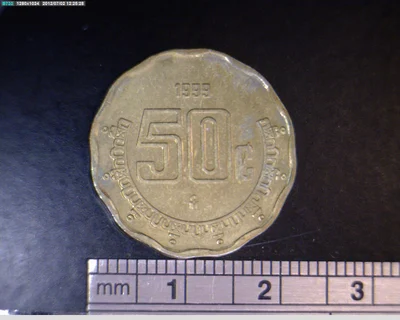
Frequently asked questions
How much is the 1998 Mexican 50 centavos coin worth?
In circulated condition it's worth face value, roughly 2 to 3 US cents. A pristine uncirculated example can bring about 1 to 5 dollars from a collector, and an original sealed Banxico blister pack carries a small premium. It contains no silver or gold, so it has no melt value.
Is the 1998 50 centavos coin rare?
No. It was struck in large numbers for everyday circulation in México and is easy to find. Age alone doesn't make it valuable. Only a verified mint error or a top-grade uncirculated example would push it above face value.
Where can I sell my 1998 Mexican 50 centavos coin?
Use a verified shop from the [Pesoteca dealer directory](/tiendas) for an on-the-spot appraisal, or list it in the [Pesoteca buy-and-sell forum](/foro/compra-venta) among collectors. Photograph the front, back, and edge first, and check the value ranges here before you sell. Avoid dumping it to the first buyer on social media.
How can I tell if my 1998 50 centavos coin is genuine?
Weigh it (it should be 4.39 grams) and measure the diameter (22 mm) against the specifications above. Counterfeits and altered pieces usually have the wrong weight or diameter, flat relief, or uneven color.
Conversation
0 comments
Loading comments…