
1823 Iturbide 8 Escudos Gold Coin: Value & Prices
The 1823 Iturbide 8 Escudos Gold Coin: Value & Prices is worth between $51,403 and $73,047 MXN depending on its grade of preservation.
Prices updated: August 2026
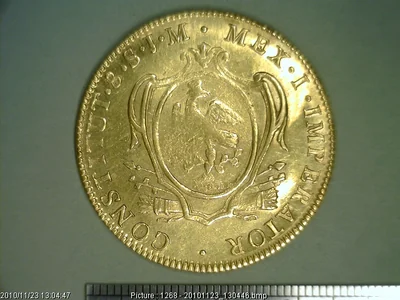
First Empire · Mexico City Mint · Assayer JM
First Empire · Mexico City Mint · Assayer JM
The 1823 Iturbide 8 Escudos Gold Coin: Value & Prices is worth between $51,403 and $73,047 MXN depending on its grade of preservation.
Prices updated: August 2026
How much is the 1823 Iturbide 8 Escudos Gold Coin: Value & Prices worth?
The estimated value of the 1823 Iturbide 8 Escudos Gold Coin: Value & Prices ranges from $51,403 (circulated, XF) up to $73,047 (official blister pack), with $65,176 as a reference for an uncirculated (UNC) piece. The estimate is based on the official mintage and the historical behavior of the family.
The real price depends on four factors: the grade of preservation (a circulated piece is worth the low end of the range; an uncirculated one, or one still in its official blister pack, the high end), the finish (satin vs mirror/proof), the rarity within the series based on the mintage, and the metal spot price on the day of the deal when the piece is silver or gold. Check the value-by-grade table above and compare with equivalent pieces before buying or selling.
Where to buy or sell this coin?
Browse the national directory of numismatic shops or the community forum to trade directly with other collectors.
Description
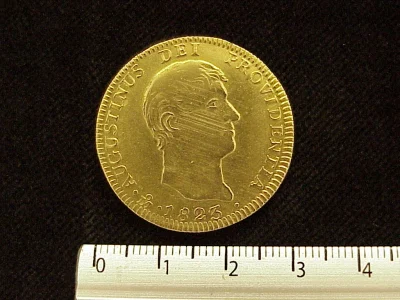
If you inherited or found an 1823 gold coin showing a man's profile with the name Agustín de Iturbide, you have one of the more interesting pieces in Mexican numismatics. It is a genuine gold coin, so it has a real floor value in melt alone, and the 1823 date ties it to Mexico's First Empire, which lasted less than a year. That combination of gold content plus historical scarcity is what drives price here, not age by itself.
What it's worth right now
The honest answer: value depends almost entirely on grade, authenticity, and the gold spot price on the day you sell. This is a large gold coin (27.03 grams, .875 fine), so even a heavily worn, damaged example carries meaningful bullion value. A well-preserved or certified example carries a strong collector premium on top of that.
Because this is a scarce early-Empire type rather than a common bullion coin, verified genuine examples can move well into the thousands of USD at auction. Circulated, uncertified pieces trade closer to melt-plus-modest-premium. The single biggest factor separating a few hundred dollars from several thousand is third-party certification (NGC or PCGS), because it settles both authenticity and grade in one step.
| Coin | Year | Metal & weight | Typical value range (USD) |
|---|---|---|---|
| 8 Escudos, Agustín de Iturbide | 1823 | .875 gold, 27.03 g | Melt value floor up to several thousand certified |
| Same, circulated / uncertified | 1823 | .875 gold, 27.03 g | Bullion value plus modest premium |
| Same, high grade / certified | 1823 | .875 gold, 27.03 g | Strong four-figure collector premium |
For a precise number on your exact coin, you need it graded or appraised in hand. A photo estimate can get you in the ballpark, but gold this valuable is worth the certification cost before you sell.
The specs (and why they matter for spotting fakes)
- Weight: 27.03 grams
- Diameter: 37 mm
- Metal: gold, .875 fine (21 karat)
- Edge: diagonally reeded
- Mint: Mexico City, assayer JM
- Series: Escudos, the Spanish colonial-era gold denomination that carried over into early independent Mexico
These numbers are your first authenticity test. Counterfeit gold coins, many produced overseas in lower-purity alloys, almost never match the exact weight and dimensions. A real 1823 8 Escudos will hit 27.03 grams and 37 mm. If yours is light, thin, or the edge reeding looks wrong, be skeptical before anything else.
What an "8 Escudos" actually is
The escudo was the gold denomination of Spain and colonial Mexico. Eight escudos was the largest standard gold piece, roughly the gold equivalent of the famous "pieces of eight" in silver. When Iturbide declared himself emperor in 1822, the Mexico City mint struck gold in his name. The Empire collapsed in 1823, so coinage under his portrait was short-lived, and that brief window is exactly what makes surviving examples desirable.
Why age alone doesn't make it a fortune
Most old coins are worth little more than their metal. This one is different only because it is gold and comes from a very short political period. It is the scarcity of genuine, well-preserved survivors, combined with real gold weight, that supports the price, not the fact that it is roughly two centuries old. Plenty of 200-year-old copper coins are worth a few dollars. Do not assume a high number just because a coin looks old.
How to check what yours is worth
- Weigh and measure it. A jeweler's scale should read 27.03 grams; diameter 37 mm. This is your fastest fraud filter.
- Photograph both faces and the edge. Clear, in-focus shots of obverse, reverse, and the reeded edge are what any serious buyer or appraiser will ask for.
- Assess the grade. Wear level drives value dramatically. Our coin condition grading guide walks you through it.
- Get it certified for a valuable example. For a coin that could be worth thousands, NGC or PCGS certification is the definitive insurance on authenticity and grade.
- Don't clean it. Cleaning gold coins can lower collector value. Leave it as found.
Where to sell it
Because this is a high-value gold coin, sell only where authenticity and payment are protected. A verified numismatic shop in the Pesoteca dealer directory will appraise it in person, and the Pesoteca buy-and-sell forum connects you directly with collectors who know these pieces. Established auction houses are the best route for a certified high-grade example. Avoid dumping a gold coin on the first buyer in a general marketplace, and never ship before verifying the buyer. This is also part of the broader colonial gold escudos series, so a specialist dealer will understand exactly what you have.
Think you have a genuine 1823 Iturbide 8 Escudos, or unsure if yours matches the weight? Post clear photos of both sides and the edge in the Pesoteca forum and let collectors help you confirm it before you sell.
Historical context
Eight escudos Agustín de Iturbide, 1823, Mexico mint, assayer JM, Krause KM#314. Krause distinguishes KM#314 from KM#313.1 (1822) by a die or legend variation within the Iturbide bust. Final year of the First Empire: on March 19, 1823, Iturbide abdicated under pressure from the Plan de Casa Mata and in May left into exile. The piece was struck in the final months of the regime. The ounce weighs 27.06 grams with 0.875 fineness. The assayer's JM signature continues in the field, the same mark as on the later republican issues from the same workshop. The obverse shows the laureate bust of Iturbide as emperor and the reverse the crowned eagle. The transition to the republican coat of arms would occur later that same year. 1823 pieces are collectible for documenting the close of the first independent Mexican monarchical attempt and for the rarity of survivors after the partial demonetization ordered by the Republic.
This piece belongs to the era
República Federal Mexicana →Explore all the Mexican coins of this era, their historical context and how they connect to the monetary system of the period.
Value range of this piece
Market estimate: $51,403 - $73,047 MXN depending on the grade of preservation (typical range between a circulated and an uncirculated piece).
See the full breakdown by grade (VG, F, VF, EF, AU, MS-60, MS-63, MS-65) for the whole series →
Other denominations from 1823
Escudos Coloniales (oro) · Oro 0.875 (21k)
Same denomination, other years
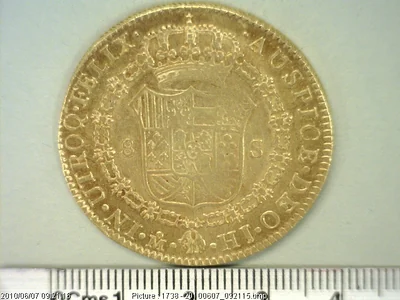
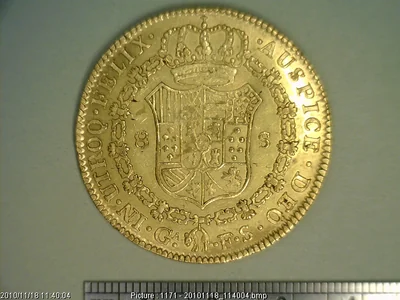
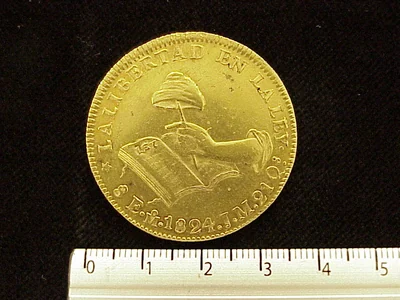
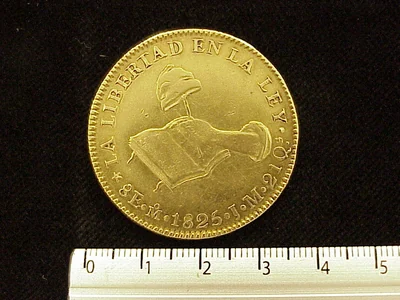
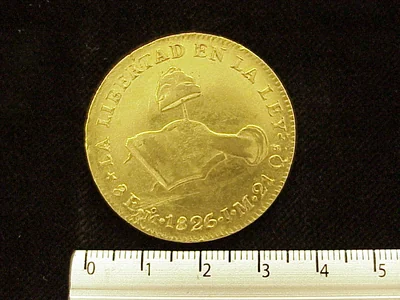
8 escudos Oro 0.875 (21k) · Escudos Coloniales (oro)
Frequently asked questions
How much is an 1823 Iturbide 8 Escudos worth?
It depends heavily on grade, authenticity, and the gold spot price the day you sell. As a .875 gold coin weighing 27.03 grams, even a worn example has a real melt-value floor. Circulated, uncertified pieces trade near bullion value plus a modest premium, while certified high-grade examples can reach well into the thousands of USD at auction. For a precise figure, get your coin appraised in hand or certified by NGC or PCGS.
Is the 1823 Iturbide 8 Escudos rare?
Yes, comparatively. It was struck only in 1823, during Mexico's First Empire under Agustín de Iturbide, a period that lasted less than a year. Exact mintage is not officially documented, but the short window and low survival rate make genuine, well-preserved examples scarce and desirable to collectors.
How can I tell if my 1823 Iturbide 8 Escudos is genuine?
Start with weight and size: a real one is 27.03 grams and 37 mm with a diagonally reeded edge. Counterfeits, often produced overseas in lower-purity gold, rarely match those exact specs, so weight usually gives them away. For a coin this valuable, NGC or PCGS certification is the definitive proof of both authenticity and grade.
Where can I sell an 1823 Iturbide 8 Escudos?
Sell where authenticity and payment are protected: a verified numismatic shop in the Pesoteca dealer directory that appraises in person, the Pesoteca buy-and-sell forum among collectors, or an established auction house for a certified example. Photograph both faces and the edge, confirm the weight, and never ship before verifying the buyer. Avoid selling a valuable gold coin to the first offer on a general marketplace.
Conversation
0 comments
Sources
Images for informational and educational purposes, attributed to their original source. Reference values; the real price depends on the grade, the specific variant and demand.
Loading comments…