
8 Escudos Carlos II 1695: Gold Cob Value Guide
The 8 Escudos Carlos II 1695: Gold Cob Value Guide is worth between $51,289 and $86,382 MXN depending on its grade of preservation.
Prices updated: August 2026
Viceroyalty · Mexico City Mint · Assayer L
Viceroyalty · Mexico City Mint · Assayer L
The 8 Escudos Carlos II 1695: Gold Cob Value Guide is worth between $51,289 and $86,382 MXN depending on its grade of preservation.
Prices updated: August 2026
How much is the 8 Escudos Carlos II 1695: Gold Cob Value Guide worth?
The estimated value of the 8 Escudos Carlos II 1695: Gold Cob Value Guide ranges from $51,289 (circulated, XF) up to $86,382 (official blister pack), with $73,621 as a reference for an uncirculated (UNC) piece. The estimate is based on the official mintage and the historical behavior of the family.
The real price depends on four factors: the grade of preservation (a circulated piece is worth the low end of the range; an uncirculated one, or one still in its official blister pack, the high end), the finish (satin vs mirror/proof), the rarity within the series based on the mintage, and the metal spot price on the day of the deal when the piece is silver or gold. Check the value-by-grade table above and compare with equivalent pieces before buying or selling.
Where to buy or sell this coin?
Browse the national directory of numismatic shops or the community forum to trade directly with other collectors.
Description
If you inherited or found a Mexican 8 Escudos dated 1695 with the name Carlos II, you own a piece of colonial gold. The short answer: this coin has a hard floor from its gold content alone (roughly 0.75 troy ounces of pure gold), and genuine, well-preserved examples trade well above melt because collectors of Spanish colonial gold pay a real premium. Fakes are common, so verification matters before any deal.
This was struck in 2026's collector market as one of the classic pieces of the Colonial Escudos (gold) series. It came out of the Mexico City mint (the oldest mint in the Americas) under Spanish rule, with assayer mark L.
What it actually is
The 8 Escudos was the largest gold denomination of the Spanish colonial system, worth eight of the smaller escudos. Collectors sometimes call these coins "cobs" or "doubloons" because early ones were hand-struck on irregular planchets. The design carries the shield and cross of the Spanish crown under Carlos II, who ruled Spain from 1665 to 1700.
Specifications, which you should verify on your own coin, are fixed:
- Weight: 26.97 grams
- Diameter: 37 mm
- Metal: Gold, .875 fine (21 karat)
- Edge: plain (unmilled)
- Mint: Mexico City, assayer L
- Era: Colonial / Viceroyalty of New Spain
At .875 fineness, the coin contains about 23.6 grams of pure gold, which is roughly 0.76 troy ounces. That gold content is your price floor: no matter the condition, a genuine coin is never worth less than its melt value.
What it is worth
| Coin | Year | Metal | Value driver | Where it trades |
|---|---|---|---|---|
| 8 Escudos Carlos II | 1695 | Gold .875 | Gold content + collector premium | Heritage, Stack's Bowers, colonial specialists |
Value splits into two parts. The bullion floor is the gold, currently well over 1,000 USD in melt for a coin this size. On top of that sits the numismatic premium, which for authentic Spanish colonial 8 Escudos of this period runs from a modest markup on worn, damaged pieces to several thousand dollars or more for sharp, certified examples. Cobs with clear dates, full shields, and strong strikes command the most, since date and mint marks are frequently weak or off-flan on hand-struck colonial gold.
Be honest with yourself about grade before you expect a high number. A corroded, holed, or heavily worn coin sells much closer to melt. A well-detailed example graded by NGC or PCGS is where the real money is.
The myth to kill
A lot of listings claim any old Spanish colonial gold coin is worth a fortune. It is not automatic. Age alone does not create value here; gold content and genuine collector demand do. Two coins of the same date can be separated by thousands of dollars purely on strike quality and authenticity. And a convincing fake is worth nothing, so do not price your coin off a headline before you confirm it is real.
How to tell if yours is genuine
Counterfeits of colonial gold are everywhere, many struck in lower-purity gold or gold-plated base metal and shipped from overseas.
- Weigh it. A genuine coin weighs 26.97 grams. Gold is dense, so most fakes come in light or off. A cheap gram scale settles this fast.
- Check the diameter: 37 mm.
- Look at the gold color and surfaces. Real .875 gold has a specific warm tone; plated fakes wear through at high points.
- Photograph the edge, obverse, and reverse. Serious buyers and appraisers ask for all three.
- When in doubt, certify it. For a coin worth more than a few hundred dollars, submitting to NGC or PCGS grading is the definitive insurance. A slabbed, graded coin sells faster and higher.
Mintage and varieties
Exact mintage figures for this 1695 issue are not officially documented, which is normal for hand-struck colonial gold. Records from that era are incomplete, and survival rates matter more than original output. Because it is a single-year piece, there are no year variants within this issue, but die varieties (letter placement, minor striking differences) exist and only expert graders reliably distinguish them.
Where to sell or buy
For a gold coin at this level, use channels built for value:
- A verified numismatic shop from the Pesoteca directory, which can appraise it on the spot.
- The Pesoteca buy-and-sell forum, where colonial-gold collectors trade.
- Major auction houses (Heritage, Stack's Bowers) for high-grade or certified examples, where colonial 8 Escudos regularly cross the block.
Whatever the channel, deal only with someone who lets you see the coin and confirm its weight before payment. Photograph the obverse, reverse, and edge, and check the value ranges here before you accept an offer. Skip dumping it to the first bidder on social media.
Think you have a genuine 1695 8 Escudos? Post clear photos of both sides and the edge in the Pesoteca forum and let collectors help you confirm the date, assayer, and whether it is worth certifying.
Historical context
Cob ounce of Carlos II dated 1695, Mexico mint, assayer L. The ounce in the colonial system equals eight escudos: it is the crowning piece of the gold series of the period. Its theoretical weight is around 27.06 grams with the 0.916 fineness typical of early viceregal gold. In 1695 the viceregal government was in the hands of Gaspar de la Cerda, VIII Count of Galve, in his final stretch before leaving office in 1696. Sor Juana Inés de la Cruz died in April of that same year at the convent of San Jerónimo. The cob technique is based on planchets cut with shears from the cast gold bar, without a prior round cut. The dies were fixed and struck with a hammer, hence the name coa, common cob in English. Krause does not assign a specific running number to this year; it is grouped within the Carlos II Mo cob family. The assayer L of this period is recorded as the usual signature of the capital's workshop in this final decade of the reign.
This piece belongs to the era
Colonial / Virreinato →Explore all the Mexican coins of this era, their historical context and how they connect to the monetary system of the period.
Value range of this piece
Market estimate: $51,289 - $86,382 MXN depending on the grade of preservation (typical range between a circulated and an uncirculated piece).
See the full breakdown by grade (VG, F, VF, EF, AU, MS-60, MS-63, MS-65) for the whole series →
Other denominations from 1695
Escudos Coloniales (oro) · Oro 0.875 (21k)
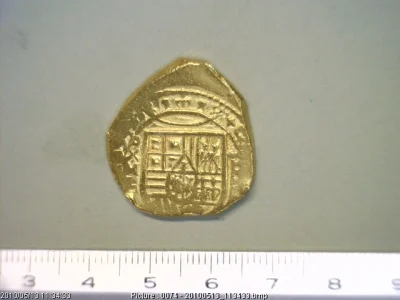
Same denomination, other years
8 escudos Oro 0.875 (21k) · Escudos Coloniales (oro)
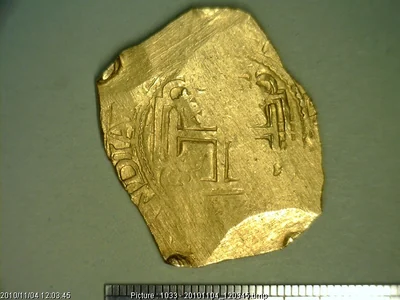
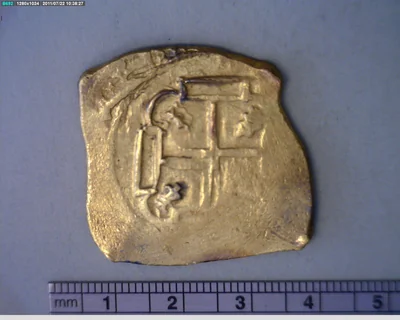
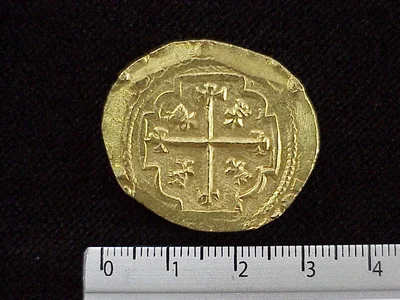
Frequently asked questions
How much is the 1695 8 Escudos Carlos II worth?
It has two value layers. The gold floor alone is well over 1,000 USD, since the coin holds about 0.76 troy ounces of pure gold. Genuine, well-struck examples add a collector premium that can push authentic pieces into the several-thousand-dollar range, especially when certified by NGC or PCGS. Worn or damaged coins sell closer to melt.
Is the 1695 8 Escudos rare?
It is a single-year colonial gold issue with no official mintage figure, which is typical for hand-struck coins of that era. Survival, strike quality, and a clear date matter more than original numbers. High-grade, certified examples are genuinely scarce and command the strongest prices; heavily worn ones are more common.
How can I tell if my 8 Escudos is genuine?
Start with weight and size: a real coin weighs 26.97 grams and measures 37 mm. Gold is dense, so lightweight or off-size pieces are usually fake, often lower-purity or plated. Check the gold tone and inspect the surfaces. For anything worth more than a few hundred dollars, submit it to NGC or PCGS for definitive authentication.
Where can I sell an 8 Escudos Carlos II?
Use a verified numismatic shop from the Pesoteca directory for an on-the-spot appraisal, or the Pesoteca buy-and-sell forum among collectors. For high-grade or certified coins, major auction houses like Heritage or Stack's Bowers reach the most serious buyers. Always let the buyer verify weight, and photograph both sides and the edge before selling.
Conversation
0 comments
Sources
Images for informational and educational purposes, attributed to their original source. Reference values; the real price depends on the grade, the specific variant and demand.
Loading comments…