
8 Escudos Carlos II 1700 Gold Cob: Value & How to Sell
The 8 Escudos Carlos II 1700 Gold Cob: Value & How to Sell is worth between $51,232 and $86,286 MXN depending on its grade of preservation.
Prices updated: August 2026
Viceroyalty · Mexico City Mint · Assayer L
Viceroyalty · Mexico City Mint · Assayer L
The 8 Escudos Carlos II 1700 Gold Cob: Value & How to Sell is worth between $51,232 and $86,286 MXN depending on its grade of preservation.
Prices updated: August 2026
How much is the 8 Escudos Carlos II 1700 Gold Cob: Value & How to Sell worth?
The estimated value of the 8 Escudos Carlos II 1700 Gold Cob: Value & How to Sell ranges from $51,232 (circulated, XF) up to $86,286 (official blister pack), with $73,539 as a reference for an uncirculated (UNC) piece. The estimate is based on the official mintage and the historical behavior of the family.
The real price depends on four factors: the grade of preservation (a circulated piece is worth the low end of the range; an uncirculated one, or one still in its official blister pack, the high end), the finish (satin vs mirror/proof), the rarity within the series based on the mintage, and the metal spot price on the day of the deal when the piece is silver or gold. Check the value-by-grade table above and compare with equivalent pieces before buying or selling.
Where to buy or sell this coin?
Browse the national directory of numismatic shops or the community forum to trade directly with other collectors.
Description
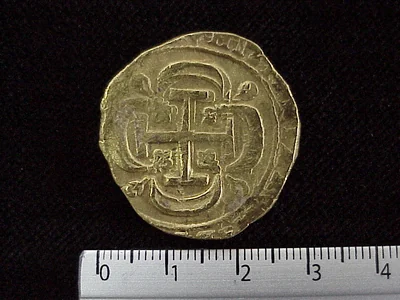
If you have found or inherited an 8 Escudos of Carlos II dated 1700, you are holding a serious piece of colonial gold. This is not a common pocket coin worth a few dollars. Genuine examples in good condition sell in the thousands of US dollars, and the metal alone (nearly a full troy ounce of gold) gives it a hard floor. But condition and authenticity decide everything, so read before you sell.
What this coin actually is
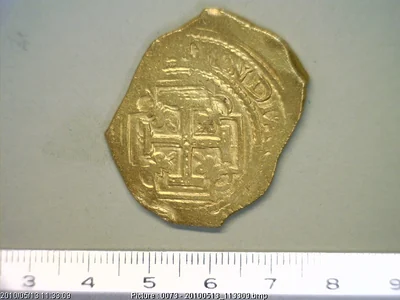
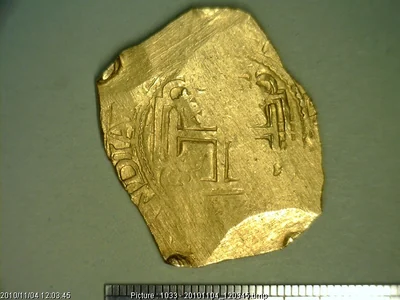
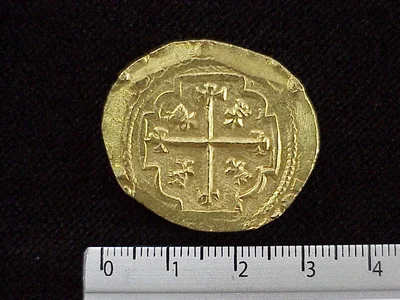
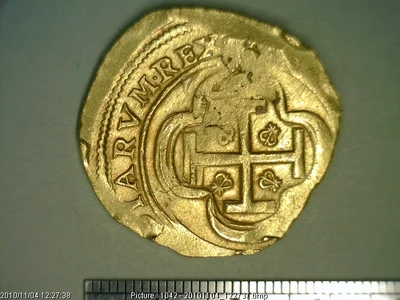
The 8 Escudos was the largest gold denomination of the Spanish colonial system, struck in México (Mexico City mint) under King Carlos II. Collectors call these early hand-struck pieces "cobs." They were cut and stamped by hand, so no two are identical, and each one is essentially a small ingot of gold with a royal design pressed into it.
Hard specifications you can measure yourself:
- Weight: 26.94 grams
- Diameter: 33 millimeters
- Metal: gold, .875 fine (21 karat)
- Mint: México (Mexico City), assayer L
- Date: 1700
That weight is the single most important number. Nearly all counterfeits fail the scale.
How much is an 8 Escudos Carlos II 1700 worth?
Value swings widely by condition and by whether the piece is certified. Because this is colonial gold that never left a large surviving population, even worn examples carry strong value from the gold content plus historical demand.
| Condition | Realistic value range (USD) |
|---|---|
| Heavily worn / damaged cob | 1,000 to 2,000 |
| Circulated, clear design | 2,000 to 5,000 |
| Sharp, well-centered, problem-free | 5,000 to 12,000 |
| Certified high grade (NGC/PCGS) | 12,000 and up |
Exceptional colonial 8 Escudos cobs, especially those recovered from documented shipwrecks with provenance, have brought well into five figures at Heritage and Stack's Bowers auctions. The exact figure for your coin depends on centering, strike quality, the visibility of the date and assayer mark, and whether it has been cleaned. Cleaning a gold cob lowers its value, so never polish it.
At minimum, the gold content sets a floor: 26.94 grams at .875 fine is roughly 0.76 troy ounces of pure gold. Whatever the numismatic premium, the coin is never worth less than that metal value at the current spot price.
Is it rare?
Colonial 8 Escudos are genuinely scarce, far scarcer than 20th-century Mexican gold like the Centenario. Exact mint figures for a single 1700 date at the Mexico City mint are not cleanly documented, which is normal for the era. Survivors are limited, and demand from collectors of Spanish colonial gold is steady. That combination is what keeps prices high.
Because each cob was struck by hand, minor die variations, off-center strikes, and doubling exist. Genuine, verifiable strike varieties can add value. Most "errors" people spot are post-mint damage (dings, corrosion, mount marks), not mint errors, and those lower value rather than raise it.
How to tell if yours is genuine
This is the coin type most worth authenticating, because fakes are common and the stakes are high.
- Weigh it. A real piece is 26.94 grams. Counterfeits, often lower-karat gold or gold-plated base metal, almost always miss this weight. The scale is your first and best test.
- Check the diameter. 33 millimeters. Off by much and it is suspect.
- Look at the edges and surface. Genuine cobs show irregular, hand-cut shapes and honest wear, not the crisp uniform rim of a modern cast copy.
- Get it certified. For a coin worth thousands, professional grading from NGC or PCGS is the only real insurance. It confirms authenticity, assigns a grade, and makes selling far easier and safer.
Use the coin grading guide to place your piece before you take it anywhere. This coin belongs to the broader Colonial Escudos (gold) series, which helps when comparing your example to others.
Where to sell it
With a coin in this value range, do not accept the first offer on social media. Your safest routes:
- A verified numismatic dealer from the Pesoteca shop directory, who can appraise it in person.
- The Pesoteca buy-and-sell forum, where collectors who actually know colonial gold gather.
- For maximum reach and best prices on a certified example, major auction houses that handle Spanish colonial gold.
Whichever route you pick, photograph the front, back, and edge in good light, and never hand over the coin before payment is confirmed. Since this is precious metal, buyers should always show you the piece and its weight; sellers should let the buyer verify first.
Not sure what you have or what grade it falls into? Post clear photos of both sides and the edge in the Pesoteca forum and let the community weigh in before you set a price.
Historical context
Eight-escudo cob of Charles II dated 1700, Mexican mint, assayer L. This year carries a specific historical weight: on November 1, 1700, Charles II died without descendants, which triggered the War of the Spanish Succession. The piece was struck while he was still alive and signing as the Bewitched. In Mexico, José Sarmiento de Valladares, Count of Moctezuma, was governing, in the second half of his viceroyalty before ceding the post to Ortega y Montañez in 1701. The colonial ounce weighs about 27.06 grams with a fineness of 0.916. The cob technique is the same as that of all specimens of the reign: shear-trimmed blank, heated blank, fixed dies, hammer. Assayer L signs the piece in the field. Krause does not give 1700 a specific running number, grouping it within the Charles II Mo cob family. Pieces from this final year of the reign are direct numismatic witnesses to the change of dynasty from Habsburg to Bourbon on the Spanish crown.
This piece belongs to the era
Colonial / Virreinato →Explore all the Mexican coins of this era, their historical context and how they connect to the monetary system of the period.
Value range of this piece
Market estimate: $51,232 - $86,286 MXN depending on the grade of preservation (typical range between a circulated and an uncirculated piece).
See the full breakdown by grade (VG, F, VF, EF, AU, MS-60, MS-63, MS-65) for the whole series →
Same denomination, other years
8 escudos Oro 0.875 (21k) · Escudos Coloniales (oro)
Frequently asked questions
How much is an 8 Escudos Carlos II 1700 worth?
It depends heavily on condition. Worn but genuine examples typically bring 1,000 to 2,000 US dollars, circulated pieces with a clear design run 2,000 to 5,000, and sharp or certified high-grade coins reach 12,000 and above. The gold content (about 0.76 troy ounces pure) sets a hard floor at current spot. Get a professional appraisal for your specific piece.
Is the 8 Escudos Carlos II 1700 rare?
Yes. Colonial 8 Escudos are far scarcer than modern Mexican gold like the Centenario. Exact mintage for the 1700 Mexico City date is not cleanly documented, which is normal for the era, and surviving examples are limited. Steady collector demand for Spanish colonial gold keeps prices strong.
How can I tell if my 8 Escudos Carlos II 1700 is genuine?
Weigh it first: a real piece is 26.94 grams and measures 33 millimeters. Most fakes are lower-karat or plated base metal and fail the scale. Genuine cobs show irregular hand-cut shapes and honest wear. For a coin worth thousands, certification from NGC or PCGS is the only reliable proof of authenticity.
Where can I sell an 8 Escudos Carlos II 1700?
Safest options are a verified numismatic dealer from the Pesoteca directory who appraises it in person, the Pesoteca buy-and-sell forum among collectors, or a major auction house that handles Spanish colonial gold for a certified example. Photograph both sides and the edge, and never release the coin before payment clears.
Conversation
0 comments
Sources
Images for informational and educational purposes, attributed to their original source. Reference values; the real price depends on the grade, the specific variant and demand.
Loading comments…