
8 Escudos Carlos III 1768 Gold Coin: Value & Prices (2026)
The 8 Escudos Carlos III 1768 Gold Coin: Value & Prices is worth between $51,232 and $86,286 MXN depending on its grade of preservation.
Prices updated: August 2026
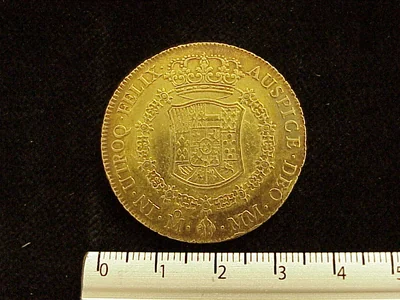
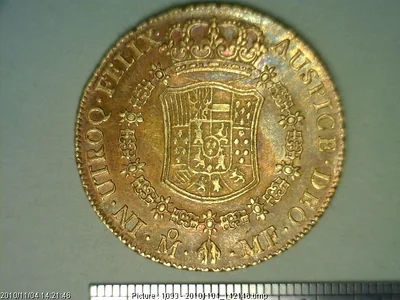
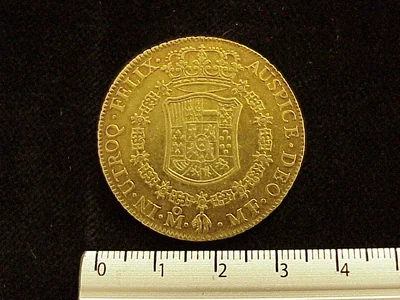
Third type; mature bust; no 8 S; overdate 8/7.
Third type; mature bust; no 8 S; overdate 8/7.
The 8 Escudos Carlos III 1768 Gold Coin: Value & Prices is worth between $51,232 and $86,286 MXN depending on its grade of preservation.
Prices updated: August 2026
How much is the 8 Escudos Carlos III 1768 Gold Coin: Value & Prices (2026) worth?
The estimated value of the 8 Escudos Carlos III 1768 Gold Coin: Value & Prices (2026) ranges from $51,232 (circulated, XF) up to $86,286 (official blister pack), with $73,539 as a reference for an uncirculated (UNC) piece. The estimate is based on the official mintage and the historical behavior of the family.
The real price depends on four factors: the grade of preservation (a circulated piece is worth the low end of the range; an uncirculated one, or one still in its official blister pack, the high end), the finish (satin vs mirror/proof), the rarity within the series based on the mintage, and the metal spot price on the day of the deal when the piece is silver or gold. Check the value-by-grade table above and compare with equivalent pieces before buying or selling.
Where to buy or sell this coin?
Browse the national directory of numismatic shops or the community forum to trade directly with other collectors.
Description
If you inherited an 8 Escudos gold coin dated 1768 with the bust of Carlos III, you are holding something with a real floor value in the thousands of dollars, not because it is old, but because it is nearly a full ounce of gold. This is one of the few Mexican colonial pieces where "is it worth money?" has a confident yes.
Quick answer: what it's worth in 2026
An 8 Escudos of this type contains 26.94 grams of gold at .875 fineness, which is roughly 0.758 troy ounces of pure gold. That gives it a bullion floor of about 1,800 to 2,000 USD at current gold prices, before any collector premium. Coins with clear detail and honest surfaces trade well above that. Certified examples in high grade can reach 5,000 USD and up. A truly exceptional, sharply struck piece can bring more, but most circulated examples land in the 2,000 to 4,000 USD range.
That metal floor is the key point. Unlike most old coins that other sites overhype, this one cannot fall below its melt value. The gold alone protects you.
What this coin actually is
This is an 8 Escudos, the highest gold denomination of the Spanish colonial monetary system, popularly called an onza (Spanish for "ounce") because of its size and gold content. It was struck at the Mexico City mint (the Casa de Moneda de México), which was the main silver and gold supplier of the Spanish Empire at the time.
Key identifiers on your coin:
- Ruler: Carlos III (Charles III of Spain)
- Date: 1768
- Mint: Mexico (look for the "Mo" mintmark)
- Assayer initials: MF (the official who certified the metal's fineness)
- Type: Third type, mature bust, no "8 S" denomination mark, with an overdate 8/7 (the 8 struck over a 7)
- Catalog reference: KM#155
Technical specs (check yours against these)
| Feature | Specification |
|---|---|
| Metal | Gold |
| Weight | 26.94 g |
| Diameter | 37 mm |
| Fineness | .875 (87.5% gold) |
| Pure gold content | approx. 0.758 troy oz |
| Edge | Chain pattern |
| Catalog | KM#155 |
Grab a jeweler's scale and a caliper. If your coin weighs meaningfully less than 26.94 g or measures off on diameter, be suspicious. Colonial gold is a heavily faked area, and weight is your first defense.
What drives the price
Three things move the value of a genuine 8 Escudos:
- Gold content. This is the guaranteed floor. Nearly an ounce of gold, always.
- Grade and eye appeal. A coin with a full, sharp portrait and clean fields commands a strong premium over a worn, scratched, or cleaned example. Cleaning kills value on colonial gold; collectors want original surfaces.
- The overdate variant. The 8/7 overdate on this type is a recognized feature that specialists watch for. On a well-preserved coin, a clearly visible overdate can add to demand.
What does not automatically make it worth a fortune: being from the 1700s. Age alone is not rarity. These were struck in real quantity as trade coins. The value comes from the gold plus condition, not from a myth about "antique" money.
The overhype to ignore
You will find sellers online claiming any Carlos III gold piece is worth tens of thousands of dollars "because it's colonial." That is clickbait. Ordinary circulated examples trade at a few thousand dollars, driven mostly by melt value plus a modest collector premium. The five-figure prices are reserved for top-grade, certified, problem-free coins, and even those are the exception, not the rule. If someone offers you far below the gold value, they are counting on you not knowing what an ounce of gold is worth.
How to tell if yours is genuine
- Weigh it. It should be right at 26.94 g. Cast fakes and gold-plated copies almost always come in wrong.
- Measure it. 37 mm diameter. Off-size is a red flag.
- Check the edge. The genuine coin has a chain-pattern edge, not smooth or reeded.
- Study the engraving. Look at the mintmark (Mo), the MF assayer initials, and the style of the mature bust. Fakes often botch these fine details.
- When in doubt, certify. For a coin worth thousands, professional grading through NGC or PCGS pays for itself. Certification confirms authenticity and grade, and certified coins sell faster and higher.
Suspect any offer that sits well below the metal value. That is the number one sign someone thinks you don't know what you have.
Where to sell it
Because this is a precious-metal coin, only deal with buyers who let you see the piece, weigh it, and verify it before money changes hands.
- A verified coin shop from the Pesoteca directory can appraise it on the spot.
- The Pesoteca buy-and-sell forum connects you with collectors who understand colonial gold and pay accordingly.
- For maximum price on a high-grade example, a major auction house (Heritage, Stack's Bowers) is worth considering, especially once the coin is certified.
Photograph the obverse, reverse, and edge in good light before you talk to anyone. Do not dump it on Facebook to the first bidder, and never let anyone pressure you into selling below the gold value.
Have an 8 Escudos or another piece of Spanish colonial gold and want a read on grade and value before you sell? Post clear photos in the Pesoteca forum and let collectors who handle these regularly weigh in.
Historical context
Eight escudos, Carlos III, 1768, Mexico mint. The record lists the third type with mature bust without the 8S mark and an overdate 8/7, a sign of restriking the last digit over the 7 of a 1767 die. This year follows the Jesuit expulsion, with the viceroyalty of Carlos Francisco de Croix stabilized since August 1766. In 1768 the new military ordinances were applied, reorganizing the viceregal army along the Prussian-French model of company and battalion. It was also the year the works of the Mining College in Mexico and the Royal Mining Tribunal began. The ounce weighs 27.06 grams with 0.916 fineness. Milled with a standardized round planchet. The reverse keeps the classic pillar design in one of its last issues before the change to the royal bust that Carlos III would formally introduce in the American series around 1772. The assayer's signature continues as the workshop mark. The 8/7 overdate adds collectible technical rarity. Krause KM#155 holds. Pieces from this year document the post-Jesuit phase of the viceroyalty under the new Bourbon military organization.
This piece belongs to the era
Colonial / Virreinato →Explore all the Mexican coins of this era, their historical context and how they connect to the monetary system of the period.
Value range of this piece
Market estimate: $51,232 - $86,286 MXN depending on the grade of preservation (typical range between a circulated and an uncirculated piece).
See the full breakdown by grade (VG, F, VF, EF, AU, MS-60, MS-63, MS-65) for the whole series →
Same denomination, other years
8 escudos Oro 0.875 (21k) · 8 Escudos Carlos III
Frequently asked questions
How much is an 8 Escudos Carlos III 1768 worth?
It has a gold floor of roughly 1,800 to 2,000 USD, since it contains about 0.758 troy ounces of pure gold (26.94 g at .875 fineness). Most circulated examples trade for 2,000 to 4,000 USD, and certified high-grade coins can reach 5,000 USD or more. It cannot fall below its melt value.
Is the 1768 Carlos III 8 Escudos rare?
It is not rare in the way age-based myths suggest; these were struck as real trade coins in quantity. The value comes mostly from the gold plus condition. The 8/7 overdate on this third type is a recognized variant that specialists watch, and well-preserved or certified examples do command a strong premium.
Where can I sell my 8 Escudos Carlos III 1768?
Use a verified coin shop from the Pesoteca directory for an on-the-spot appraisal, or the Pesoteca buy-and-sell forum to reach collectors. For a top-grade piece, a major auction house like Heritage or Stack's Bowers is worth considering. Photograph the obverse, reverse, and edge first, and never sell below the coin's gold value.
How can I tell if my 8 Escudos is genuine?
Weigh it (should be 26.94 g) and measure it (37 mm) with a jeweler's scale and caliper. Check for the chain-pattern edge, the Mexico City mintmark, and the MF assayer initials. Fakes are common in colonial gold, so for a coin worth thousands, professional certification through NGC or PCGS is the safest confirmation.
Conversation
0 comments
Loading comments…