
8 Escudos Carlos III 1764: Gold Coin Value
The 8 Escudos Carlos III 1764: Gold Coin Value is worth between $51,308 and $86,414 MXN depending on its grade of preservation.
Prices updated: August 2026
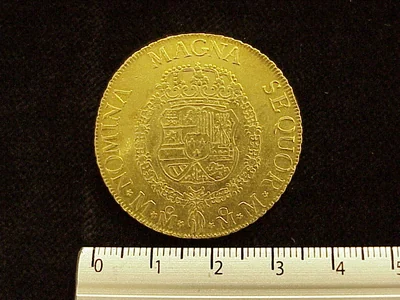
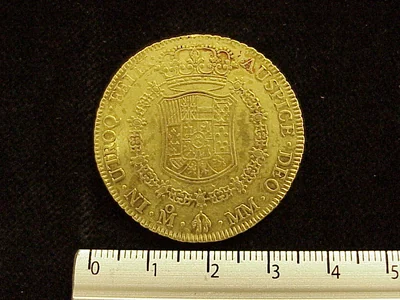
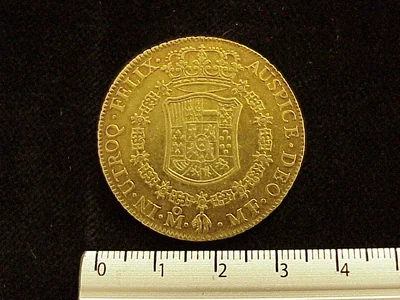
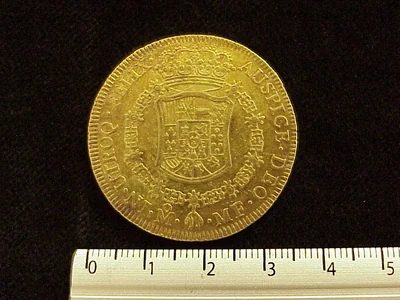
Third type; mature bust; no 8 S; overdate 4/2.
Third type; mature bust; no 8 S; overdate 4/2.
The 8 Escudos Carlos III 1764: Gold Coin Value is worth between $51,308 and $86,414 MXN depending on its grade of preservation.
Prices updated: August 2026
How much is the 8 Escudos Carlos III 1764: Gold Coin Value worth?
The estimated value of the 8 Escudos Carlos III 1764: Gold Coin Value ranges from $51,308 (circulated, XF) up to $86,414 (official blister pack), with $73,648 as a reference for an uncirculated (UNC) piece. The estimate is based on the official mintage and the historical behavior of the family.
The real price depends on four factors: the grade of preservation (a circulated piece is worth the low end of the range; an uncirculated one, or one still in its official blister pack, the high end), the finish (satin vs mirror/proof), the rarity within the series based on the mintage, and the metal spot price on the day of the deal when the piece is silver or gold. Check the value-by-grade table above and compare with equivalent pieces before buying or selling.
Where to buy or sell this coin?
Browse the national directory of numismatic shops or the community forum to trade directly with other collectors.
Description
If you inherited an 1764 8 Escudos of Carlos III, you are holding one of the most valuable gold coins of colonial Mexico. This is not a common piece worth a few dollars. Genuine examples in circulated condition already trade for several thousand dollars, and high-grade survivors have crossed into five figures at auction. The gold content alone sets a hard floor under its value.
Here is what it actually is, what drives the price, and how to check that yours is real before you sell.
What this coin is
The 8 Escudos was the highest gold denomination of Spanish colonial Mexico. Collectors and merchants of the era called it an "onza" (ounce). Struck at the Mexico City Mint (the Casa de Moneda de México, the oldest mint in the Americas), it carried the portrait and titles of King Carlos III, who reigned from 1759 to 1788. The 1764 date places it in the early years of his reign, during a monetary reform aimed at standardizing the weight and fineness of Spanish gold.
These large gold coins financed transatlantic and transpacific trade. They circulated far beyond Mexico, and that international reach is part of why they are so collected today.
Technical data (verify yours against this)
| Feature | Specification |
|---|---|
| Denomination | 8 Escudos ("onza") |
| Metal | Gold |
| Weight | 26.98 grams |
| Diameter | 35.91 mm |
| Edge | Chain pattern (laurel/chain, an anti-clipping device) |
| Mint | Mexico City (Casa de Moneda de México) |
| Ruler | Carlos III of Spain |
| Date | 1764 |
The chain edge is important. It was designed to make it obvious if someone shaved gold off the rim. On a genuine coin the edge design should be crisp and continuous. A smooth or filed edge is a warning sign.
What it is worth
With nearly 27 grams of gold, this coin has a substantial melt value on its own, which changes with the daily gold price. That is the absolute floor. In practice, no serious collector or dealer sells a genuine colonial 8 Escudos at melt, because the numismatic premium is far higher.
Value is driven by four things:
- Condition (grade). Original surfaces and sharp relief command the highest prices. A worn, cleaned, or polished coin drops sharply in value.
- Strike quality. Sharp die detail versus a weak or flat strike.
- Edge integrity. An intact chain edge matters. Filing or mounting damage kills the premium.
- No damage or manipulation. Solder marks (from being worn as jewelry), polishing, or repairs all reduce value.
As a general range, a genuine 1764 8 Escudos in a solid circulated grade trades in the low-to-mid thousands of dollars, and choice or high-grade examples reach well into five figures. Because condition swings the number so much, we do not quote a single fixed price: get the exact coin graded before assuming a value.
The catch: fakes are everywhere
Colonial gold is one of the most counterfeited areas in all of numismatics. High value plus centuries of history makes it a magnet for forgeries and modern replicas. Some fakes are cast, some are struck from false dies, and some are genuine coins that were cleaned, tooled, or mounted as jewelry and then "restored."
Do not send money to anyone who will not let you verify the piece first. Before you buy or sell, confirm the weight (26.98 g) and diameter (35.91 mm) exactly, inspect the chain edge, and check the mint mark and assayer initials for the correct style of the period.
How to check what yours is worth
- Weigh it on a jewelry scale and measure the diameter with calipers. Compare to the table above. A coin that is light or thin is a red flag.
- Examine the edge for the chain pattern and any signs of filing or mounting.
- Get it authenticated. For a coin at this value level, third-party grading by a recognized service (such as NGC or PCGS) is worth the cost. A graded, encapsulated coin sells for more and removes the buyer's doubt.
- Do not clean it. Cleaning colonial gold almost always lowers the value. Leave the surfaces alone.
Where to sell it
For a piece of this value, work with people who let you verify the coin in hand or through detailed photos. A verified numismatic shop from the Pesoteca directory can appraise it on the spot. The Pesoteca buy-and-sell forum connects you directly with collectors who know the series. Photograph the obverse, reverse, and edge, and check the value range on this page before you agree to any price. Avoid dumping a coin like this to the first bidder on social media.
Got one in a family collection? Post clear photos of both sides and the edge in the Pesoteca forum and let collectors weigh in before you sell.
Historical context
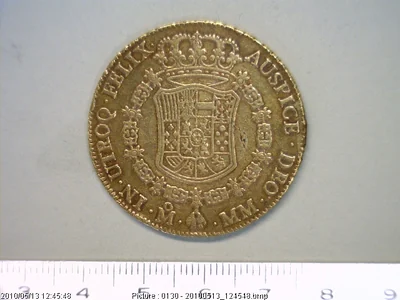
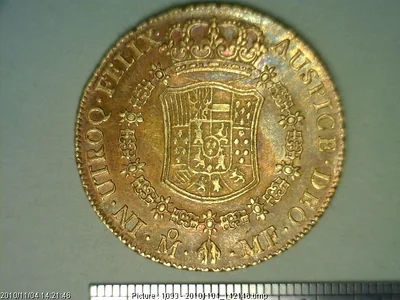
Eight escudos Carlos III, 1764, Mexico mint. The listing records the third type with a mature bust without the 8S mark and an overdate 4/2, a sign of restriking the last digit over the 2 of a 1762 die. The first full postwar year after the Treaty of Paris of 1763. Carlos III launched the program of Bourbon reforms that included the military strengthening of the Americas and the new ordinances of intendants that would arrive later. In New Spain the marquis of Cruillas remained as viceroy and the general inspection by the visitor Jose de Galvez was being organized, which would arrive officially in 1765. The ounce weighs 27.06 grams with a fineness of 0.916. Produced by mill press with a round planchet. The classic pillar reverse remained without significant changes. Krause groups 1764 within the sustained KM#155. The 4/2 overdate declared in the listing makes this piece a collectible technical variant. It is testimony to a year of quiet imperial reorganization that prepared the great Bourbon reforms of the following years in the richest viceroyalty of the crown.
This piece belongs to the era
Colonial / Virreinato →Explore all the Mexican coins of this era, their historical context and how they connect to the monetary system of the period.
Value range of this piece
Market estimate: $51,308 - $86,414 MXN depending on the grade of preservation (typical range between a circulated and an uncirculated piece).
See the full breakdown by grade (VG, F, VF, EF, AU, MS-60, MS-63, MS-65) for the whole series →
Same denomination, other years
8 escudos Oro 0.875 (21k) · 8 Escudos Carlos III
Frequently asked questions
How much is an 8 Escudos Carlos III 1764 worth?
It contains 26.98 grams of gold, which sets a hard melt-value floor that rises and falls with the gold price. Genuine examples sell well above melt: a solid circulated coin trades in the low-to-mid thousands of dollars, and choice high-grade pieces reach into five figures. Condition, strike, and edge integrity drive the exact number, so get the specific coin graded before assuming a value.
Is the 8 Escudos Carlos III 1764 rare?
It is a genuinely scarce and highly collected colonial gold coin, the highest gold denomination of the Spanish colonial system. Survivors exist, but demand from collectors keeps prices strong. Grade matters enormously: worn or damaged examples are far more available than sharp, original-surface coins, which are the ones that command top money.
How can I tell if my 8 Escudos Carlos III 1764 is genuine?
Weigh it (26.98 g) on a jewelry scale and measure the diameter (35.91 mm) with calipers, then compare to the technical data above. Inspect the chain edge, which should be crisp and continuous, and check the mint mark and assayer initials for the correct period style. Colonial gold is heavily counterfeited, so for a coin at this value, professional authentication (NGC or PCGS) is strongly recommended. Be suspicious of any offer far below the metal value.
Where can I sell an 8 Escudos Carlos III 1764?
Use a [verified numismatic shop from the Pesoteca directory](/tiendas), which can appraise and pay on the spot, or the [Pesoteca buy-and-sell forum](/foro/compra-venta) to reach collectors directly. Photograph the obverse, reverse, and edge, and get the coin authenticated first since fakes are common. Avoid selling to the first bidder on social media.
Conversation
0 comments
Loading comments…