
8 Escudos Carlos III 1763: Gold Coin Value
The 8 Escudos Carlos III 1763: Gold Coin Value is worth between $51,270 and $86,350 MXN depending on its grade of preservation.
Prices updated: August 2026
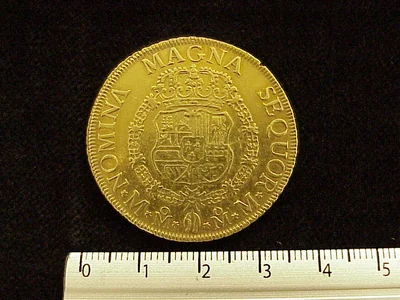
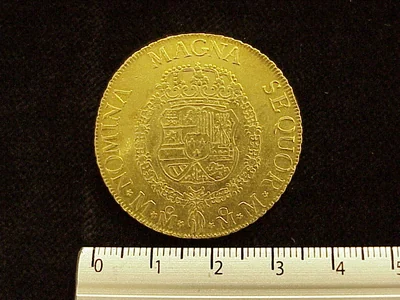
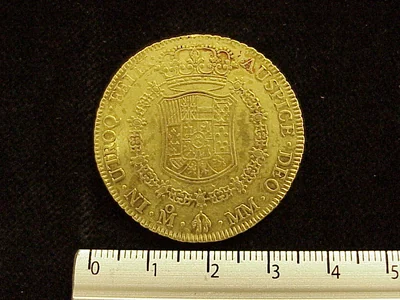
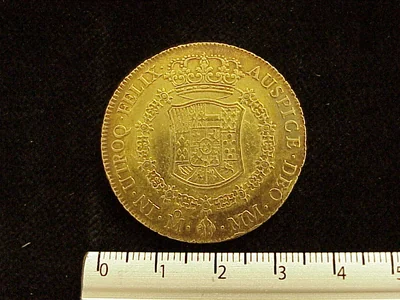
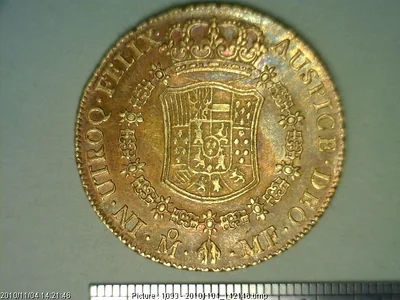
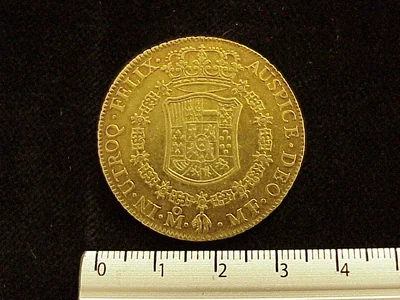
Third type; large bust.
Third type; large bust.
The 8 Escudos Carlos III 1763: Gold Coin Value is worth between $51,270 and $86,350 MXN depending on its grade of preservation.
Prices updated: August 2026
How much is the 8 Escudos Carlos III 1763: Gold Coin Value worth?
The estimated value of the 8 Escudos Carlos III 1763: Gold Coin Value ranges from $51,270 (circulated, XF) up to $86,350 (official blister pack), with $73,594 as a reference for an uncirculated (UNC) piece. The estimate is based on the official mintage and the historical behavior of the family.
The real price depends on four factors: the grade of preservation (a circulated piece is worth the low end of the range; an uncirculated one, or one still in its official blister pack, the high end), the finish (satin vs mirror/proof), the rarity within the series based on the mintage, and the metal spot price on the day of the deal when the piece is silver or gold. Check the value-by-grade table above and compare with equivalent pieces before buying or selling.
Where to buy or sell this coin?
Browse the national directory of numismatic shops or the community forum to trade directly with other collectors.
Description
If you inherited an old Spanish colonial gold coin dated 1763 with a king's bust and the words "CAROLUS III," you may be holding a Mexico 8 Escudos. The floor value is real money: it contains about 0.76 troy ounces of gold, so even a worn example is worth well over 1,600 USD in melt at current gold prices. Sharp, problem-free examples sell for several thousand USD, and top-grade certified pieces reach five figures.
This is not a coin that trades for a few dollars. It is one of the genuinely valuable pieces people find in a family collection, both for its gold content and its history. Below is what it is, what drives the number, and how to check yours before you sell.
What this coin actually is
The 8 Escudos was the largest gold denomination in the Spanish colonial system, struck at the Casa de Moneda de México (the Mexico City Mint). Collectors and dealers often call it an "onza" (Spanish for ounce), because it holds close to a full ounce of gold. It circulated worldwide as a trusted gold coin for large payments and international trade.
The 1763 date falls early in the reign of Carlos III (Charles III of Spain), who took the throne in 1759. Your coin shows his laureate bust, the "bust type" introduced in the first years of his reign.
Technical facts (verify yours against these)
| Feature | Specification |
|---|---|
| Denomination | 8 Escudos |
| Year | 1763 |
| Mint | Mexico City (Casa de Moneda de México) |
| Metal | Gold |
| Weight | 26.96 grams |
| Diameter | 35.57 mm |
| Edge | Chain-pattern (canto en cadena) |
| Ruler | Carlos III (Charles III) |
The chain-pattern edge is a signature of this period. A complete, undamaged chain edge is one of the first things a buyer looks for. If the edge is smooth, filed, or shows a mount removal, that hurts value badly and can signal a problem coin.
What it's worth in 2026
There are two floors and one ceiling to understand.
The gold floor. At 26.96 grams of gold at roughly .901 fineness, the coin holds about 0.76 troy ounces of pure gold. That means the raw metal alone is worth well over 1,600 USD at recent gold prices, and it moves with the gold market. No genuine example of this coin is worth less than its melt value. If someone offers you far below that, walk away.
The collector premium. Because it is a genuine 18th-century Mexican gold coin, most examples trade above melt. A worn but honest coin typically brings a modest premium over its gold. A coin with a clear bust, sharp legends, original surfaces, and a full chain edge can bring several thousand USD. Certified high-grade examples (graded by NGC or PCGS) reach the five-figure range at major auctions.
What moves the number:
- Grade and wear. Sharpness of the bust and the legends is everything. Heavy wear pushes you back toward melt value.
- Original surfaces. Cleaning, polishing, or harsh dips lower the price. Buyers pay for original, undisturbed gold.
- Edge integrity. A complete chain edge matters. Mount marks, filing, or edge damage cut deep.
- Certification. A coin in an NGC or PCGS holder with a stated grade sells for more and faster than a raw coin, because the buyer trusts it.
The myth to avoid
A common belief is that any old Spanish colonial gold coin is automatically worth a fortune in the tens of thousands. Not true across the board. A heavily worn, cleaned, or mount-damaged 8 Escudos may only bring a modest premium over its gold value. The record-level prices belong to sharp, original, certified pieces. Condition, not just age, decides which category yours falls into.
The opposite myth is worse: assuming an old dark coin is "just junk." This one is not junk. It is close to a full ounce of gold. Do not sell it to a general pawn shop that only pays scrap.
How to check what yours is worth
- Weigh and measure it. Use a jewelry scale and a caliper. Compare to the table above: 26.96 g and 35.57 mm. A genuine coin should be close. A coin that weighs noticeably less may be worn, damaged, or fake.
- Examine the edge. Look for the chain pattern. Check for filing or a repaired mount.
- Look at the strike. Study the bust, the legends, the mint mark, and the assayer initials. Colonial gold is heavily counterfeited, so style and detail matter. When in doubt, get it authenticated.
- Photograph obverse, reverse, and edge in good light before you approach any buyer.
For authenticity and grade, the safest route is submission to a recognized grading service (NGC or PCGS) or an appraisal from a dealer who specializes in colonial gold. Counterfeits of high-value colonial coins are common, and a wrong call costs thousands.
Where to sell it
Because this is a precious-metal coin, sell only where the piece is examined in person or through a trusted, verified channel. A reputable numismatic dealer will value it on the spot and pay a fair figure over melt. For a specialized colonial gold coin, an established coin dealer or a major auction house (Heritage, Stack's Bowers) will reach the collectors who pay the strongest prices. Avoid dumping it to the first Facebook offer or a scrap-gold buyer who ignores the numismatic premium.
You can also list it or ask for a read on your specific example in the Pesoteca community. Which mint mark and assayer letters are on yours, and what condition is the bust in? Post clear photos of the obverse, reverse, and edge in the Pesoteca forum and get honest feedback before you sell.
Historical context
Eight escudos Carlos III, 1763, Mexico Mint. The listing records the third type with large bust. Year of the Treaty of Paris that ended the Seven Years' War: Spain returned Havana and Manila in exchange for ceding Florida to England and receiving from France the Spanish Louisiana. It was a far-reaching territorial reorganization in North America that dramatically expanded the frontier of New Spain. In New Spain the Marquis of Cruillas continued as viceroy in the middle stretch of his government. The onza weighs a theoretical 27.06 grams at 0.916 fineness. Produced by mill with a standardized round planchet. The pillar reverse was maintained with the crowned Pillars of Hercules and PLVS VLTRA, iconography that had been in force for thirty years since the reform of 1732. Krause references KM#155 for 1763. The assayer's signature appears in the field as the workshop's mark. Pieces from 1763 are material testimony of the imperial turning point that marks the end of the pre-Westphalian Atlantic system and the beginning of the North American reordering that set the stage for U.S. Independence thirteen years later.
This piece belongs to the era
Colonial / Virreinato →Explore all the Mexican coins of this era, their historical context and how they connect to the monetary system of the period.
Value range of this piece
Market estimate: $51,270 - $86,350 MXN depending on the grade of preservation (typical range between a circulated and an uncirculated piece).
See the full breakdown by grade (VG, F, VF, EF, AU, MS-60, MS-63, MS-65) for the whole series →
Same denomination, other years
8 escudos Oro 0.875 (21k) · 8 Escudos Carlos III
Frequently asked questions
How much is a 1763 Carlos III 8 Escudos worth?
It contains about 0.76 troy ounces of gold, so its floor value is well over 1,600 USD in melt at recent gold prices, and no genuine example is worth less than that. A sharp, original coin with a full chain edge brings several thousand USD, and certified high-grade pieces reach five figures at major auctions. Grade and original surfaces decide where yours lands.
Is the 1763 Carlos III 8 Escudos rare?
It is a genuinely collectible 18th-century Mexican gold coin, not a common piece, but its main value driver is condition rather than pure scarcity. Worn, cleaned, or mount-damaged examples are far more common and trade closer to melt. Sharp, original, certified coins are the ones that command premium prices.
Where can I sell a 1763 Carlos III 8 Escudos?
Sell through a reputable numismatic dealer who examines the coin in person and values it on the spot, or a major auction house like Heritage or Stack's Bowers that reaches collectors of colonial gold. For a read on your specific example, post clear photos of the obverse, reverse, and edge in the [Pesoteca forum](/foro). Never accept an offer below the gold value or dump it to a scrap-gold buyer.
How can I tell if my 1763 8 Escudos is genuine?
Weigh and measure it: a genuine coin is close to 26.96 grams and 35.57 mm. Check for the chain-pattern edge and look closely at the bust, legends, mint mark, and assayer initials, since colonial gold is heavily counterfeited. For certainty, submit it to NGC or PCGS or get a specialist dealer's appraisal. Be suspicious of any offer far below the gold value.
Conversation
0 comments
Loading comments…