
8 Escudos Carlos III 1760 (Gold Onza): Value & Prices
The 8 Escudos Carlos III 1760 : Value & Prices is worth between $51,365 and $86,510 MXN depending on its grade of preservation.
Prices updated: August 2026
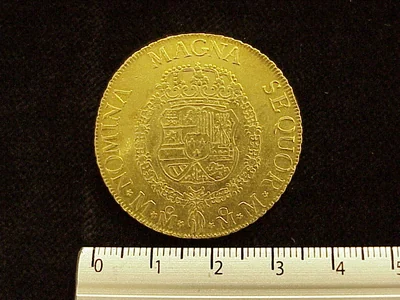
First type; young bust with bow below.
First type; young bust with bow below.
The 8 Escudos Carlos III 1760 : Value & Prices is worth between $51,365 and $86,510 MXN depending on its grade of preservation.
Prices updated: August 2026
How much is the 8 Escudos Carlos III 1760 (Gold Onza): Value & Prices worth?
The estimated value of the 8 Escudos Carlos III 1760 (Gold Onza): Value & Prices ranges from $51,365 (circulated, XF) up to $86,510 (official blister pack), with $73,730 as a reference for an uncirculated (UNC) piece. The estimate is based on the official mintage and the historical behavior of the family.
The real price depends on four factors: the grade of preservation (a circulated piece is worth the low end of the range; an uncirculated one, or one still in its official blister pack, the high end), the finish (satin vs mirror/proof), the rarity within the series based on the mintage, and the metal spot price on the day of the deal when the piece is silver or gold. Check the value-by-grade table above and compare with equivalent pieces before buying or selling.
Where to buy or sell this coin?
Browse the national directory of numismatic shops or the community forum to trade directly with other collectors.
Description
If you inherited an 1760 8 Escudos of Carlos III, you are holding a genuine gold coin, not a token or a novelty. It weighs 27.01 grams in gold, so even in worn condition it carries a hard floor of roughly 1,500 to 1,700 USD in melt value alone. A clean, authentic example can bring several thousand dollars, and rare varieties climb higher.
This is one of the most sought-after Spanish colonial gold coins struck in México, and in 2026 demand from both bullion buyers and serious collectors keeps prices firm. Here is what yours is actually worth and how to check it.
What this coin actually is
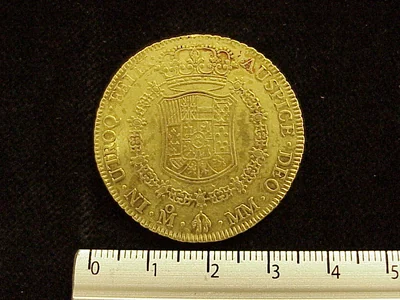
The 8 Escudos was the largest denomination of the Spanish colonial system, popularly called an onza (Spanish for "ounce") because of its gold content. This piece was struck at the Mexico City Mint (the ceca de México) in 1760, early in the reign of Carlos III of Spain. The letters MM on the coin are the assayer's initials, the mint official who certified the gold's fineness.
The 1760 date is the first type, showing a young bust of the king with a ribbon (moño) below. That young-bust detail matters for value, since it identifies the specific variety.
Technical data (verify yours against these)
| Feature | Specification |
|---|---|
| Metal | Gold |
| Weight | 27.01 g |
| Diameter | 36 mm |
| Edge | Chain (cadena) pattern |
| Mint | Mexico City |
| Assayer | MM |
| Catalog reference | KM#153 |
| Type | First type, young bust with ribbon below |
The gold content is the key number. At roughly 0.9 fineness, this coin contains close to three-quarters of a troy ounce of pure gold. That gold value sets the absolute minimum, no matter how worn the coin is.
What it is worth in 2026
Value splits into two layers: the gold floor and the collector premium.
- Melt value (the floor): With about 0.78 troy ounces of gold, the metal alone is worth roughly 1,500 to 1,700 USD depending on the spot gold price. No genuine example trades below this.
- Collector value: A circulated but honest example typically brings 2,000 to 3,500 USD. Higher grades, sharp detail, and problem-free surfaces push into the 4,000 to 8,000 USD range and beyond for exceptional pieces.
- Rare varieties and top grades: Scarce die combinations or mint-state survivors certified by NGC or PCGS can command five figures at auction.
Condition drives the premium more than age. Two 1760 8 Escudos can be worth 2,000 USD and 10,000 USD for the exact same date, purely on grade and eye appeal.
The honest caveat
We give ranges rather than a single price on purpose. Spanish colonial gold is a specialist market, and hammer prices swing with grade, provenance, and how many collectors are bidding that day. Anyone quoting you one exact figure sight-unseen is guessing.
Watch out for fakes
Colonial gold coins are heavily counterfeited, both period contemporary fakes and modern replicas. Before you buy or sell, do three checks:
- Weigh it. A jeweler's scale should read very close to 27.01 g. Underweight is a red flag.
- Measure it. The diameter should be 36 mm. Use calipers.
- Study the details. Check the engraving style, the mint mark, and the assayer initials against reference images. Cast copies look soft or grainy under magnification.
Be suspicious of any deal priced below the gold value. Nobody sells a genuine gold coin for less than its metal is worth. For any coin worth this much, third-party certification from NGC or PCGS grading removes the doubt entirely and raises resale value.
About "error" coins
Genuine mint errors (off-center strikes, die rotation, doubled strikes) can multiply a coin's value when verified. But most "errors" people spot on social media are post-mint damage: dings, corrosion, or cleaning, not factory mistakes. If you think you have a real error, post clear photos in the Pesoteca forum for the community to review before you assume it is worth a premium.
Where to sell it
Because this is precious metal, sell smart:
- A verified numismatic dealer from the Pesoteca directory will appraise it on the spot and can handle certified gold.
- The Pesoteca buy-and-sell forum connects you directly with collectors who understand what this coin is.
Photograph the front (anverso), back (reverso), and edge before you talk to anyone. Compare against the price range above so you know your floor. Do not dump it to the first buyer on a social feed, and never pay or sell without seeing the coin and its weight verified in person.
Have an 1760 8 Escudos in hand and want a read on the grade before you sell? Post your photos in the Pesoteca forum and let collectors help you pin down its value.
Historical context
Eight escudos of Carlos III, 1760, Mexico City mint. The record describes the piece as the first type with a young bust and a mint mark below. The first numismatic year of Carlos III in New Spain: he ascended the Spanish throne in August 1759 after the death of his brother Fernando VI. Having already governed Naples and Sicily since 1734, he brought Italian reformist experience, and his reign would drive the deepest Bourbon reforms of the 18th century in the Americas. In Mexico, Agustín de Ahumada y Villalón, Marquis of Las Amarillas, was governing, and he died in office in February of that same 1760. He was succeeded by Francisco Cajigal de la Vega as interim and then by Joaquín de Montserrat, Marquis of Cruillas, in October. A year of multiple political transitions. The ounce weighs 27.06 grams with 0.916 fineness. Krause KM#153 is the first pillar type of Carlos III at the capital mint. The young bust with mint mark appears on the obverse as the king's initial portrait, distinct from the mature busts that would be used in later years. The assayer's signature is in the reverse field, a tradition that would continue until the introduction of the royal bust in 1772.
This piece belongs to the era
Colonial / Virreinato →Explore all the Mexican coins of this era, their historical context and how they connect to the monetary system of the period.
Value range of this piece
Market estimate: $51,365 - $86,510 MXN depending on the grade of preservation (typical range between a circulated and an uncirculated piece).
See the full breakdown by grade (VG, F, VF, EF, AU, MS-60, MS-63, MS-65) for the whole series →
Same denomination, other years
8 escudos Oro 0.875 (21k) · 8 Escudos Carlos III
Frequently asked questions
How much is an 8 Escudos Carlos III 1760 worth?
It has a gold melt floor of roughly 1,500 to 1,700 USD. A circulated genuine example typically brings 2,000 to 3,500 USD, and high grades or rare varieties reach 4,000 to 8,000 USD or more. Condition drives value far more than age, so grading matters.
Is the 8 Escudos Carlos III 1760 rare?
It is a genuinely sought-after Spanish colonial gold coin, the largest denomination of the system. Circulated examples appear on the market, but high-grade survivors and scarce die varieties are rare and command strong premiums from collectors.
Where can I sell an 8 Escudos Carlos III 1760?
The safest options are a [verified dealer from the Pesoteca directory](/tiendas), who can appraise gold on the spot, or the [Pesoteca buy-and-sell forum](/foro/compra-venta) among collectors. Photograph the front, back, and edge, and check the price range in this listing before selling. Avoid dumping it to the first social-media buyer.
How can I tell if my 8 Escudos Carlos III 1760 is genuine?
Weigh it (should be about 27.01 g) and measure the diameter (36 mm) against the specs above. Examine the engraving style, mint mark, and MM assayer initials, since colonial gold is heavily faked. Be suspicious of any price below the gold's value, and certify high-value pieces with NGC or PCGS.
Conversation
0 comments
Loading comments…