
8 Escudos Carlos III 1762 Gold Coin: Value Guide
The 8 Escudos Carlos III 1762 Gold Coin: Value Guide is worth between $51,403 and $86,574 MXN depending on its grade of preservation.
Prices updated: August 2026
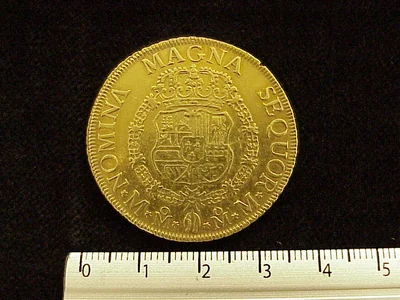
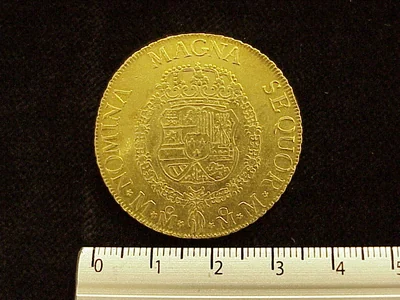
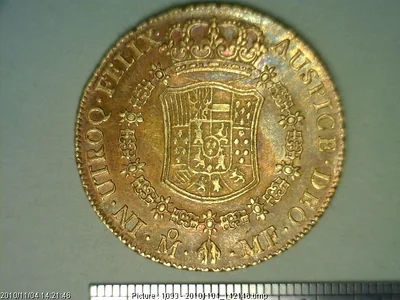
Third type; mature bust; no 8 S.
Third type; mature bust; no 8 S.
The 8 Escudos Carlos III 1762 Gold Coin: Value Guide is worth between $51,403 and $86,574 MXN depending on its grade of preservation.
Prices updated: August 2026
How much is the 8 Escudos Carlos III 1762 Gold Coin: Value Guide worth?
The estimated value of the 8 Escudos Carlos III 1762 Gold Coin: Value Guide ranges from $51,403 (circulated, XF) up to $86,574 (official blister pack), with $73,785 as a reference for an uncirculated (UNC) piece. The estimate is based on the official mintage and the historical behavior of the family.
The real price depends on four factors: the grade of preservation (a circulated piece is worth the low end of the range; an uncirculated one, or one still in its official blister pack, the high end), the finish (satin vs mirror/proof), the rarity within the series based on the mintage, and the metal spot price on the day of the deal when the piece is silver or gold. Check the value-by-grade table above and compare with equivalent pieces before buying or selling.
Where to buy or sell this coin?
Browse the national directory of numismatic shops or the community forum to trade directly with other collectors.
Description
If you inherited a heavy gold coin marked with a Spanish king and dated 1762, you have something with real money behind it. The 8 Escudos of Carlos III, minted in Mexico City, contains close to 0.79 troy ounces of gold. That alone puts its floor in the low thousands of dollars, before any collector premium. This is one of the few old Mexican coins where the common belief ("old coin equals fortune") is actually close to the truth.
Quick answer: what it's worth in 2026
As of 2026, a genuine 1762 Mexico City 8 Escudos of Carlos III is worth from roughly 2,000 USD for a worn, damaged, or lightly circulated example up to 8,000 to 15,000 USD or more for a sharp, high-grade coin certified by a major grading service. The gold content sets the floor; condition and authenticity set the ceiling. Cleaned, holed, or mounted pieces (many were worn as jewelry) drop toward melt value.
What you actually have
This is an 8 Escudos, the largest gold denomination of the Spanish colonial system. In Spanish it was popularly called an onza (ounce). It was struck under Carlos III (Charles III of Spain) at the Casa de Moneda de México, the Mexico City mint, which was the most important silver and gold mint in the Spanish Empire.
Key details, exactly as they appear on the piece:
- Metal: Gold
- Weight: 27.03 grams
- Diameter: 36 mm
- Edge: Chain pattern (a raised linked design running around the rim)
- Assayer initials: MM (the mint official who certified the metal's fineness)
- Catalog reference: KM#155
- Type: Third type, mature bust, without the "8 S" mark
The letters MM are the assayer's mark, not a mint mistake. Colonial coins were signed by the assayer responsible for the gold's purity, and this detail is one of the things authenticators check.
Value by condition
Grade drives most of the price above the gold floor. These figures reflect what genuine, certified examples bring at auction and through dealers.
| Condition | What it looks like | Approx. value (USD) |
|---|---|---|
| Damaged / mounted / cleaned | Holed, polished, or ex-jewelry | Near melt, ~1,800 to 2,500 |
| Circulated (VF) | Even wear, clear design | 2,500 to 4,500 |
| Extremely Fine (XF) | Light wear, strong detail | 4,500 to 8,000 |
| About Uncirculated / Mint State | Sharp, minimal to no wear | 8,000 to 15,000+ |
These are guidance ranges, not fixed quotes. A specific date, mint mark, and assayer combination can command more if it is scarce, and standout eye appeal pushes prices higher at major auctions. For a firm number you need the coin graded and seen in person.
The gold floor: why this coin can't be "worth nothing"
Unlike most old coins, this one has a hard minimum. At 27.03 grams of gold at roughly 0.875 to 0.917 fineness for the period, it holds close to 0.79 troy ounces of pure gold. That means its melt value alone runs into the low thousands of dollars at current gold prices. No genuine example is "just a few dollars." If someone offers you well below the metal value, walk away, and if someone offers you a suspiciously heavy discount to buy it fast, be skeptical of both the offer and your own coin's authenticity.
The myth to watch out for
Gold escudos are among the most faked colonial coins. Because the design is well known and the metal is valuable, counterfeits, casts, and modern restrikes circulate widely. A common trap: a coin that "looks right" but is underweight, oversized, or made of a gold-plated base metal. Another trap is treating post-mint damage as a valuable "error." Scratches, corrosion, and rim dings are damage, not mint errors, and they lower value. Genuine striking errors (off-center strikes, die rotation, doubling) do exist and can add value, but they are rare and must be verified.
How to check what yours is worth
- Weigh and measure it. Use a jewelry scale and calipers. It should weigh close to 27.03 grams and measure about 36 mm. A coin far off these numbers is almost certainly fake.
- Check the edge. The chain (linked) edge is a authentication point. A plain or reeded edge is a red flag for this type.
- Get it graded. For a coin in this value range, professional certification by NGC or PCGS is worth the cost. It confirms authenticity, assigns a grade, and makes selling far easier and safer.
- Photograph it clearly. Obverse, reverse, and edge, in good light, before you talk to any buyer.
Where to sell it
Because this is a precious-metal coin, sell only where you can verify value and get paid safely. A verified numismatic dealer from the Pesoteca directory can appraise it on the spot. For collector-to-collector sales, the Pesoteca buy-and-sell forum reaches people who actually know what this coin is. For high-grade certified examples, a major auction house often gets the best result. Whatever route you choose, confirm authenticity and weight before money changes hands, and don't dump it on the first social-media offer.
Have one sitting in a drawer or a jewelry box? Post clear photos of the obverse, reverse, and edge in the Pesoteca forum and let collectors help you confirm what you've got.
Historical context
Eight escudos Carlos III, 1762, Mexico City mint. The record describes the piece as third type with mature bust and without the 8S value mark on the reverse. The change to the mature bust between 1761 and 1762 documents the rapid iconographic shift of the obverse of Carlos III in New Spain. In August of that year the English took Havana as part of the Seven Years' War, and in October, Manila. Spain would lose Florida to the English the following year through the Treaty of Paris. It was the year of greatest territorial defeat of the reign. In New Spain the Marquis of Cruillas reinforced coastal defenses and organized the Junta de Puebla to raise resources. The ounce weighs 27.06 grams with .916 fineness. Krause records the change to KM#155 from 1762, distinguished from KM#153 by variation of the obverse die and the absence of the 8S value mark. Produced by mill (screw press) with a round planchet. The reverse maintains the classic pillar design. Pieces of 1762 are witnesses to the year of greatest Spanish military loss in the Seven Years' War.
This piece belongs to the era
Colonial / Virreinato →Explore all the Mexican coins of this era, their historical context and how they connect to the monetary system of the period.
Value range of this piece
Market estimate: $51,403 - $86,574 MXN depending on the grade of preservation (typical range between a circulated and an uncirculated piece).
See the full breakdown by grade (VG, F, VF, EF, AU, MS-60, MS-63, MS-65) for the whole series →
Same denomination, other years
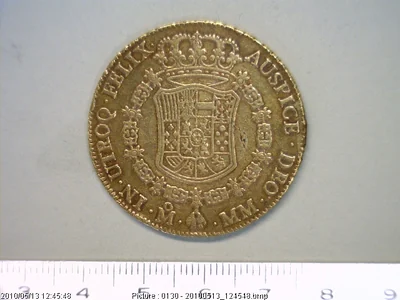
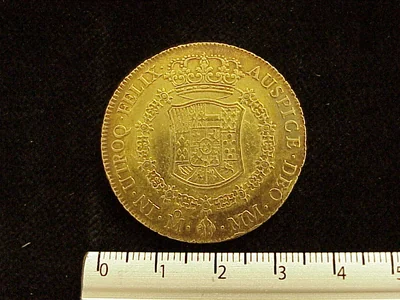
8 escudos Oro 0.875 (21k) · 8 Escudos Carlos III
Frequently asked questions
How much is an 8 Escudos Carlos III 1762 worth?
A genuine 1762 Carlos III 8 Escudos is worth from about 2,000 USD for a worn or damaged example up to 8,000 to 15,000 USD or more for a sharp, certified high-grade coin. It contains close to 0.79 troy ounces of gold, so its melt value alone sets a floor in the low thousands. Condition and authentication determine the premium above that.
Is the 8 Escudos Carlos III 1762 rare?
It is scarce and valuable, mainly because of its gold content and age. Colonial 8 Escudos were the largest gold denomination of the Spanish system, and surviving examples in high grade are genuinely hard to find since many were melted or worn as jewelry. Specific date, mint mark, and assayer combinations can be scarcer and worth more.
Where can I sell an 8 Escudos Carlos III 1762?
Sell through a [verified numismatic dealer in the Pesoteca directory](/tiendas), which can appraise it on the spot, or the [Pesoteca buy-and-sell forum](/foro/compra-venta) for collector-to-collector sales. For a certified high-grade coin, a major auction house often gets the best price. Photograph the obverse, reverse, and edge, and confirm the weight before selling. Avoid dumping it on the first social-media offer.
How can I tell if my 8 Escudos Carlos III 1762 is genuine?
Weigh and measure it: it should be close to 27.03 grams and about 36 mm, and the edge should show the chain (linked) pattern. Gold escudos are heavily counterfeited, so an underweight, oversized, or plain-edge coin is a red flag. For a coin in this value range, professional certification by NGC or PCGS is the safest confirmation. Be suspicious of any offer far below the metal value.
Conversation
0 comments
Loading comments…