
8 Escudos Carlos III 1761 Gold Coin: Value & Prices
The 8 Escudos Carlos III 1761 Gold Coin: Value & Prices is worth between $51,384 and $86,542 MXN depending on its grade of preservation.
Prices updated: August 2026
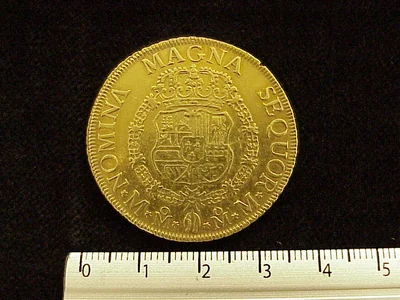
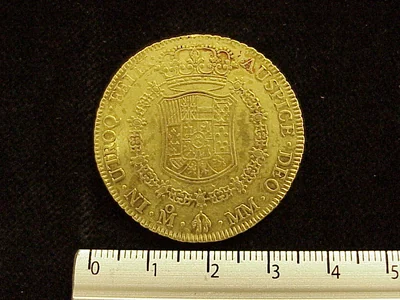
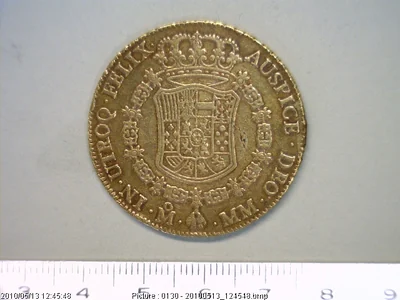
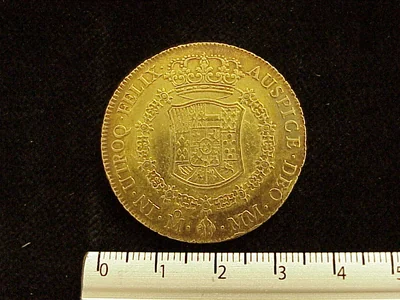
First type; overdate 1/0; young bust with bow.
First type; overdate 1/0; young bust with bow.
The 8 Escudos Carlos III 1761 Gold Coin: Value & Prices is worth between $51,384 and $86,542 MXN depending on its grade of preservation.
Prices updated: August 2026
How much is the 8 Escudos Carlos III 1761 Gold Coin: Value & Prices worth?
The estimated value of the 8 Escudos Carlos III 1761 Gold Coin: Value & Prices ranges from $51,384 (circulated, XF) up to $86,542 (official blister pack), with $73,757 as a reference for an uncirculated (UNC) piece. The estimate is based on the official mintage and the historical behavior of the family.
The real price depends on four factors: the grade of preservation (a circulated piece is worth the low end of the range; an uncirculated one, or one still in its official blister pack, the high end), the finish (satin vs mirror/proof), the rarity within the series based on the mintage, and the metal spot price on the day of the deal when the piece is silver or gold. Check the value-by-grade table above and compare with equivalent pieces before buying or selling.
Where to buy or sell this coin?
Browse the national directory of numismatic shops or the community forum to trade directly with other collectors.
Description
If you inherited an 8 Escudos gold coin dated 1761 with the bust of Carlos III, you have something with real money behind it. This is a large gold piece, not a common pocket coin. In 2026, its value runs from roughly 1,500 USD in worn condition to well over 20,000 USD for a sharp, high-grade example, driven by its gold content and genuine scarcity.
The short answer: this coin is worth money for two reasons at once. It contains almost an ounce of gold (a hard floor under its price), and it is a scarce colonial issue that collectors compete for. That combination is what separates it from the millions of common old coins worth a few dollars.
What you actually have
The 8 Escudos was the highest denomination of the Spanish colonial system, popularly called an "onza" (ounce). Yours was struck at the Mexico City Mint under Spanish rule, when that mint was the main gold and silver supplier of the empire.
| Feature | Detail |
|---|---|
| Denomination | 8 Escudos (gold "onza") |
| Date | 1761 |
| Mint | Mexico City |
| Assayer initials | MM |
| Metal | Gold |
| Weight | 27.02 g |
| Diameter | 36 mm |
| Edge | Chain (cadena) pattern |
| Catalog reference | KM#153 |
| Type | First type, young bust with bow ("busto joven con moño") |
| Notable variety | Overdate 1/0 (the 1 struck over a 0) |
The MM you see near the design is the assayer's mark, the mint official responsible for certifying the fineness of the metal. It is a normal part of the coin, not a defect.
What it is worth in USD
There is no single price. Value depends on wear (grade), whether it is genuine, and whether it carries the sought-after overdate variety.
| Condition | Approximate value (USD) |
|---|---|
| Heavily worn / damaged | 1,500 to 2,500 (near gold value) |
| Circulated, honest wear | 2,500 to 5,000 |
| Lightly worn, good detail | 5,000 to 10,000 |
| High grade / choice | 10,000 to 20,000+ |
Start with the metal. At 27.02 g of gold, this coin carries close to an ounce of precious metal, which puts a firm floor under it no matter how worn. Even a beaten example is worth well over 1,500 USD just for what it is made of. That is the safety net most old coins do not have.
Above that floor, the numbers climb fast for well-preserved pieces. Early Carlos III 8 Escudos from Mexico in strong grades regularly bring five figures at major auction houses like Heritage and Stack's Bowers. The 1761 date, as an early issue with the young bust, sits at the desirable end of the series.
The overdate matters
Your coin is the first type with the young bust and, importantly, the overdate 1/0 (the final digit was struck over a previous 0). Genuine, verifiable die varieties like this can lift the price above a plain example. Do not confuse this with post-mint damage. A real overdate shows the underlying digit clearly under magnification. If you think you have it, get it confirmed before assuming a premium.
The myth to ignore
"Old Spanish gold coin" triggers fantasies of six-figure treasure. For this piece, that is not the reality. It is valuable, but its price is anchored by gold weight and collector demand, not by age alone. Age does not create value; scarcity, grade and metal do. A worn 1761 8 Escudos is worth thousands, not a fortune, and that is already far better than almost every coin people inherit.
The bigger risk here is the opposite of the myth: this is exactly the kind of high-value coin that gets faked. Cast copies, gold-plated fakes and modern replicas of colonial 8 Escudos are common because the payoff for a counterfeiter is real.
How to tell if yours is genuine
- Weigh it. Use a jewelry scale. A real one should be very close to 27.02 g. A light coin is a red flag.
- Measure it. Diameter should be about 36 mm. Check the chain-pattern edge; many fakes get the edge wrong.
- Study the engraving. Look at the bust, the mint mark and the assayer initials MM under magnification. Cast fakes look soft, bubbly or fuzzy compared to genuine struck detail.
- Distrust cheap offers. Any deal priced below the coin's gold value is almost certainly a fake or a scam.
For a coin at this value, professional third-party grading is worth it. NGC and PCGS authenticate and grade colonial gold, and a certified 8 Escudos sells for far more, and far more safely, than a raw one.
Where to sell it
Do not dump a gold coin like this on Facebook to the first offer. Your best routes:
- A verified numismatic shop from the Pesoteca directory, which can value it in person on the spot.
- The Pesoteca buy-and-sell forum, where collectors who understand colonial gold actually compete for it.
- A major auction house (Heritage, Stack's Bowers) for high-grade or certified examples, where world-market bidders drive the price up.
Before you sell, photograph the obverse, reverse and edge clearly, confirm the weight, and compare against the range above. If you are unsure about the grade or the overdate, post it in the Pesoteca forum and let the community weigh in before you accept any offer.
Inherited a full box, not just this one? A 1761 8 Escudos might be the standout, but what else is hiding in there, and do you know which pieces are silver versus gold? Bring your photos to the forum and let's find out what your collection is really worth.
Historical context
Eight escudos Carlos III, 1761, Mexico mint. The record describes the piece as the first type with the overdate 1/0 and a young bust with a bun. The overdate 1/0 indicates a re-striking of the last digit over the zero of the 1760 die, a documented practice of the capital workshop to save dies. That year, Carlos III signed the Third Family Pact with France and entered the Seven Years' War against England. Spain would temporarily lose Havana and Manila the following year. In New Spain, Joaquín de Montserrat, Marquis of Cruillas, governed as viceroy from October 1760 until 1766. His administration had to reinforce New Spain's defenses against the risk of an English invasion. The ounce weighs 27.06 grams with 0.916 fineness. Krause keeps KM#153 for 1761. Produced by mill with a round planchet. The classic pillar reverse with crowned Pillars of Hercules and PLVS VLTRA. Pieces of this year carry symbolic weight: they are testimony to the start of the transatlantic war that would reorganize the American colonial map in 1763. The overdate 1/0 adds collectible technical rarity to the piece.
This piece belongs to the era
Colonial / Virreinato →Explore all the Mexican coins of this era, their historical context and how they connect to the monetary system of the period.
Value range of this piece
Market estimate: $51,384 - $86,542 MXN depending on the grade of preservation (typical range between a circulated and an uncirculated piece).
See the full breakdown by grade (VG, F, VF, EF, AU, MS-60, MS-63, MS-65) for the whole series →
Same denomination, other years
8 escudos Oro 0.875 (21k) · 8 Escudos Carlos III
Frequently asked questions
How much is an 8 Escudos Carlos III 1761 worth?
In {{AÑO}}, expect roughly 1,500 to 2,500 USD for a worn or damaged example (near its gold value), 2,500 to 5,000 USD for honest circulated pieces, and 10,000 to 20,000 USD or more for high-grade coins. The coin contains 27.02 g of gold, which sets a firm price floor no matter the condition.
Is the 1761 8 Escudos gold coin rare?
Yes, it is genuinely scarce. It was the highest denomination of the Spanish colonial system, struck at the Mexico City Mint, and early Carlos III issues survive in far smaller numbers than common silver coins. The 1761 first type with the young bust and the 1/0 overdate is at the desirable end of the series, which supports strong collector demand.
Where can I sell an 8 Escudos Carlos III 1761?
Use a [verified numismatic shop from the Pesoteca directory](/tiendas) for an in-person valuation, the [Pesoteca buy-and-sell forum](/foro/compra-venta) to reach collectors, or a major auction house like Heritage or Stack's Bowers for high-grade or certified coins. Photograph the obverse, reverse and edge, confirm the weight, and never accept an offer below the coin's gold value.
How do I know if my 8 Escudos Carlos III 1761 is genuine?
Weigh it (should be about 27.02 g) and measure it (about 36 mm) with a jewelry scale and caliper. Inspect the bust, the Mexico mint mark, the assayer initials MM and the chain-pattern edge under magnification; cast fakes look soft or bubbly. Because this is high-value gold, counterfeits are common, so professional authentication by NGC or PCGS is strongly recommended before you buy or sell.
Conversation
0 comments
Loading comments…