
8 Escudos Gold Coin, Carlos IV 1793 (Mexico City Mint)
The 8 Escudos Gold Coin, Carlos IV 1793 is worth between $51,384 and $86,542 MXN depending on its grade of preservation.
Prices updated: August 2026
Viceroyalty · Mexico City Mint · Assayer FM
Viceroyalty · Mexico City Mint · Assayer FM
The 8 Escudos Gold Coin, Carlos IV 1793 is worth between $51,384 and $86,542 MXN depending on its grade of preservation.
Prices updated: August 2026
How much is the 8 Escudos Gold Coin, Carlos IV 1793 (Mexico City Mint) worth?
The estimated value of the 8 Escudos Gold Coin, Carlos IV 1793 (Mexico City Mint) ranges from $51,384 (circulated, XF) up to $86,542 (official blister pack), with $73,757 as a reference for an uncirculated (UNC) piece. The estimate is based on the official mintage and the historical behavior of the family.
The real price depends on four factors: the grade of preservation (a circulated piece is worth the low end of the range; an uncirculated one, or one still in its official blister pack, the high end), the finish (satin vs mirror/proof), the rarity within the series based on the mintage, and the metal spot price on the day of the deal when the piece is silver or gold. Check the value-by-grade table above and compare with equivalent pieces before buying or selling.
Where to buy or sell this coin?
Browse the national directory of numismatic shops or the community forum to trade directly with other collectors.
Description
If you inherited a large gold coin with a bust and "CAROL IIII" on it dated 1793, you are holding real money. A Mexico City 8 Escudos in Carlos IV's name contains 0.7614 troy ounces of gold, so even the most worn example has a floor of roughly USD 2,000 to 2,300 at current bullion prices. Nicer examples sell for several thousand, and top certified pieces can bring five figures.
This is the largest gold denomination struck under Spanish colonial rule in Mexico, and in 2026 it remains one of the most sought-after coins from the period. Here is what drives the number.
What you actually have
The 8 Escudos was the highest gold denomination of the viceregal monetary system, often called the "gold onza" (ounce). It was used in wholesale trade and large transactions, not everyday purchases. The specifications are fixed and easy to verify:
- Weight: 27.02 grams
- Fineness: 0.875 gold (21 karat)
- Actual gold content: about 0.7614 troy ounces
- Diameter: 36.52 mm
- Edge: diagonally reeded
- Mint: Mexico City (Casa de Moneda de México)
- Assayer mark: FM
- Catalog reference: KM#159
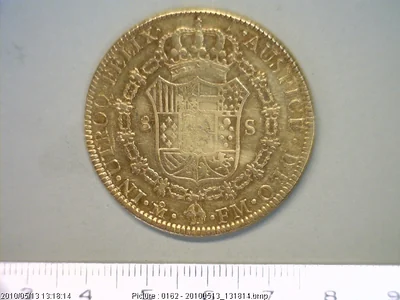
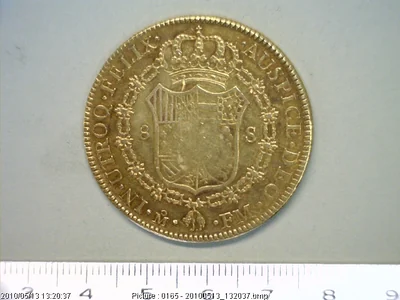
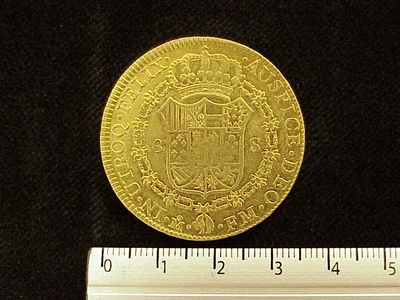
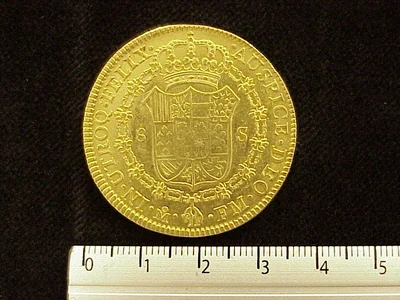
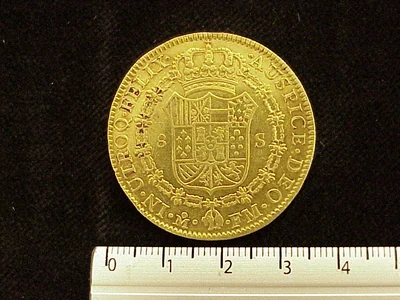
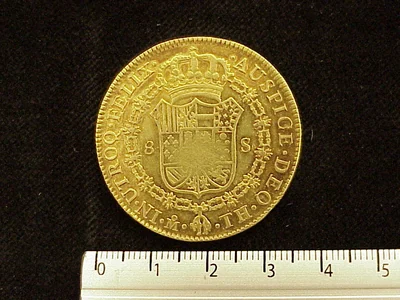
The front (obverse) shows the bust of Carlos IV, king of Spain. The back (reverse) shows the crowned Spanish royal arms. Note a common quirk: coins from the very start of his reign were struck with the earlier "CAROL III" or a transitional bust before the dies caught up, so early Carlos IV pieces have well-documented portrait varieties that specialists track.
What it's worth in USD
A colonial 8 Escudos has two layers of value: the gold it contains (its floor) and its numismatic premium (grade, eye appeal, and how scarce the exact date and mint are). The gold floor moves with the market. At a gold price near USD 2,700 per ounce, the metal alone is worth roughly USD 2,050.
| Condition | Typical value range (USD) | Notes |
|---|---|---|
| Heavily worn / damaged | ~2,000 to 2,300 | Trades near melt value |
| Circulated, problem-free | ~2,500 to 4,000 | Most surviving examples land here |
| About Uncirculated | ~4,000 to 7,000 | Sharp detail, minimal wear |
| Mint State, certified | 8,000 to 15,000+ | High-grade NGC/PCGS pieces |
These are ranges, not guarantees. The gold portion is real and liquid; the numismatic premium depends on demand and on getting the coin graded. A raw (ungraded) coin almost always sells for less than the same coin in a sealed NGC or PCGS holder, because buyers pay for certainty of grade and authenticity.
The myth to ignore
Because these coins are old and made of gold, sellers sometimes tag them at wild numbers. Age alone does not make a coin worth a fortune. What moves an 8 Escudos above its melt value is grade, verified authenticity, and specific date/mint/assayer combinations that collectors chase. A common-date, well-worn example is worth its gold plus a modest premium, not a museum price. Be skeptical of any listing claiming a routine 1793 8 Escudos is worth tens of thousands without a certified high grade behind it.
How to tell if yours is genuine
Gold fakes are common, and weight usually gives them away. A real piece weighs 27.02 grams and measures 36.52 mm. Counterfeits, many coming out of China, are typically struck in lower-purity metal or the wrong alloy, so they come out underweight or the wrong diameter. Steps to check yourself:
- Weigh it on a jewelry scale. Anything meaningfully off from 27.02 g is a red flag.
- Measure the diameter (36.52 mm) and check the edge for diagonal reeding.
- Look at the detail. Cast fakes show soft, mushy lettering and seam lines on the edge.
- Get it authenticated if it passes those checks. For a coin worth thousands, NGC or PCGS certification is the only definitive answer, and it raises resale value at the same time.
If you are unsure, do not clean the coin. Cleaning gold coins leaves hairline scratches that grading services penalize, and it can knock hundreds off the value.
Where to sell it
Because the metal value alone is significant, sell only where the buyer inspects the coin and its weight in front of you or on clear photos (obverse, reverse, and edge). Your best options:
- A reputable coin dealer or numismatic shop. You can find vetted shops in the Pesoteca dealer directory, searchable by city, without a middleman markup.
- Collector-to-collector through the Pesoteca buy/sell forum, where people who know the series set fair prices.
- Major auction houses (Heritage, Stack's Bowers) if the coin is high grade and certified. Their colonial gold sales reach the buyers who pay the strongest premiums.
Avoid dumping a gold coin to the first Facebook offer, and treat online marketplaces with caution: that is where the most counterfeits circulate. Always share photos of the edge and the exact weight before agreeing to anything.
Got a large gold coin from an inheritance and not sure what it is? Post clear photos of both sides and the edge in the Pesoteca forum and the community will help you identify the date, mint, and whether it's worth grading.
Historical context
Eight escudos Carlos IV, 1793, Mexico mint, assayer FM, Krause KM#159. The year in which Spain entered the War of the Convention against revolutionary France after the execution of Louis XVI in January. The conflict militarized the Pyrenees frontier and New Spain had to contribute financial resources to the crown. In Mexico the government of the second count of Revillagigedo was ending; he would close his viceroyalty in July 1794. His administration left demographic censuses, regulations of urban policing and sanitation in Mexico City, and the consolidation of the Royal Tribunal of Mining. The ounce weighs 27.06 grams with a fineness of 0.875. Produced by mill with a round planchet. The FM signature of the assayers continues in the field. Pieces of 1793 are testimony to the last phase of the New Spain Enlightenment cycle before the political decline of the reign of Carlos IV.
This piece belongs to the era
Colonial / Virreinato →Explore all the Mexican coins of this era, their historical context and how they connect to the monetary system of the period.
Value range of this piece
Market estimate: $51,384 - $86,542 MXN depending on the grade of preservation (typical range between a circulated and an uncirculated piece).
See the full breakdown by grade (VG, F, VF, EF, AU, MS-60, MS-63, MS-65) for the whole series →
Same denomination, other years
8 escudos Oro 0.875 (21k) · Escudos Coloniales (oro)
Frequently asked questions
How much is an 1793 Carlos IV 8 Escudos worth?
It has a gold floor of roughly USD 2,000 to 2,300 even when heavily worn, because it contains about 0.76 troy ounces of gold. Problem-free circulated examples run about USD 2,500 to 4,000, and high-grade certified pieces can reach USD 8,000 to 15,000 or more. Grade and NGC/PCGS certification make the biggest difference in price.
Is the 8 Escudos Carlos IV a rare coin?
The 8 Escudos was the largest colonial gold denomination and survivors exist, but nice, high-grade examples are genuinely scarce and command strong premiums. Common worn pieces trade close to their gold value. Rarity within the series depends on the exact date, mint, and assayer combination, so getting yours attributed is worth doing before you sell.
How can I tell if my 8 Escudos is genuine?
Weigh it (27.02 grams) and measure it (36.52 mm diameter) with diagonal reeding on the edge. Counterfeits are usually underweight or made of lower-purity metal, so weight gives them away. Cast fakes show soft lettering and edge seams. For a coin worth thousands, NGC or PCGS certification is the only definitive proof of authenticity.
Where can I sell a Carlos IV 8 Escudos?
Sell through a reputable coin dealer (see the [Pesoteca dealer directory](/tiendas)), the [Pesoteca buy/sell forum](/foro/compra-venta), or a major auction house like Heritage or Stack's Bowers if it is high grade. Because it is a gold coin, only deal with buyers who inspect the piece and its weight, and always show photos of both sides and the edge.
Conversation
0 comments
Sources
Images for informational and educational purposes, attributed to their original source. Reference values; the real price depends on the grade, the specific variant and demand.
Loading comments…