
8 Escudos Carlos IV 1790 Gold Coin: Value & How to Sell
The 8 Escudos Carlos IV 1790 Gold Coin: Value & How to Sell is worth between $51,365 and $86,510 MXN depending on its grade of preservation.
Prices updated: August 2026
Viceroyalty · Mexico City Mint · Assayer FM
Viceroyalty · Mexico City Mint · Assayer FM
The 8 Escudos Carlos IV 1790 Gold Coin: Value & How to Sell is worth between $51,365 and $86,510 MXN depending on its grade of preservation.
Prices updated: August 2026
How much is the 8 Escudos Carlos IV 1790 Gold Coin: Value & How to Sell worth?
The estimated value of the 8 Escudos Carlos IV 1790 Gold Coin: Value & How to Sell ranges from $51,365 (circulated, XF) up to $86,510 (official blister pack), with $73,730 as a reference for an uncirculated (UNC) piece. The estimate is based on the official mintage and the historical behavior of the family.
The real price depends on four factors: the grade of preservation (a circulated piece is worth the low end of the range; an uncirculated one, or one still in its official blister pack, the high end), the finish (satin vs mirror/proof), the rarity within the series based on the mintage, and the metal spot price on the day of the deal when the piece is silver or gold. Check the value-by-grade table above and compare with equivalent pieces before buying or selling.
Where to buy or sell this coin?
Browse the national directory of numismatic shops or the community forum to trade directly with other collectors.
Description
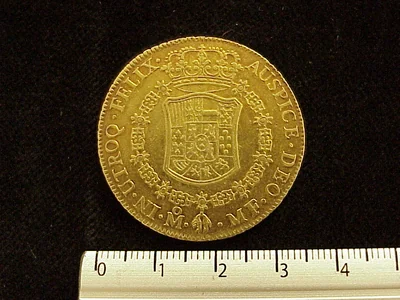
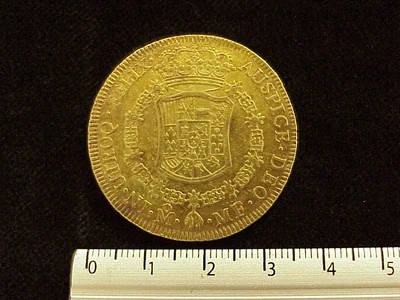
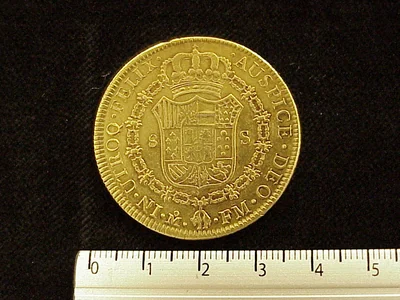
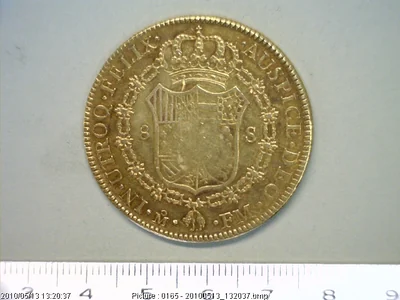
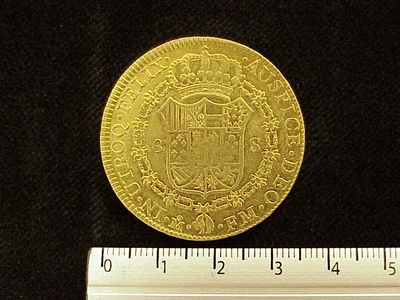
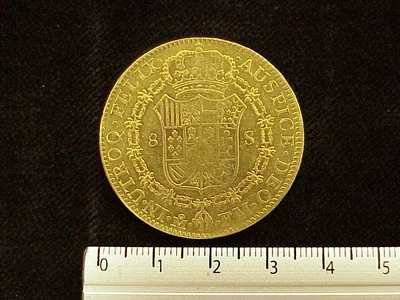
If you inherited an 8 Escudos gold coin dated 1790 with the bust of Carlos IV, you have a genuine gold piece, not a novelty. This is one of the largest gold denominations struck in colonial Mexico, and even a well-worn example is worth several thousand US dollars because of its gold content alone. High-grade certified examples go much higher.
What this coin actually is
The 8 Escudos was the top gold coin of the Spanish colonial system, minted in Mexico City (then the viceroyalty of New Spain) under King Carlos IV of the Bourbon dynasty. Collectors and dealers often call the 8 Escudos a "doubloon." The 1790 issue carries the assayer mark FM.
The hard specs, which matter for both value and authentication:
- Metal: gold, .875 fine (21 karat)
- Weight: 27.01 grams
- Diameter: 37 mm
- Edge: diagonally reeded
- Mint: Casa de Moneda de México (Mexico City), assayer FM
- Year: 1790, first year of the Carlos IV type
That gold weight is the key number. At 27.01 grams of .875 gold, the coin holds roughly 0.76 troy ounces of pure gold. Whatever the numismatic premium, the melt value sets a hard floor under the price. It cannot be worth less than its gold.
How much is it worth in USD
There are two ways to value this coin, and both matter.
Floor (gold content): with about 0.76 troy ounces of pure gold, the melt value tracks the international gold spot price. At recent gold levels that alone is several thousand US dollars. Check the current spot price and multiply by 0.76 to see the metal floor on any given day in 2026.
Numismatic value: above the melt floor, condition and eye appeal drive everything. A circulated, worn example trades close to melt plus a modest premium. A sharp, uncirculated coin, especially one certified by NGC or PCGS in Mint State, commands a strong premium over melt.
| Grade / condition | Approximate value (USD) |
|---|---|
| Heavily worn, cleaned or damaged | Near gold melt (several thousand) |
| Circulated, honest wear | Melt plus modest premium |
| Extremely Fine (XF) | Solid premium over melt |
| Uncirculated / Mint State, certified | Well above melt, into five figures for top grades |
The reason we give ranges instead of one exact figure: gold coins move with the daily spot price, and grade swings the premium dramatically. The 1790 date is the first year of the Carlos IV portrait type, which adds interest for type collectors, but this is fundamentally a gold-driven coin.
Is it rare?
Carlos IV 8 Escudos coins from Mexico City exist across multiple years (1789 through 1808), so this is not a unique piece. The 1790 first-year date and the FM assayer combination are collectible, but survival numbers depend heavily on condition. Worn examples are available. Genuinely high-grade, original-surface coins are the scarce part, and that scarcity is where the money is.
Do not assume "1790" alone makes it a fortune. Age is not rarity. What lifts one of these coins above gold value is grade, original surfaces, and certification, not the date on its own.
How to tell if yours is genuine
Gold coins of this value attract counterfeits, and the specs are your first defense.
- Weigh it. A real 1790 8 Escudos weighs 27.01 grams. Use a scale accurate to 0.01 grams. Fakes, often lower-purity gold or gold-plated base metal from overseas, almost always miss the weight.
- Measure it. 37 mm diameter. Off dimensions are a red flag.
- Check the edge. It should show diagonal reeding. A smooth or wrong edge points to a cast copy.
- Get it certified. For a coin at this value, do not rely on eyeballing. Submit it to NGC or PCGS for grading and authentication. Certification is the definitive insurance and it also raises what buyers will pay.
If your coin is off on weight or diameter, stop there. No amount of nice detail makes up for wrong specs on a gold coin.
Where to sell it
Because this is a precious-metal coin worth thousands, sell it where the buyer can prove the price and you can prove the coin:
- Certified auction houses and established dealers. For a genuine, high-grade 8 Escudos, a specialist auction reaches the collectors who pay the most. Heritage Auctions and Stack's Bowers both handle Mexican colonial gold regularly.
- Verified numismatic shops. A reputable dealer will weigh and appraise it on the spot. Browse the Pesoteca shop directory to find one.
- Collector marketplaces. The Pesoteca buy/sell forum connects you with collectors of Mexican gold. Always show clear photos of the obverse, reverse, and edge, plus the weight.
Avoid dumping it on a general online marketplace at the first offer. Get it graded first if it looks uncirculated; the certification fee is small next to the premium a Mint State example earns.
This piece belongs to the Colonial Escudos gold series from the Colonial / Viceroyalty era. You can also browse other 8 Escudos coins and more coins dated 1790.
Got one in a drawer and not sure what grade it is? Post clear photos of both sides and the edge in the Pesoteca forum and let collectors who handle these help you pin down the value.
Historical context
Eight escudos Carlos IV, 1790, Mexico City Mint, assayer FM, Krause KM#157. The first full year of the viceroyalty of the second Count of Revillagigedo, one of the most enlightened viceroys of New Spain. That year the Piedra del Sol (Sun Stone) and the Coatlicue were discovered in Mexico City's main square during the leveling works ordered by the viceroy himself, finds that were reported by Antonio de León y Gama in his Descripción histórica y cronológica de las dos piedras. The ounce weighs 27.06 grams with the 0.875 fineness typical of the Carlos IV bust. Produced by mill press with a standardized round planchet. The FM signature of the assayers continues in the field. In Europe the French Revolution advanced with the Civil Constitution of the Clergy. Krause KM#157 is the reference for the first Carlos IV bust type with FM signature in Mexico, current until the die change of 1791.
This piece belongs to the era
Colonial / Virreinato →Explore all the Mexican coins of this era, their historical context and how they connect to the monetary system of the period.
Value range of this piece
Market estimate: $51,365 - $86,510 MXN depending on the grade of preservation (typical range between a circulated and an uncirculated piece).
See the full breakdown by grade (VG, F, VF, EF, AU, MS-60, MS-63, MS-65) for the whole series →
Same denomination, other years
8 escudos Oro 0.875 (21k) · Escudos Coloniales (oro)
Frequently asked questions
How much is an 8 Escudos Carlos IV 1790 worth?
Because it contains about 0.76 troy ounces of pure gold, it can't be worth less than its melt value, which is several thousand US dollars at recent gold prices. Circulated examples trade near melt plus a small premium; certified Mint State coins reach well into five figures. Grade drives everything above the gold floor.
Is the 8 Escudos Carlos IV 1790 rare?
Carlos IV 8 Escudos coins were struck in Mexico City across several years, so it isn't unique. Worn examples are available. The rare and valuable part is a genuinely high-grade, original-surface coin, ideally certified by NGC or PCGS. Age alone doesn't make it a fortune; condition does.
How do I know if my 8 Escudos 1790 is genuine?
It must weigh 27.01 grams and measure 37 mm, with a diagonally reeded edge. Counterfeits, often lower-purity or plated metal, usually miss the weight, so a scale accurate to 0.01 grams is your first test. For a coin worth thousands, get it authenticated and graded by NGC or PCGS.
Where can I sell my 8 Escudos Carlos IV 1790?
Sell where price and coin can both be verified: established auction houses like Heritage or Stack's Bowers for high-grade pieces, verified dealers from the Pesoteca shop directory, or the Pesoteca buy/sell forum. Show photos of the obverse, reverse, and edge plus the weight, and grade it first if it looks uncirculated.
Conversation
0 comments
Sources
Images for informational and educational purposes, attributed to their original source. Reference values; the real price depends on the grade, the specific variant and demand.
Loading comments…