
8 Escudos Carlos III 1768 Gold Coin: Value & Guide
The 8 Escudos Carlos III 1768 Gold Coin: Value & Guide is worth between $51,232 and $86,286 MXN depending on its grade of preservation.
Prices updated: August 2026
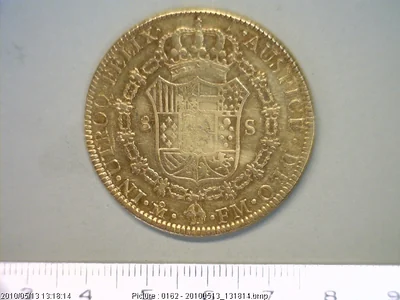
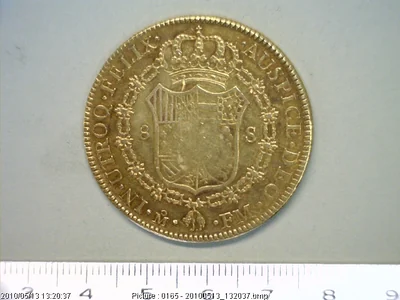
Viceroyalty · Mexico City Mint · Assayer MF
Viceroyalty · Mexico City Mint · Assayer MF
The 8 Escudos Carlos III 1768 Gold Coin: Value & Guide is worth between $51,232 and $86,286 MXN depending on its grade of preservation.
Prices updated: August 2026
How much is the 8 Escudos Carlos III 1768 Gold Coin: Value & Guide worth?
The estimated value of the 8 Escudos Carlos III 1768 Gold Coin: Value & Guide ranges from $51,232 (circulated, XF) up to $86,286 (official blister pack), with $73,539 as a reference for an uncirculated (UNC) piece. The estimate is based on the official mintage and the historical behavior of the family.
The real price depends on four factors: the grade of preservation (a circulated piece is worth the low end of the range; an uncirculated one, or one still in its official blister pack, the high end), the finish (satin vs mirror/proof), the rarity within the series based on the mintage, and the metal spot price on the day of the deal when the piece is silver or gold. Check the value-by-grade table above and compare with equivalent pieces before buying or selling.
Where to buy or sell this coin?
Browse the national directory of numismatic shops or the community forum to trade directly with other collectors.
Description
If you have an 8 Escudos Carlos III dated 1768, you are holding a substantial gold coin from Spanish colonial Mexico. This is not a common pocket-change find. Genuine examples in collectible grades sell in the low thousands of USD, and exceptional pieces go well beyond that. Here is what it is actually worth and how to verify it in 2026.
Quick answer: what it's worth
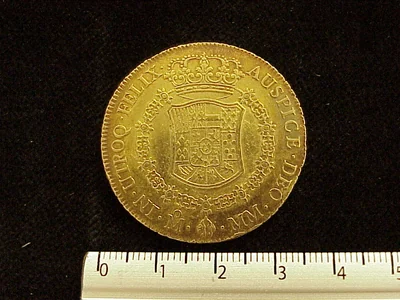
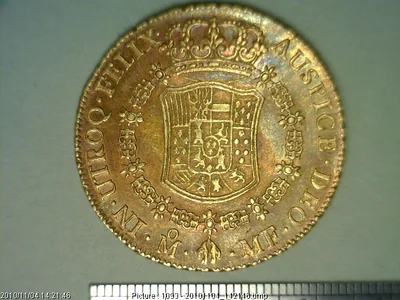
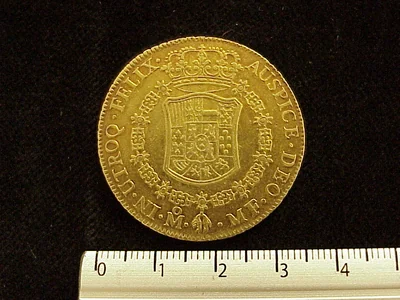
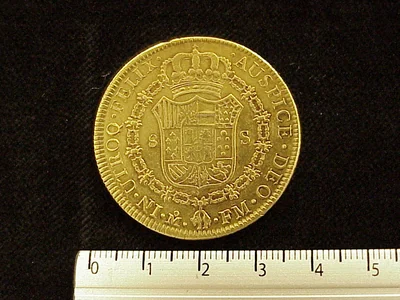
The 8 Escudos of Carlos III from 1768 is a gold coin struck at the Mexico City Mint (Casa de Moneda de México) during the colonial period. It weighs 26.94 grams and measures 37 millimeters across, with 0.875 fine gold. That gives it roughly 0.758 troy ounces of pure gold, so it has a hard floor: even worn or damaged, it is worth its melt value in gold, which alone runs well over 1,500 USD at recent gold prices.
As a collectible, a genuine circulated example typically trades from about 1,500 to 4,000 USD depending on wear. Well-struck coins with original surfaces and full detail reach higher, and certified high-grade pieces of the Mexican colonial gold series have brought five figures at major auctions. The single biggest factors are grade, whether the surfaces are original (not cleaned), and whether it was ever mounted as jewelry.
What this coin actually is
The 8 Escudos was the largest gold denomination in the Spanish monetary system of the era, popularly called the "onza." It carries the catalog reference KM#155. The obverse shows the bust of King Carlos III, part of the shift toward a royal portrait design that replaced the earlier "columnario" (pillar-type) coins.
Mexico City was one of the most productive mints in the Spanish empire, and this gold fed transatlantic trade for decades. The colonial gold 8 Escudos is one of the most collected series in world numismatics precisely because it combines age, size, and intrinsic gold value.
Value by condition
| Condition | What it looks like | Approx. value (USD) |
|---|---|---|
| Heavily worn / ex-jewelry | Flat detail, mount marks, cleaned | Near melt (1,500 to 2,000) |
| Circulated, honest wear | Clear bust and legends, original surfaces | 2,000 to 4,000 |
| High grade, original luster | Sharp strike, minimal wear, uncleaned | 5,000 to 15,000+ |
These are guide ranges for the type. A single date and mint, sold at a reputable auction house, can vary widely with eye appeal and certification. Colonial Mexican gold in top certified grades has repeatedly cleared five figures at Heritage and Stack's Bowers sales.
The mistakes that cost people money
Two things quietly destroy the value of a coin like this.
Cleaning. Many people scrub old gold coins to make them shiny. This ruins the original surface and can cut the collectible value in half. If your coin is dirty, leave it alone and let a professional assess it.
Jewelry mounting. Large gold coins were frequently soldered into pendants and rings. A solder scar, a filed edge, or a smoothed rim marks a coin as ex-jewelry, which drops it toward melt value. Check the edge and rim carefully.
How to tell if yours is genuine
Start with the numbers. A real 8 Escudos of 1768 weighs 26.94 grams and measures 37 millimeters, with a chain-pattern edge (canto en cadena). Counterfeits, many originating overseas, almost always miss the weight because they use lower-purity gold or base metal. A cheap jeweler's scale settles most fakes in seconds: if the weight is off, it is not real.
Beyond weight, look at the edge design, the sharpness of the lettering, and the metal color. For a coin in this price range, professional authentication is worth it. Third-party grading from NGC or PCGS gives you a sealed, certified holder that buyers trust and that removes any doubt about authenticity. That certification usually pays for itself when you sell.
Where to sell it
Because this is precious metal, sell where value is transparent and the buyer inspects the coin in hand or from clear photos of the obverse, reverse, and edge.
- A verified coin dealer from the Pesoteca directory can appraise it on the spot.
- The Pesoteca buy-and-sell forum connects you with collectors who know the series.
- For a high-grade piece, consider consigning to a major auction house that handles world coins, where colonial gold reaches its best prices.
Photograph the coin (both sides and the edge) and confirm the weight before you talk numbers. Avoid dumping it with the first online offer, and be cautious on general marketplaces, where counterfeits of gold coins circulate the most.
Think you have a genuine 1768 onza, or not sure if yours was cleaned or mounted? Post clear photos of both sides and the edge in the Pesoteca forum and let collectors weigh in before you sell.
Historical context
Eight escudos Carlos III, 1768, Mexico mint, assayer MF, Krause KM#155. The year after the Jesuit expulsion, with the viceroyalty of Carlos Francisco de Croix stabilized since August 1766. In 1768 the new military ordinances were applied, reorganizing the viceregal army following the Prussian-French model of company and battalion. It was also the year the works on the College of Mining in Mexico and the Royal Tribunal of Mining began. The ounce weighs 27.06 grams with a fineness of 0.916. Produced by mill press with a standardized round planchet. The reverse keeps the classic pillar design, in what would be one of its last issues before the change to the royal bust that Carlos III would formally introduce in the American series around 1772. The MF signature of the assayers continues as the mark of the workshop.
This piece belongs to the era
Colonial / Virreinato →Explore all the Mexican coins of this era, their historical context and how they connect to the monetary system of the period.
Value range of this piece
Market estimate: $51,232 - $86,286 MXN depending on the grade of preservation (typical range between a circulated and an uncirculated piece).
See the full breakdown by grade (VG, F, VF, EF, AU, MS-60, MS-63, MS-65) for the whole series →
Same denomination, other years
8 escudos Oro 0.875 (21k) · Escudos Coloniales (oro)
Frequently asked questions
How much is an 8 Escudos Carlos III 1768 worth?
It has a floor at its gold melt value, over 1,500 USD, because it contains about 0.758 troy ounces of pure gold. As a collectible, a genuine circulated example generally runs 2,000 to 4,000 USD, and high-grade certified pieces of colonial Mexican gold have brought five figures at auction. Grade and original surfaces drive the difference.
Is the 8 Escudos Carlos III 1768 rare?
It is a scarce and highly collected type, though not a one-off rarity. Value comes mostly from its gold content, age, and condition. Coins that were never cleaned or mounted as jewelry, with full detail, are the ones that command premium prices.
How do I tell if my 8 Escudos 1768 is genuine?
A real one weighs 26.94 grams and measures 37 millimeters, with a chain-pattern edge. Most counterfeits fail on weight because they use less gold, so a jeweler's scale catches them fast. For a coin worth thousands, get it certified by NGC or PCGS to confirm authenticity and grade.
Where can I sell an 8 Escudos Carlos III 1768?
Sell through a verified dealer from the Pesoteca directory for an on-the-spot appraisal, the Pesoteca buy-and-sell forum among collectors, or a major world-coin auction house for a high-grade piece. Photograph both sides and the edge, confirm the weight, and avoid taking the first offer on open marketplaces where fakes are common.
Conversation
0 comments
Sources
Images for informational and educational purposes, attributed to their original source. Reference values; the real price depends on the grade, the specific variant and demand.
Loading comments…