
8 Escudos Carlos IV 1789: Gold Coin Value Guide
The 8 Escudos Carlos IV 1789: Gold Coin Value Guide is worth between $51,403 and $86,574 MXN depending on its grade of preservation.
Prices updated: August 2026
Viceroyalty · Mexico City Mint · Assayer FM
Viceroyalty · Mexico City Mint · Assayer FM
The 8 Escudos Carlos IV 1789: Gold Coin Value Guide is worth between $51,403 and $86,574 MXN depending on its grade of preservation.
Prices updated: August 2026
How much is the 8 Escudos Carlos IV 1789: Gold Coin Value Guide worth?
The estimated value of the 8 Escudos Carlos IV 1789: Gold Coin Value Guide ranges from $51,403 (circulated, XF) up to $86,574 (official blister pack), with $73,785 as a reference for an uncirculated (UNC) piece. The estimate is based on the official mintage and the historical behavior of the family.
The real price depends on four factors: the grade of preservation (a circulated piece is worth the low end of the range; an uncirculated one, or one still in its official blister pack, the high end), the finish (satin vs mirror/proof), the rarity within the series based on the mintage, and the metal spot price on the day of the deal when the piece is silver or gold. Check the value-by-grade table above and compare with equivalent pieces before buying or selling.
Where to buy or sell this coin?
Browse the national directory of numismatic shops or the community forum to trade directly with other collectors.
Description
If you inherited an 8 Escudos gold coin dated 1789, you are holding a genuine piece of colonial Mexican gold, and it is worth real money. This is not a coin that trades for a few dollars. Even a worn example carries a floor of over 2,000 USD in gold content alone, and sharp, certified examples sell for several thousand dollars at auction.
Here is what you need to know to figure out what yours is worth, whether it is rare, how to tell if it is genuine, and where to sell it.
What this coin actually is
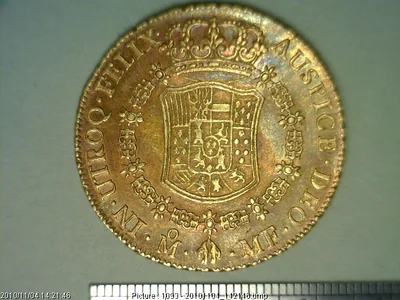
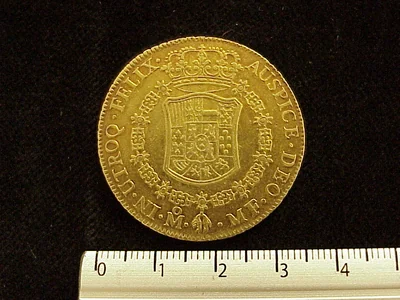
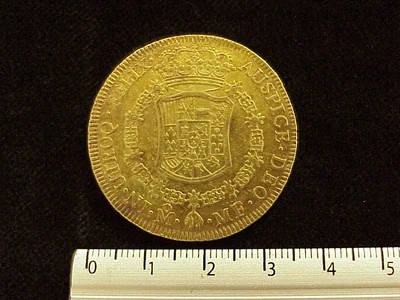
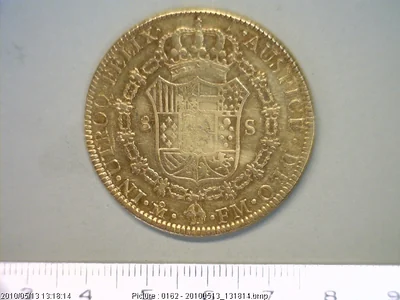
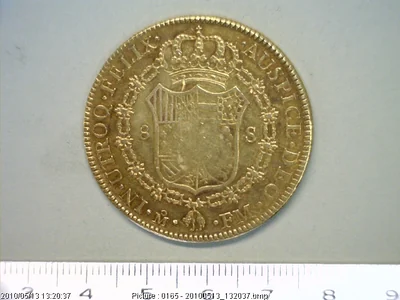
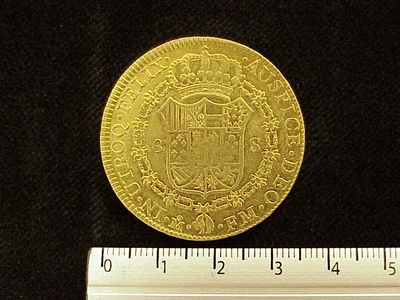
The 8 Escudos was the largest gold coin struck by the Royal Mint of Mexico (Real Casa de Moneda de México), the top denomination of the Spanish colonial period. Collectors often call it a "gold onza." The 1789 issue was minted under King Carlos IV of Spain, in the first year of his reign after his father Carlos III died. It is cataloged as KM#157.
Key specs, which double as your first authenticity check:
- Weight: 27.03 grams
- Diameter: 38 mm
- Edge: diagonal reeding
- Metal: gold (the standard escudo fineness of the era is 0.875, giving roughly 23.65 grams of pure gold, about 0.76 troy ounces)
That gold content is why this coin has a hard price floor. At current gold prices, the metal alone is worth well over 2,000 USD. No colonial 8 Escudos in genuine gold is ever "only worth a few dollars."
How much is an 8 Escudos Carlos IV 1789 worth?
Value splits into two parts: gold value (the floor) and numismatic value (the premium collectors pay above melt).
| Condition | What you have | Approximate value (USD) |
|---|---|---|
| Damaged, mounted, or holed | Gold value only | Melt, roughly 2,000+ |
| Circulated, worn detail | Collectible but common grade | 2,500 to 4,000 |
| Sharp, original surfaces (VF-XF) | Strong collector demand | 4,000 to 8,000 |
| High grade, certified (AU/UNC) | Top of the series | 8,000 and up |
These are ranges, not guarantees. Two things move the price hard: the sharpness of the king's portrait (bust) and shield, and whether the coin is certified. A raw coin sold on trust always brings less than the same coin in an NGC or PCGS holder.
One detail specialists watch for on this year: early 1789 strikes sometimes used dies with the previous king's bust (Carlos III), creating recognized transition varieties. If your coin shows an unexpected portrait, do not assume it is a fake. It may be one of these studied varieties, and those carry a premium. Get it looked at before you conclude anything.
Is it rare?
Rarity here is relative. Colonial 8 Escudos are scarce compared to modern coins, but 1789 Mexico City strikes are not the rarest date in the series. What makes any single example valuable is condition and, in some cases, the transition variety. A worn, common example is worth its gold plus a modest premium. A crisp certified example, or a genuine variety, is where the money is.
Do not confuse "old" with "rare." This coin is 200-plus years old, and that alone does not make it worth a fortune. The gold does, and the grade decides the rest.
How to tell if yours is genuine
Gold fakes exist, and the 8 Escudos is a target because of its size and value. Your fastest checks:
- Weigh it. A genuine coin is 27.03 grams. Counterfeits, especially lower-fineness fakes, almost always miss the weight. A digital jewelry scale settles most doubts.
- Measure it. 38 mm diameter. Off-size means walk away.
- Check the edge. Diagonal reeding. A smooth or wrong edge is a red flag.
- Look for mount damage. Many of these were worn as jewelry. Solder marks, filing, or a smoothed rim drop the value toward melt.
If the coin passes weight and size and you are dealing with real money, do not rely on your own eye. Send it to NGC or PCGS for certification. Their holder is the definitive answer on both authenticity and grade, and it raises what a buyer will pay.
Where to sell it
Because this is a precious-metal coin with a real floor, you always have a buyer. The question is getting a fair price instead of melt.
- Certify first, then sell. For a coin at this value, an NGC or PCGS grade pays for itself. Buyers bid confidently on graded gold.
- Established coin dealers and auction houses (the kind that handle Heritage or Stack's Bowers-level material) are the right venue for a genuine, higher-grade example.
- Verified numismatic shops in the Pesoteca dealer directory will value it in person, by city, without middleman markups.
- The Pesoteca buy/sell forum connects you directly with collectors.
Before you sell anything, photograph the obverse, reverse, and edge, and weigh it. Never accept the first lowball offer on social media, and never let a buyer pressure you into a fast sale on a coin worth thousands.
If you want a second opinion on grade, variety, or authenticity before you list it, post clear photos in the Pesoteca forum and let collectors who handle these coins weigh in.
Historical context
Eight escudos Carlos IV, 1789, Mexico City mint, assayer FM, Krause KM#157. First numismatic year of Carlos IV in New Spain. Carlos IV inherited the throne on December 14, 1788, after the death of Carlos III, and was formally crowned on January 17, 1789. The piece is among the first strikes already bearing the new king's own bust, in the bust system that had replaced the pillar type in New Spain in 1772. In Mexico, Juan Vicente de Güemes Pacheco de Padilla, second Count of Revillagigedo, was in office, viceroy from October 1789. He was the son of the previous Count of Revillagigedo and considered one of the best enlightened viceroys. The onza weighs 27.06 grams with the 0.875 fineness typical of post-1772 gold. In France the Revolution broke out in July, an event that would reorder all of Europe. The FM signature of the assayers appears in the field.
This piece belongs to the era
Colonial / Virreinato →Explore all the Mexican coins of this era, their historical context and how they connect to the monetary system of the period.
Value range of this piece
Market estimate: $51,403 - $86,574 MXN depending on the grade of preservation (typical range between a circulated and an uncirculated piece).
See the full breakdown by grade (VG, F, VF, EF, AU, MS-60, MS-63, MS-65) for the whole series →
Same denomination, other years
8 escudos Oro 0.875 (21k) · Escudos Coloniales (oro)
Frequently asked questions
How much is an 8 Escudos Carlos IV 1789 worth?
It has a gold floor of over 2,000 USD from metal content alone. Circulated examples typically sell for 2,500 to 4,000 USD, sharp examples for 4,000 to 8,000 USD, and high-grade certified coins for 8,000 USD and up. Grade and certification drive the premium above melt.
How do I tell if my 8 Escudos Carlos IV 1789 is genuine?
Start with weight and size: a real coin is exactly 27.03 grams and 38 mm, with diagonal reeding on the edge. Most fakes miss the weight because they use lower-fineness gold. For a coin this valuable, send it to NGC or PCGS for certification, which is the definitive check on both authenticity and grade.
Is the 8 Escudos Carlos IV 1789 rare?
It is scarce as a colonial gold coin, but the 1789 Mexico City strike is not the rarest date in the series. Value comes mainly from condition and, in some cases, the transition varieties struck early that year using the previous king's bust. A worn example brings gold plus a small premium; a sharp certified one is where the real money is.
Where can I sell an 8 Escudos Carlos IV 1789?
Certify it with NGC or PCGS first, then sell through an established coin dealer or auction house, a verified shop in the Pesoteca dealer directory, or the Pesoteca buy/sell forum. Photograph the obverse, reverse, and edge and weigh the coin before listing. Avoid selling to the first lowball offer on social media.
Conversation
0 comments
Sources
Images for informational and educational purposes, attributed to their original source. Reference values; the real price depends on the grade, the specific variant and demand.
Loading comments…