
8 Escudos 1733 Felipe V Gold Coin: Value & How to Sell
The 8 Escudos 1733 Felipe V Gold Coin: Value & How to Sell is worth between $51,194 and $86,222 MXN depending on its grade of preservation.
Prices updated: August 2026
Viceroyalty · Mexico City Mint · Assayer F
Viceroyalty · Mexico City Mint · Assayer F
The 8 Escudos 1733 Felipe V Gold Coin: Value & How to Sell is worth between $51,194 and $86,222 MXN depending on its grade of preservation.
Prices updated: August 2026
How much is the 8 Escudos 1733 Felipe V Gold Coin: Value & How to Sell worth?
The estimated value of the 8 Escudos 1733 Felipe V Gold Coin: Value & How to Sell ranges from $51,194 (circulated, XF) up to $86,222 (official blister pack), with $73,485 as a reference for an uncirculated (UNC) piece. The estimate is based on the official mintage and the historical behavior of the family.
The real price depends on four factors: the grade of preservation (a circulated piece is worth the low end of the range; an uncirculated one, or one still in its official blister pack, the high end), the finish (satin vs mirror/proof), the rarity within the series based on the mintage, and the metal spot price on the day of the deal when the piece is silver or gold. Check the value-by-grade table above and compare with equivalent pieces before buying or selling.
Where to buy or sell this coin?
Browse the national directory of numismatic shops or the community forum to trade directly with other collectors.
Description
If you inherited or found an 8 escudos gold coin dated 1733 with the name Felipe V, you are holding almost a full ounce of gold, plus real numismatic value on top. A genuine, certified piece trades in the thousands of dollars, and rare high-grade examples have sold for far more at international auction. Here is what yours is actually worth, and how to tell if it is real.
What this coin is
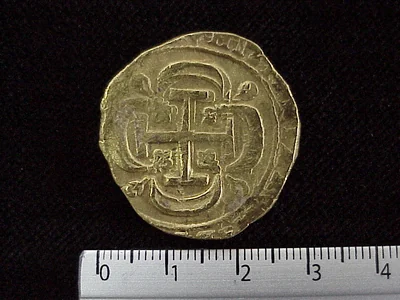
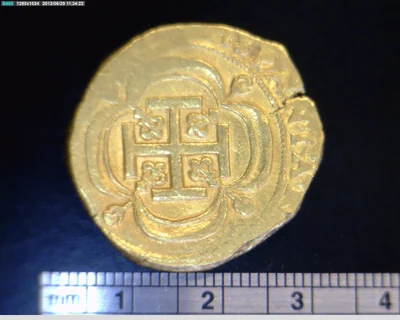
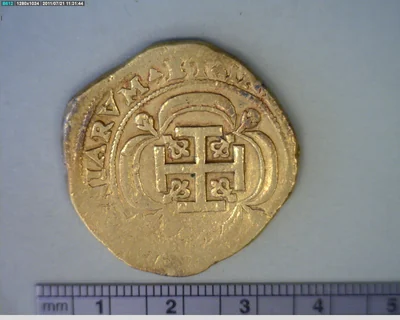
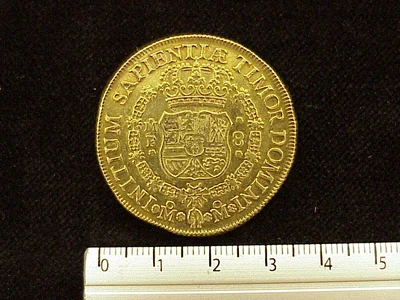
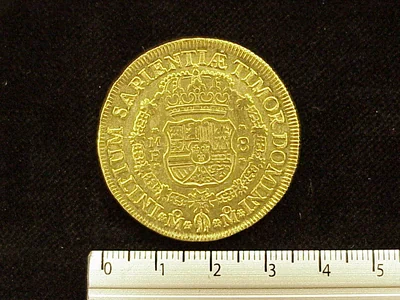
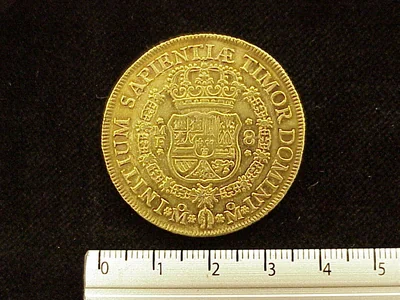
This is an 8 escudos gold coin struck in 1733 at the Mexico City Mint (Casa de Moneda de México), during the reign of Felipe V, the first Bourbon king of Spain. At the time, Mexico was New Spain, a Spanish colony, so these coins were made in the Americas but issued under the Spanish Crown. Collectors call the large 8 escudos gold piece a doubloon, the type made famous by pirate lore.
Key physical specs, which double as your first authenticity check:
- Metal: gold, .875 fine (21 karat)
- Weight: 26.92 grams
- Diameter: 37 mm
- Edge: diagonally reeded
- Mint: Mexico City
- Denomination: 8 escudos
At .875 fineness and 26.92 grams, the coin contains roughly 0.757 troy ounces of pure gold. That alone sets a hard price floor: at current gold prices, the melt value is well over 1,500 USD, and often more. A genuine coin can never be worth less than its gold content.
What a 1733 8 escudos is worth
Value depends heavily on two things: whether it is the earlier cob-style or the round milled type, and the grade (condition). Early 1730s Mexican 8 escudos are scarce and desirable, and colonial gold from this era is one of the most actively collected areas in world numismatics.
| Condition | Realistic value range (USD) |
|---|---|
| Damaged / holed / ex-jewelry | Around melt, 1,500 to 2,000 |
| Circulated, honest wear | 2,500 to 6,000 |
| High grade, certified AU to MS | 8,000 to 30,000+ |
| Rare variety in top certified grade | Auction record territory |
Colonial Mexican 8 escudos of the Felipe V period have crossed well into five figures at major auction houses such as Heritage and Stack's Bowers, especially certified examples in high grade or pieces with shipwreck provenance. If yours is a clean, original-surface coin, do not sell it as scrap gold. You would be leaving serious money on the table.
For context on other Mexican gold, compare with modern bullion in our guide to the Centenario 50 pesos gold coin and the broader colonial escudos series.
The myth to avoid, in both directions
Two mistakes cost people money with this coin.
Mistake one: assuming it is priceless because it is old. Age alone does not make a coin a fortune. A worn, damaged 1733 8 escudos is worth its gold, plus a modest premium. Real value comes from grade, eye appeal, rarity of the specific die variety, and authenticity.
Mistake two: selling a genuine piece as bullion. Because it is nearly an ounce of gold, some people melt it or sell it to a cash-for-gold shop for spot price. A certified colonial doubloon can be worth several times its melt value. Never scrap one until an expert has looked at it.
How to tell if yours is genuine
Gold fakes from overseas are common on this exact type, and the physical specs give them away fast.
- Weigh it. A real one is 26.92 grams. Most counterfeits are underweight or made of a lighter alloy, so a cheap gram scale often exposes them immediately.
- Measure it. 37 mm diameter, with a diagonally reeded edge. Wrong size or a plain edge is a red flag.
- Check the sound and color. Low-purity fakes look brassy and ring wrong, but do not rely on this alone.
- Get it certified. For any coin worth more than a few thousand dollars, professional grading by NGC or PCGS is the definitive answer. They authenticate, grade, and seal the coin in a tamper-evident holder that buyers trust worldwide.
If your coin does not match the exact weight and diameter above, treat it as suspect until proven otherwise.
Where to sell it
Because this is high-value gold, sell only where the coin can be inspected and verified before money changes hands.
- A verified numismatic dealer from the Pesoteca shop directory: they can appraise and buy on the spot, and a formal shop with an expert is worth the small appraisal fee on a coin this valuable.
- The Pesoteca buy and sell forum, where collectors who understand colonial gold will pay a fair number.
- Major auction houses (Heritage, Stack's Bowers) for a high-grade or rare example. Their reach among world-coin collectors gets you the strongest price.
Before you sell anything, get it certified or at least appraised, and photograph the front, back, and edge. Avoid dumping it to the first buyer on Facebook, and never let a cash-for-gold counter talk you into scrap price for a genuine doubloon.
Think you have a 1733 8 escudos, or not sure which type it is? Post clear photos of the front, back, and edge in the Pesoteca forum and let collectors help you pin down the variety and value.
Historical context
Eight escudos of Felipe V, second reign, 1733, Mexico Mint, assayer F. Krause references the type as KM#148, the first number in the pillar or milled-real catalog for New Spain. This is a pivotal year: in 1732 the Mexico Mint introduced milled minting with a round planchet, abandoning the cob technique that had been used since 1535. The 1733 piece corresponds to the first full year of the new system, already with a pillar reverse showing the crowned Pillars of Hercules and the PLVS VLTRA banners. Felipe V resumed the throne in 1724 after the death of Luis I and reigned until 1746. In Mexico, Juan Vazquez de Acuna Manrique, Marquis of Casafuerte (1722-1734), was governing. The ounce weighs 27.06 grams with a fineness of 0.916. The technical change to milling allowed greater uniformity of weight and shape, the hallmark of the Bourbon reform of the mint. KM#148 pieces with the F signature are direct witnesses to the start of the Mexican pillar series.
This piece belongs to the era
Colonial / Virreinato →Explore all the Mexican coins of this era, their historical context and how they connect to the monetary system of the period.
Value range of this piece
Market estimate: $51,194 - $86,222 MXN depending on the grade of preservation (typical range between a circulated and an uncirculated piece).
See the full breakdown by grade (VG, F, VF, EF, AU, MS-60, MS-63, MS-65) for the whole series →
Same denomination, other years
8 escudos Oro 0.875 (21k) · Escudos Coloniales (oro)
Frequently asked questions
How much is a 1733 Felipe V 8 escudos gold coin worth?
It depends on condition. A worn or damaged piece is worth its gold content, roughly 1,500 to 2,000 USD at current prices. A clean circulated example typically brings 2,500 to 6,000 USD, and certified high-grade coins reach 8,000 to 30,000 USD or more. Rare varieties in top grade have set auction records. Because it is nearly an ounce of gold, never sell it as scrap before an expert appraises it.
Is the 1733 8 escudos rare?
Yes, in relative terms. Early 1730s Mexican 8 escudos gold coins are scarce and heavily collected worldwide. High-grade certified examples are genuinely hard to find, which is why they command strong premiums over their gold value. Common circulated pieces are more available but still valuable because of the gold content and historical demand.
How can I tell if my 1733 8 escudos is genuine?
Weigh and measure it first. A real coin is 26.92 grams, 37 mm across, with a diagonally reeded edge. Overseas gold fakes are usually underweight or the wrong size, so a simple scale often exposes them. For any coin worth more than a few thousand dollars, professional certification by NGC or PCGS is the definitive proof of authenticity and grade.
Where can I sell a 1733 8 escudos gold coin?
Sell only where the coin can be inspected before payment. Best options are a verified dealer from the Pesoteca shop directory, the Pesoteca buy and sell forum among collectors, or a major auction house like Heritage or Stack's Bowers for a high-grade example. Get it certified or appraised first and photograph the front, back, and edge. Do not accept scrap gold price for a genuine coin.
Conversation
0 comments
Sources
Images for informational and educational purposes, attributed to their original source. Reference values; the real price depends on the grade, the specific variant and demand.
Loading comments…