
8 Escudos Luis I 1725 Gold Coin: Value & How to Sell
The 8 Escudos Luis I 1725 Gold Coin: Value & How to Sell is worth between $51,632 and $86,958 MXN depending on its grade of preservation.
Prices updated: August 2026
Viceroyalty · Mexico City Mint · Assayer D
Viceroyalty · Mexico City Mint · Assayer D
The 8 Escudos Luis I 1725 Gold Coin: Value & How to Sell is worth between $51,632 and $86,958 MXN depending on its grade of preservation.
Prices updated: August 2026
How much is the 8 Escudos Luis I 1725 Gold Coin: Value & How to Sell worth?
The estimated value of the 8 Escudos Luis I 1725 Gold Coin: Value & How to Sell ranges from $51,632 (circulated, XF) up to $86,958 (official blister pack), with $74,112 as a reference for an uncirculated (UNC) piece. The estimate is based on the official mintage and the historical behavior of the family.
The real price depends on four factors: the grade of preservation (a circulated piece is worth the low end of the range; an uncirculated one, or one still in its official blister pack, the high end), the finish (satin vs mirror/proof), the rarity within the series based on the mintage, and the metal spot price on the day of the deal when the piece is silver or gold. Check the value-by-grade table above and compare with equivalent pieces before buying or selling.
Where to buy or sell this coin?
Browse the national directory of numismatic shops or the community forum to trade directly with other collectors.
Description
If you inherited an 8 escudos gold coin dated 1725 with the name Luis I, you own a piece of colonial Mexican gold that has a hard floor: 27.15 grams of gold at .875 fineness, worth well over 1,500 USD in metal alone at today's spot. The right example, in the right grade, sells for far more. Here is what actually drives the price and how to check yours.
Quick answer: what it's worth
This coin never trades below its melt value, and that floor moves with the gold market. Above that, the price depends almost entirely on condition and whether a grading service has certified it. A worn, damaged, or lightly polished example trades close to bullion value. A sharp, original, certified coin can command a multiple of that, into the several-thousand-dollar range for scarce Mexico Mint issues from the short reign of Luis I.
Because the coin is gold, you have two separate questions to answer: what is the metal worth, and what is the collector premium worth. Most sellers only think about the first. The second is where the real money hides, and it lives entirely in grade and authenticity.
What this coin actually is
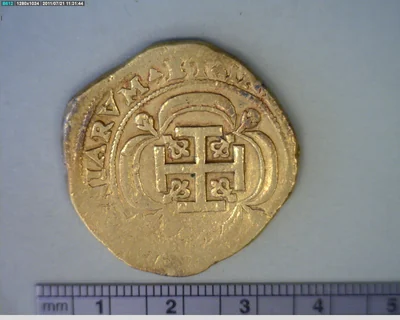
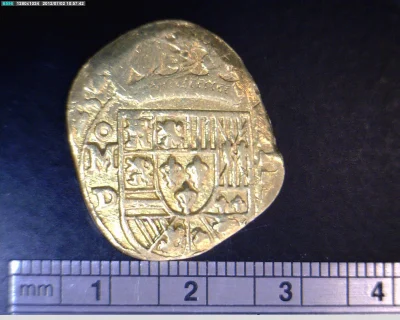
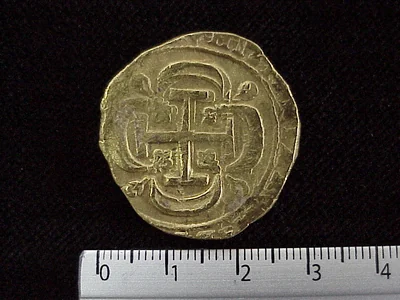
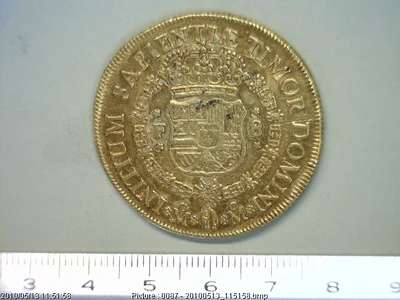
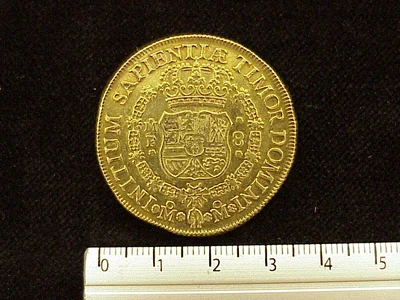
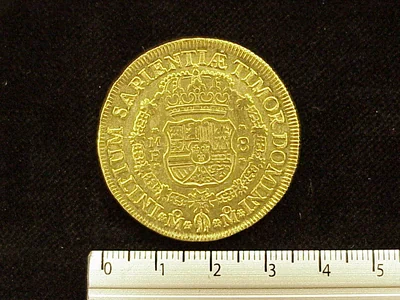
The 8 escudos was the largest gold denomination of the Spanish colonial system, struck at the Mexico City Mint (Casa de Moneda de México) during the Viceroyalty. The 1725 date puts it in the brief reign of Luis I, king of Spain for only a few months in 1724 before his death, which makes coins bearing his name inherently short-lived issues. The assayer mark on Mexico strikes of this period is D.
Collectors in the United States often call the large colonial 8 escudos a "doubloon." That is the same family of coin. The Luis I name on a Mexico-minted 8 escudos is what separates a common colonial doubloon from a genuinely scarce one.
Specifications (verify yours against these)
| Spec | Value |
|---|---|
| Denomination | 8 escudos (gold) |
| Year | 1725 |
| Mint | Mexico City (Casa de Moneda de México) |
| Assayer | D |
| Weight | 27.15 grams |
| Diameter | 28.4 mm |
| Metal | Gold .875 (21k) |
| Series | Escudos Coloniales (oro) |
Weight is your first authenticity test. Gold is dense, and counterfeits almost never match both the correct weight and the correct diameter at once. If your coin does not weigh close to 27.15 grams and measure about 28.4 mm, treat it as suspect until proven otherwise.
Value by condition
Gold coins hold their metal value even when worn, which sets a firm floor. Above that floor, grade decides everything:
- Heavily worn or damaged: trades near melt value, roughly the gold content at spot.
- Circulated but original: a modest premium over melt, driven by demand for the date.
- High grade, uncertified: worth more, but buyers discount for the risk that it isn't graded.
- Certified by NGC or PCGS: the strongest prices, especially for scarce Luis I dates, where certification removes doubt about both authenticity and grade.
Because the 1725 issue is genuinely limited (Luis I coins exist for only a narrow window), a certified, well-struck example can pull well above what a common colonial 8 escudos brings. Cleaned, holed, or mounted pieces (many old gold coins were worn as jewelry) lose most of their collector premium and fall back toward melt.
The mistake most sellers make
The biggest error is selling a genuine colonial gold coin for scrap. Refiners and pawn shops pay melt value and pocket any collector premium themselves. A 1725 Luis I 8 escudos in original condition is worth more to a numismatist than to a smelter, sometimes far more. Before you accept a bullion offer, find out whether the collector value exceeds the metal value. For a scarce date like this one, it often does.
How to tell if yours is genuine
Start with the scale. The correct weight is 27.15 grams; the correct diameter is 28.4 mm. Chinese counterfeits of gold coins typically use lower-purity or lighter alloys, so an accurate weight and diameter together rule out most fakes.
Check the edge and the strike. Colonial gold was hand-struck, so genuine pieces show the irregularities of that process, not the clean uniform edge of a modern cast copy. If you are looking at spending or accepting a significant sum, the only real insurance is certification by NGC or PCGS. Their holders confirm authenticity, grade, and any die variety, and a certified coin sells faster and higher.
See the grading guide for Mexican coins to assess condition yourself before you get a professional opinion.
Where to sell it
For a gold coin of this value, sell where the buyer can verify it in front of you and where you get a real appraisal:
- A verified dealer from the Pesoteca shop directory, who can weigh, test, and value the coin on the spot.
- The Pesoteca buy-and-sell forum, where collectors who understand colonial gold trade directly.
- Major international auction houses (Heritage, Stack's Bowers) if the coin is high grade and certified, where scarce colonial 8 escudos reach the widest buyer pool.
Photograph the obverse, reverse, and edge in good light, and note the exact weight. Serious buyers will ask for all three. Avoid dumping a gold coin on social media at the first offer; you almost always leave money on the table.
This piece belongs to the Escudos Coloniales gold series, where several dates carry premiums well above melt for the right grade.
Think you have a 1725 Luis I 8 escudos, or an unusual variety? Post clear photos of both sides and the edge in the Pesoteca forum and let collectors help you pin down what it's really worth.
Historical context
Ounce in the name of Louis I, Mexico City mint, assayer D, dated 1725. Krause references the type as KM#58 within the colonial catalog. Louis I was the first son of Philip V and reigned barely seven months in 1724 before dying of smallpox on August 31. The production of coinage in his name in 1725 reflects the administrative lag between the Spanish crown and the American mints: the order to suspend dies bearing his name was slow to arrive. In Mexico, Juan de Acuña, Marquis of Casafuerte, governed as viceroy from 1722 to 1734. The eight escudos is the full ounce, with a theoretical weight close to 27.06 grams and 0.916 fineness. It was still produced by cob technique: planchet cut with shears from the cast bar, fixed dies, and hammering. The rarity of Mexican Louis I pieces is high due to the brevity of the reign, which is why Krause assigns them a KM# distinct from that of Philip V despite continuous manufacture in the same workshop and by the same technique.
This piece belongs to the era
Colonial / Virreinato →Explore all the Mexican coins of this era, their historical context and how they connect to the monetary system of the period.
Value range of this piece
Market estimate: $51,632 - $86,958 MXN depending on the grade of preservation (typical range between a circulated and an uncirculated piece).
See the full breakdown by grade (VG, F, VF, EF, AU, MS-60, MS-63, MS-65) for the whole series →
Other denominations from 1725
Escudos Coloniales (oro) · Oro 0.875 (21k)
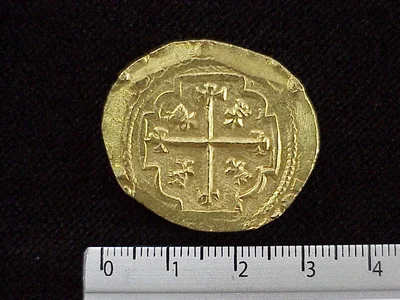
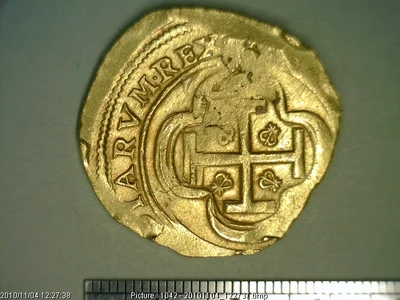
Same denomination, other years
8 escudos Oro 0.875 (21k) · Escudos Coloniales (oro)
Frequently asked questions
How much is an 8 Escudos Luis I 1725 worth?
It never trades below its gold content, which is 27.15 grams of .875 gold, worth well over 1,500 USD at current spot. Above that floor, value depends on grade. A certified, well-struck example of this scarce Luis I date can bring several thousand dollars, while a worn or damaged coin sits close to melt value.
Is the 8 Escudos Luis I 1725 rare?
Yes, relatively. Luis I reigned only briefly in 1724 and died the same year, so coins bearing his name exist for a very short window. That makes genuine 1725 Mexico Mint 8 escudos scarcer than common colonial dates, and certified high-grade examples are harder still to find.
How can I tell if my 8 Escudos Luis I 1725 is genuine?
Weigh and measure it first: the real coin is 27.15 grams and 28.4 mm. Counterfeits usually fail one of those two, since fake gold rarely matches both purity and size. For a coin worth this much, certification by NGC or PCGS is the definitive check and makes it easier to sell.
Where can I sell an 8 Escudos Luis I 1725?
Use a verified dealer from the Pesoteca shop directory who can appraise it in person, or the Pesoteca buy-and-sell forum among collectors. If it's high grade and certified, major auction houses like Heritage or Stack's Bowers reach the widest buyer pool. Photograph both sides and the edge, and never sell scarce colonial gold as scrap.
Conversation
0 comments
Sources
Images for informational and educational purposes, attributed to their original source. Reference values; the real price depends on the grade, the specific variant and demand.
Loading comments…