
8 Escudos Fernando VI 1755 (Gold): Value & Prices
The 8 Escudos Fernando VI 1755 : Value & Prices is worth between $51,346 and $86,478 MXN depending on its grade of preservation.
Prices updated: August 2026
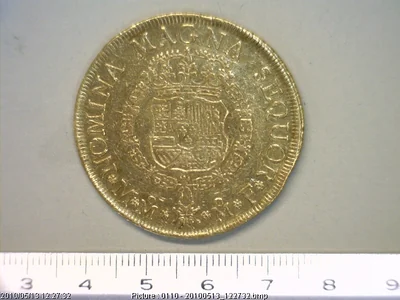
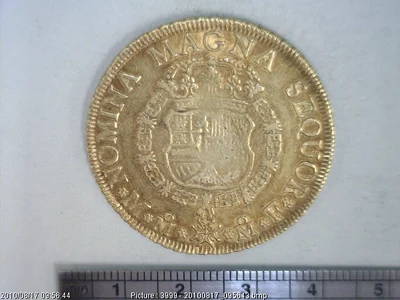
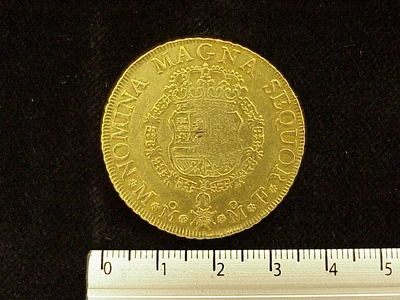
Third type; without denomination; draped bust.
Third type; without denomination; draped bust.
The 8 Escudos Fernando VI 1755 : Value & Prices is worth between $51,346 and $86,478 MXN depending on its grade of preservation.
Prices updated: August 2026
How much is the 8 Escudos Fernando VI 1755 (Gold): Value & Prices worth?
The estimated value of the 8 Escudos Fernando VI 1755 (Gold): Value & Prices ranges from $51,346 (circulated, XF) up to $86,478 (official blister pack), with $73,703 as a reference for an uncirculated (UNC) piece. The estimate is based on the official mintage and the historical behavior of the family.
The real price depends on four factors: the grade of preservation (a circulated piece is worth the low end of the range; an uncirculated one, or one still in its official blister pack, the high end), the finish (satin vs mirror/proof), the rarity within the series based on the mintage, and the metal spot price on the day of the deal when the piece is silver or gold. Check the value-by-grade table above and compare with equivalent pieces before buying or selling.
Where to buy or sell this coin?
Browse the national directory of numismatic shops or the community forum to trade directly with other collectors.
Description
If you inherited an 1755 Mexico 8 Escudos of Fernando VI, you have real gold, not a token piece. In 2026, even a worn example is worth its metal, roughly 1,800 to 2,000 USD in gold content alone, and a sharp, certified coin can sell for several thousand to well over ten thousand dollars. This is one of the genuine winners among old Mexican coins.
What you actually have
The 8 escudos was the largest gold denomination of the Spanish colonial system, popularly called an "onza" (ounce). Yours was struck at the Mexico City mint (the Casa de Moneda de México), which was the main silver and gold producer for the Spanish Empire at the time. It carries the assayer initials MM, the official who certified the metal's fineness.
Key specs to confirm on your coin:
| Feature | Value |
|---|---|
| Metal | Gold |
| Weight | 27 g |
| Diameter | 36 mm |
| Edge | Reeded and incuse |
| Catalog reference | KM#151 |
| Type | Third type, no denomination, draped bust |
| Assayer | MM |
The standard fineness for this series was 0.875 gold (21 karat), giving roughly 0.71 to 0.76 troy ounces of pure gold in a full-weight coin. That metal content sets a hard floor under the value: it cannot be worth less than its gold, no matter how worn.
What it's worth in 2026
Value splits into two layers: the gold floor and the collector premium.
- Gold floor: At current gold prices, the metal alone is worth roughly 1,800 to 2,000 USD. That is the minimum for a damaged or heavily worn coin.
- Collector value: Colonial 8 escudos in solid, original condition trade well above melt. Circulated but honest examples routinely bring 2,500 to 5,000 USD. Sharp, problem-free coins certified by NGC or PCGS in the higher grades have sold in the low five figures.
Dated 8 escudos from the mid-1750s Mexico City mint appear at Heritage Auctions and Stack's Bowers with regularity. Fernando VI gold in strong grades has repeatedly crossed the 5,000 to 10,000 USD range at those houses, and standout examples go higher. Because the gold value is so high, condition is what separates a 2,000 USD coin from a 10,000 USD coin.
The honest warning: fakes are common
High-value colonial gold attracts counterfeits. This is exactly the kind of coin that gets faked, cast, and gold-plated. Before you celebrate or sell, run these checks:
- Weigh it. Use a jeweler's scale. It should sit at or very near 27 g. A light coin is a red flag; a wrong-weight coin is often a fake or a coin that has been mounted, cleaned, or damaged.
- Measure it. Diameter should be about 36 mm. Check the reeded, incuse edge; cast fakes often have soft or wrong edges.
- Look at the engraving. Compare the bust style, the mint mark, and the MM assayer initials against verified reference images. Casting produces mushy detail and surface pitting.
- Be suspicious of any "bargain." If someone offers you a genuine 8 escudos for well under its gold value, assume it is fake until proven otherwise.
For a coin at this value, professional authentication by NGC or PCGS pays for itself. A certified coin sells faster and for more.
Where to sell it
Because this is a precious-metal coin worth thousands, do not hand it over on a first Facebook offer. Best routes:
- A verified numismatic dealer from the Pesoteca shop directory, who can appraise it in person and pay near market.
- The Pesoteca buy-and-sell forum, where collectors know colonial gold and pay fair premiums.
- For top-grade pieces, consignment to a major auction house (Heritage, Stack's Bowers) gets you the widest bidder pool.
Photograph the obverse, reverse, and edge in good light, note the exact weight, and confirm the grade before you talk price. Sell only to someone who lets you verify the coin first.
Errors and varieties
Genuine, verifiable minting errors (off-center strikes, die rotation, double strikes) can multiply value. Most "errors" people post online are post-mint damage, corrosion, or cleaning, not factory errors. If you think you have a real one, post clear photos to the Pesoteca forum for a second opinion before you pay for grading.
Have an 1755 8 escudos in the family, or another old Mexican gold piece you cannot place? Post the weight and photos in the Pesoteca forum and let collectors who handle colonial gold weigh in.
Historical context
Eight escudos Fernando VI, 1755, Mexico mint. The entry records a third type without denomination with a bust dressed in a tunic. A transition year in the viceroyalty: Francisco de Guemes y Horcasitas, count of Revillagigedo, left office in November after nine years of government. He was succeeded by Agustin de Ahumada y Villalon, marquis of las Amarillas, viceroy from 1755 to 1760. It was also the year of the great Lisbon earthquake on November 1 that was felt throughout the Iberian peninsula and shook the European Enlightenment conscience. The ounce weighs 27.06 grams with a fineness of 0.916. Produced by mill with a round planchet. Classic pillar reverse with crowned Pillars of Hercules and PLVS VLTRA. Krause keeps KM#151 for this final stretch of the reign. Pieces from 1755 are collectible for a double context: viceregal transition in New Spain and the seismic catastrophe that marked the European Enlightenment of the era. The mint's gold production was not interrupted by either event, a sign of the administrative robustness consolidated after two decades of Mexican pillar coinage.
This piece belongs to the era
Colonial / Virreinato →Explore all the Mexican coins of this era, their historical context and how they connect to the monetary system of the period.
Value range of this piece
Market estimate: $51,346 - $86,478 MXN depending on the grade of preservation (typical range between a circulated and an uncirculated piece).
See the full breakdown by grade (VG, F, VF, EF, AU, MS-60, MS-63, MS-65) for the whole series →
Same denomination, other years
8 escudos Oro 0.875 (21k) · 8 Escudos Fernando VI
Frequently asked questions
How much is an 1755 Fernando VI 8 Escudos worth?
In {{AÑO}}, the gold content alone is worth roughly 1,800 to 2,000 USD, so even a worn example never drops below that. Honest circulated coins bring around 2,500 to 5,000 USD, and sharp, NGC or PCGS certified examples have sold in the low five figures. Condition drives the difference.
Is the 1755 Mexico 8 Escudos rare?
It is a genuinely valuable piece because of its high gold content (27 g at 0.875 fineness, KM#151) and colonial history, not because it is one-of-a-kind. Survival rates are limited and demand from collectors is steady, which keeps prices well above melt for good examples.
Where can I sell my 1755 8 Escudos gold coin?
Use a verified dealer from the [Pesoteca directory](/tiendas) for an in-person appraisal, or the [Pesoteca buy-and-sell forum](/foro/compra-venta) among collectors. For high-grade coins, a major auction house like Heritage or Stack's Bowers gets the most bidders. Photograph both sides plus the edge, and confirm the exact weight before selling.
How do I tell if my 1755 8 Escudos is genuine?
Weigh it (should be about 27 g) with a jeweler's scale and measure the diameter (about 36 mm) with calipers, then compare to the specs above. Check the reeded incuse edge, the sharpness of the bust and MM assayer initials, and reject anything with soft, cast-looking detail. Any offer far below the gold value is a warning sign. For a coin this valuable, get it certified by NGC or PCGS.
Conversation
0 comments
Loading comments…