
8 Escudos Fernando VI 1752 Gold Coin: Value & Worth
The 8 Escudos Fernando VI 1752 Gold Coin: Value & Worth is worth between $51,251 and $86,318 MXN depending on its grade of preservation.
Prices updated: August 2026
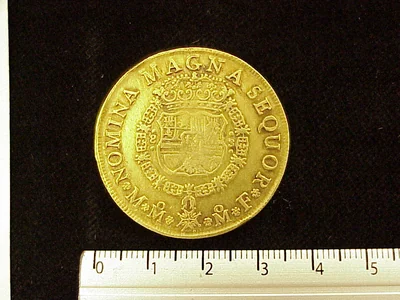
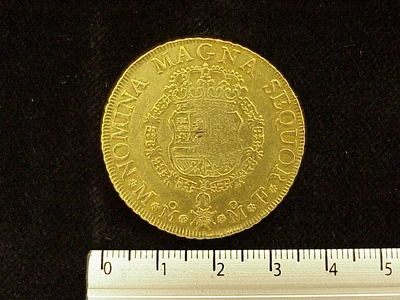
Third type; without denomination
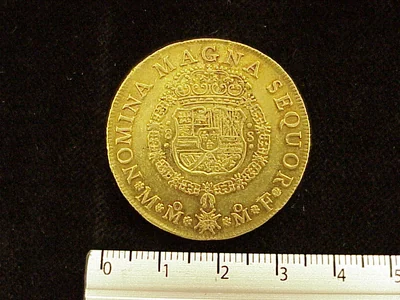
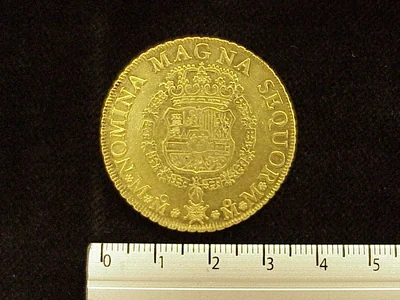
Third type; without denomination
The 8 Escudos Fernando VI 1752 Gold Coin: Value & Worth is worth between $51,251 and $86,318 MXN depending on its grade of preservation.
Prices updated: August 2026
How much is the 8 Escudos Fernando VI 1752 Gold Coin: Value & Worth worth?
The estimated value of the 8 Escudos Fernando VI 1752 Gold Coin: Value & Worth ranges from $51,251 (circulated, XF) up to $86,318 (official blister pack), with $73,566 as a reference for an uncirculated (UNC) piece. The estimate is based on the official mintage and the historical behavior of the family.
The real price depends on four factors: the grade of preservation (a circulated piece is worth the low end of the range; an uncirculated one, or one still in its official blister pack, the high end), the finish (satin vs mirror/proof), the rarity within the series based on the mintage, and the metal spot price on the day of the deal when the piece is silver or gold. Check the value-by-grade table above and compare with equivalent pieces before buying or selling.
Where to buy or sell this coin?
Browse the national directory of numismatic shops or the community forum to trade directly with other collectors.
Description
If you inherited or found an 1752 gold 8 Escudos struck in Mexico City, you are holding a coin that is worth real money at a minimum, because it contains close to an ounce of gold. The question is whether it is worth its metal value or many times more, and that comes down to grade and authenticity. Here is what actually drives the number.
What this coin is
The 8 Escudos was the highest denomination of the Spanish colonial gold system, popularly called an "onza" (ounce) because of its size. This example dates to 1752, during the reign of Fernando VI, and was struck at the Mexico City mint, the main silver and gold producer of the Spanish Empire at the time.
The letters MF on the coin are the assayer's initials, the mint official responsible for certifying the gold's fineness. Assayer initials matter for identification and can affect value on rarer combinations.
Technical specs (verify yours against these)
| Feature | Detail |
|---|---|
| Metal | Gold |
| Weight | 26.95 g |
| Diameter | 36 mm |
| Edge | Incuse (impressed) |
| Mint | Mexico City |
| Assayer | MF |
| Catalog reference | KM#151 |
| Ruler | Fernando VI |
| Date | 1752 |
How much is it worth in 2026?
Start with the floor. At 26.95 grams of gold (roughly 0.76 troy ounces of pure gold before accounting for fineness), the melt value alone puts this coin well into four figures in USD at current gold prices. No genuine 1752 8 Escudos is worth "a few dollars." That is the key difference between this piece and most old coins people bring us.
Above the metal floor, the value is set by three things: grade (how worn or preserved the coin is), authenticity (colonial gold is heavily counterfeited), and the specific date and assayer combination.
- Circulated, heavily worn: value tracks close to gold content, typically the low-to-mid thousands of USD.
- Higher circulated grades (clear detail, honest wear): can bring a meaningful premium over melt, into the mid thousands of USD.
- Uncirculated or exceptional examples, certified: these can reach well into five figures at auction when eye appeal and pedigree align.
We give ranges rather than a single price on purpose. Two 1752 8 Escudos can differ by many thousands of dollars based on grade and whether a grading service has authenticated them. Anyone quoting one exact figure for "an 1752 8 Escudos" without seeing it is guessing.
Is it rare?
Colonial gold 8 Escudos are scarce as a class, far scarcer than the silver 8 Reales of the same era. They were high-value coins that saw heavy use, were melted, or were lost. Survivors in strong grade are genuinely uncommon, which is why certified high-grade examples command real premiums.
That said, "scarce" is not the same as "unique." This is a known, cataloged type (KM#151). Its value comes from gold content plus condition, not from being a one-of-a-kind rarity.
The counterfeit problem (read this before you buy or sell)
Spanish colonial gold is one of the most faked categories in numismatics. Cast copies, tooled pieces, and modern reproductions are everywhere. Because the metal alone is valuable, fakes can still be made of gold or gold-plated base metal, so a coin "passing" a scratch test is not proof.
Before trusting any 1752 8 Escudos:
- Weigh it. It should be very close to 26.95 g on a jewelry scale. A significant miss is a red flag.
- Measure it. Diameter should be about 36 mm with a caliper.
- Check the edge. It should show the incuse (impressed) edge design, not a plain or reeded modern edge.
- Examine the engraving style, mint mark, and assayer letters. Casts often show mushy or soft detail and telltale seams.
- Be suspicious of any offer far below gold value. Nobody sells real colonial gold at a discount to melt.
For a coin at this value level, the safest path is third-party certification (NGC or PCGS). A certified, encapsulated example sells faster and for more because the buyer is not gambling on authenticity.
Where to sell it
Because this is a precious-metal coin worth real money, sell through channels that respect that value:
- A verified numismatic shop from the Pesoteca directory, where you can get an in-person appraisal and payment.
- The Pesoteca buy-and-sell forum, among collectors who understand colonial gold.
Before selling: photograph the obverse, reverse, and edge in good light, note the exact weight, and compare against the ranges above. Do not dump it to the first buyer on social media, and never hand over a gold coin before payment clears.
If you think you might have a genuine 1752 onza and want a second opinion on grade or authenticity, post clear photos in the Pesoteca forum and let collectors weigh in before you commit to a price.
Historical context
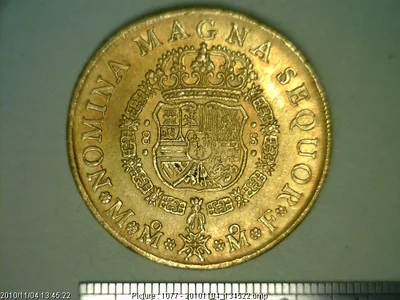
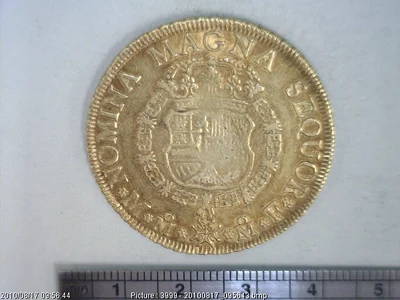
Eight escudos, Fernando VI, 1752, Mexico mint. The listing declares the piece as a third type without denomination, a sign that the reverse die no longer included the value mark VIII, an iconographic change within the same reign. That year Ensenada organized the Royal Southern Squadron on the peninsula and banned the export of silver coin to reinforce the internal money supply. In New Spain the Count of Revillagigedo continued as viceroy. Krause distinguishes KM#151 from KM#150 precisely by this variation in the reverse die. The ounce weighs 27.06 grams with a fineness of 0.916. Produced by mill with a round flan. The pillar reverse kept the crowned Pillars of Hercules and the PLVS VLTRA banners, iconography of the strong royal system in force since 1732, but without the value mark VIII carried by the first variants. The assayer's signature appears in the field as the mark of the capital's workshop. Pieces of 1752 open the third pillar type of Fernando VI, which would continue until the end of the reign in 1759.
This piece belongs to the era
Colonial / Virreinato →Explore all the Mexican coins of this era, their historical context and how they connect to the monetary system of the period.
Value range of this piece
Market estimate: $51,251 - $86,318 MXN depending on the grade of preservation (typical range between a circulated and an uncirculated piece).
See the full breakdown by grade (VG, F, VF, EF, AU, MS-60, MS-63, MS-65) for the whole series →
Same denomination, other years
8 escudos Oro 0.875 (21k) · 8 Escudos Fernando VI
Frequently asked questions
How much is the 1752 Fernando VI 8 Escudos worth?
At minimum it is worth its gold content, since it holds 26.95 g of gold, putting it in the four-figure USD range even worn. Well-preserved and certified examples bring meaningful premiums over melt, and exceptional uncirculated pieces can reach five figures at auction. Grade and authenticity set the final number.
Is the 1752 8 Escudos rare?
Colonial gold 8 Escudos are scarce as a class, much scarcer than the silver 8 Reales of the era, because many were melted or lost. Survivors in high grade are genuinely uncommon. It is a cataloged type (KM#151), so its value comes from gold content plus condition rather than being unique.
How can I tell if my 8 Escudos Fernando VI 1752 is genuine?
Weigh it against 26.95 g on a jewelry scale and measure about 36 mm with a caliper. Confirm the edge shows the incuse (impressed) design, and check the engraving style, mint mark, and MF assayer letters for sharp, seam-free detail. Colonial gold is heavily counterfeited, so for a coin this valuable, third-party certification from NGC or PCGS is the safest verification.
Where should I sell an 1752 8 Escudos gold coin?
Use a [verified numismatic shop from the Pesoteca directory](/tiendas) for an in-person appraisal and payment, or the [Pesoteca buy-and-sell forum](/foro/compra-venta) among collectors. Photograph the obverse, reverse, and edge, note the exact weight, and compare the value ranges above. Never release a gold coin before payment clears.
Conversation
0 comments
Loading comments…