
8 Escudos Fernando VI 1749: Gold Onza Value
The 8 Escudos Fernando VI 1749: Gold Onza Value is worth between $51,327 and $86,446 MXN depending on its grade of preservation.
Prices updated: August 2026
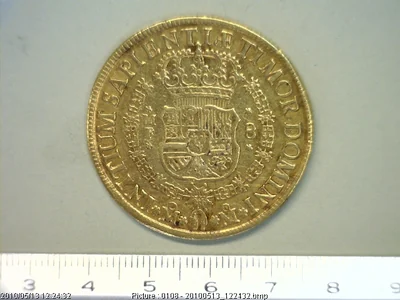
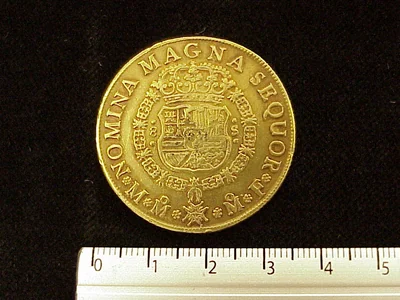
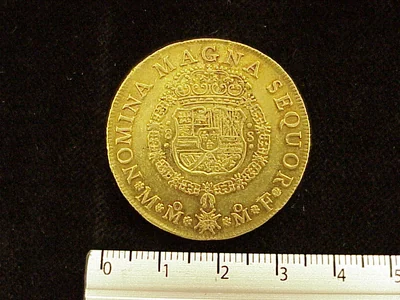
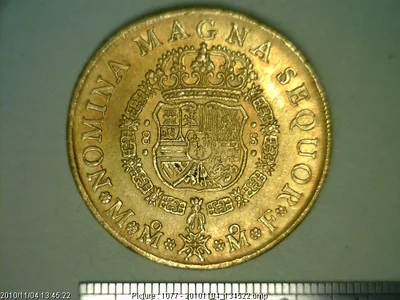
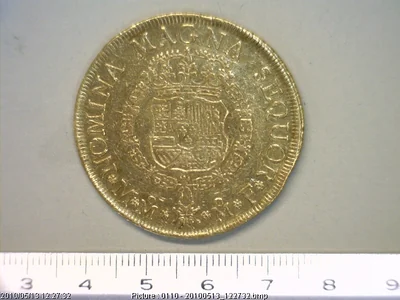
Second type; Cross of the Golden Fleece below fleece; draped bust.
Second type; Cross of the Golden Fleece below fleece; draped bust.
The 8 Escudos Fernando VI 1749: Gold Onza Value is worth between $51,327 and $86,446 MXN depending on its grade of preservation.
Prices updated: August 2026
How much is the 8 Escudos Fernando VI 1749: Gold Onza Value worth?
The estimated value of the 8 Escudos Fernando VI 1749: Gold Onza Value ranges from $51,327 (circulated, XF) up to $86,446 (official blister pack), with $73,675 as a reference for an uncirculated (UNC) piece. The estimate is based on the official mintage and the historical behavior of the family.
The real price depends on four factors: the grade of preservation (a circulated piece is worth the low end of the range; an uncirculated one, or one still in its official blister pack, the high end), the finish (satin vs mirror/proof), the rarity within the series based on the mintage, and the metal spot price on the day of the deal when the piece is silver or gold. Check the value-by-grade table above and compare with equivalent pieces before buying or selling.
Where to buy or sell this coin?
Browse the national directory of numismatic shops or the community forum to trade directly with other collectors.
Description
If you inherited an 8 Escudos of Fernando VI dated 1749, you are holding just under one ounce of colonial gold. That fact alone puts it well into the thousands of US dollars, and a sharp, authentic example can reach five figures at auction. This is not a common pocket coin. It was the highest denomination of the Spanish colonial system, and genuine survivors are prized worldwide.
What this coin actually is
The 8 Escudos was the largest gold coin of the Spanish Empire, popularly called an "onza" (Spanish for ounce) because it weighs close to one troy ounce. Yours was struck at the Mexico City mint (the Casa de Moneda de México), which was the empire's main precious-metal producer, during the reign of Fernando VI.
Key specs, exactly as cataloged:
- Metal: gold, fineness .875 (87.5% pure)
- Weight: 26.99 grams (roughly 0.76 troy ounce of pure gold)
- Diameter: 36.22 mm
- Edge: reeded (milled)
- Catalog reference: KM#150
- Assayer initials: MF (the mint official who certified the gold's fineness)
- Design: second type, armored bust of Fernando VI in robes on the front, crowned arms with the Cross of the Order of the Golden Fleece (Toisón) below on the reverse
How much is an 8 Escudos Fernando VI 1749 worth in 2026?
Start with the floor. With 26.99 grams at .875 fineness, this coin contains about 23.6 grams (0.76 troy oz) of pure gold. At current gold prices that gives it a melt value of well over 1,500 US dollars on metal content alone. No genuine 8 Escudos of this era sells below its gold value.
But collectors pay far more for the numismatic piece, not the scrap. Real value depends almost entirely on grade (state of preservation) and eye appeal:
| Condition | Typical value range (USD) |
|---|---|
| Damaged, mounted, or ex-jewelry | 1,500 to 2,500 (near melt) |
| Circulated, honest wear (VF) | 2,500 to 4,500 |
| Lightly circulated to About Uncirculated | 4,500 to 8,000 |
| Uncirculated / high grade, certified | 8,000 to 15,000+ |
Mexico City 8 Escudos of Fernando VI cross the auction block regularly at Heritage Auctions and Stack's Bowers. Well-struck, problem-free examples in AU and Mint State are the ones that command the top of these ranges. Anything cleaned, holed, or worn to a slick trades close to its gold value.
If yours has been polished, that hurts the number. Never clean a colonial gold coin. Cleaning removes original surface and drops the price a collector will pay, sometimes by half.
The myth about "very old = worth a fortune"
Being from 1749 does not automatically make this a museum piece. Plenty of 18th-century Spanish colonial coins are worth modest amounts. What lifts the 8 Escudos is a real combination: it is gold, it is the top denomination (so few were made and fewer survived), and there is steady global demand for early Mexico City gold. Age is a factor, but the gold content and the survival rate do the heavy lifting.
One more myth to kill: dramatic "error" claims on social media. Genuine mint errors on colonial gold (off-center strikes, die rotation, doubled dies) exist and can raise value if verified by a grading service. But most "errors" people post are post-mint damage: knocks, corrosion, and casting marks from a fake. Treat every error claim with skepticism until an expert confirms it.
How to tell if yours is genuine
Counterfeits of Spanish colonial gold are common, both period fakes and modern casts. Run these checks before you celebrate:
- Weigh it. Use a jewelry scale. A genuine coin should be very close to 26.99 grams. A light coin is a red flag.
- Measure the diameter. It should be about 36.22 mm on a caliper.
- Check the edge. It should show reeding (fine vertical lines). A smooth or seam-lined edge suggests a cast copy.
- Study the engraving, mint mark, and assayer initials (MF). Genuine dies have crisp, confident detail. Fakes look soft, mushy, or grainy under magnification.
- Be suspicious of any offer well below the gold value. No honest seller gives away nearly an ounce of gold.
The only way to be sure is professional authentication. Submitting the coin to NGC or PCGS for grading and encapsulation both confirms it is real and locks in a market grade, which raises what buyers will pay.
Where to sell it
Because this is a high-value precious-metal piece, sell where the coin can be examined in person and where you get paid for the numismatic value, not just the gold.
- A verified coin dealer from the Pesoteca shop directory can appraise it on the spot.
- The Pesoteca buy-and-sell forum reaches collectors who pay full market rates for colonial gold.
- For the highest results on a certified high-grade example, a major auction house (Heritage, Stack's Bowers) is worth considering.
Photograph the front, the back, and the edge in good light before you show it to anyone. Deal only with people who let you verify the coin and its weight first. Skip dumping it on a social-media buyer at the first lowball offer, and never sell colonial gold as scrap to a pawn or jewelry buyer who only pays melt.
Have an 8 Escudos of Fernando VI, or another piece of Mexican colonial gold you can't identify? Post clear photos of both sides and the edge on the Pesoteca forum and let the community help you pin down the type, the grade, and a realistic price.
Historical context
Eight escudos Fernando VI, 1749, Mexico mint. The first full year after the Treaty of Aix-la-Chapelle of 1748 that ended the War of the Austrian Succession. Fernando VI maintained the Spanish policy of neutrality with Ensenada as his chief minister, who was promoting in Spain the Cadastre that would bear his name, a pioneering attempt at taxation proportional to wealth. The piece follows the second type with the Golden Fleece beneath the fleece and a bust dressed in a tunic, the same iconography as 1748. The ounce weighs 27.06 grams with a fineness of 0.916. Produced by mill with a round planchet. In Mexico the Count of Revillagigedo continued as viceroy. Krause references KM#150 as the stabilized type of the Fernando VI pillar coinage in Mexico. The assayer's signature appears on the reverse as the mark of the capital's workshop. Pieces from this year are testimony to a decade of relative imperial peace that allowed New Spain to consolidate its role as the crown's main supplier of precious metals. The classic pillar reverse remained unchanged from the start of the reign.
This piece belongs to the era
Colonial / Virreinato →Explore all the Mexican coins of this era, their historical context and how they connect to the monetary system of the period.
Value range of this piece
Market estimate: $51,327 - $86,446 MXN depending on the grade of preservation (typical range between a circulated and an uncirculated piece).
See the full breakdown by grade (VG, F, VF, EF, AU, MS-60, MS-63, MS-65) for the whole series →
Same denomination, other years
8 escudos Oro 0.875 (21k) · 8 Escudos Fernando VI
Frequently asked questions
How much is an 8 Escudos Fernando VI 1749 worth?
It contains about 0.76 troy ounce of pure gold, giving it a melt floor of well over 1,500 US dollars. Collector value depends on grade: circulated examples run roughly 2,500 to 4,500 dollars, while certified high-grade pieces can reach 8,000 to 15,000 dollars or more at auction.
Is the 8 Escudos Fernando VI 1749 rare?
Yes. As the top gold denomination of the Spanish colonial system, few were struck and fewer survived in collectible condition. Mexico City examples appear at auction periodically, but problem-free high-grade coins are genuinely scarce and command the strongest prices.
Where can I sell an 8 Escudos Fernando VI 1749?
Sell through a verified dealer from the [Pesoteca directory](/tiendas), who can appraise it in person, or the [Pesoteca buy-and-sell forum](/foro/compra-venta) where collectors pay full market value. For a certified high-grade coin, a major auction house like Heritage or Stack's Bowers can bring the best result. Photograph both sides and the edge first.
How can I tell if my 8 Escudos Fernando VI 1749 is genuine?
Weigh it (should be near 26.99 g) and measure the diameter (about 36.22 mm) with a jewelry scale and caliper. Check for a reeded edge and crisp, sharp engraving with the MF assayer initials. Counterfeits of colonial gold are common, so for certainty submit it to NGC or PCGS for authentication.
Conversation
0 comments
Loading comments…