
8 Escudos Fernando VII 1812 Gold Coin: Value & How to Sell
The 8 Escudos Fernando VII 1812 Gold Coin: Value & How to Sell is worth between $51,327 and $86,446 MXN depending on its grade of preservation.
Prices updated: August 2026
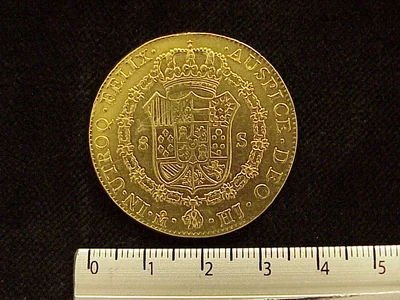
Viceroyalty · Mexico City Mint · Assayer JJ
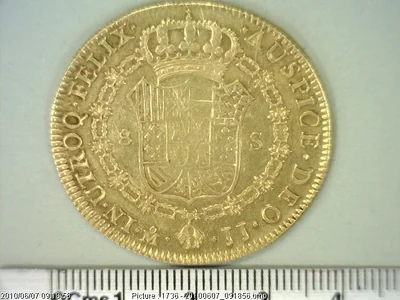
Viceroyalty · Mexico City Mint · Assayer JJ
The 8 Escudos Fernando VII 1812 Gold Coin: Value & How to Sell is worth between $51,327 and $86,446 MXN depending on its grade of preservation.
Prices updated: August 2026
How much is the 8 Escudos Fernando VII 1812 Gold Coin: Value & How to Sell worth?
The estimated value of the 8 Escudos Fernando VII 1812 Gold Coin: Value & How to Sell ranges from $51,327 (circulated, XF) up to $86,446 (official blister pack), with $73,675 as a reference for an uncirculated (UNC) piece. The estimate is based on the official mintage and the historical behavior of the family.
The real price depends on four factors: the grade of preservation (a circulated piece is worth the low end of the range; an uncirculated one, or one still in its official blister pack, the high end), the finish (satin vs mirror/proof), the rarity within the series based on the mintage, and the metal spot price on the day of the deal when the piece is silver or gold. Check the value-by-grade table above and compare with equivalent pieces before buying or selling.
Where to buy or sell this coin?
Browse the national directory of numismatic shops or the community forum to trade directly with other collectors.
Description
If you inherited or found an 1812 8 Escudos with Fernando VII on it, here is the short answer: this is a large gold coin, roughly three-quarters of a troy ounce of pure gold, so it has a real floor value in the hundreds to low thousands of dollars even in worn condition. Certified high-grade examples of colonial Mexican 8 escudos sell for several thousand dollars at auction. This is not a common pocket coin, and it is not a coin to sell cheap.
What you actually have
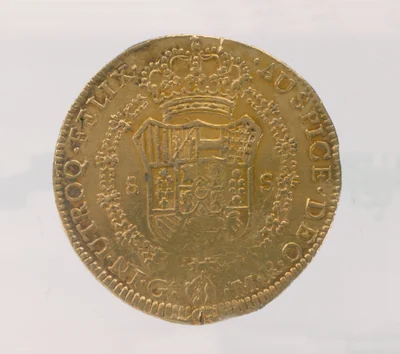
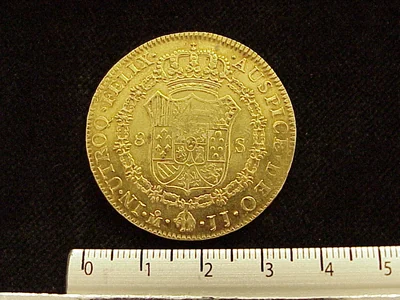
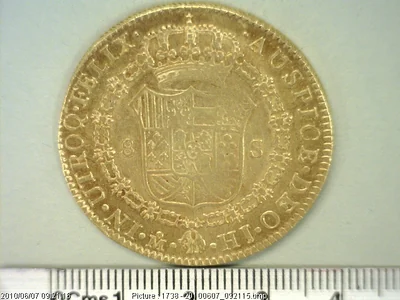
The 8 escudos was the largest gold denomination struck in colonial Mexico, minted at the Casa de Moneda de México (the Mexico City mint) while New Spain was under the Spanish Crown. The 1812 issue carries the portrait of Fernando VII, the Bourbon king of Spain during that period.
Hard specs, verify yours against these:
- Metal: Gold, .875 fine (21 karat)
- Weight: 26.99 grams (about 0.76 troy ounces of pure gold)
- Diameter: 37.06 mm
- Edge: Diagonally reeded
- Mint: Mexico City (Casa de Moneda de México)
- Assayer mark: JJ
- Date: 1812 (single year of this description)
Collectors call this type a "cob successor" milled 8 escudos, part of the Colonial Escudos gold series. If your coin does not match the weight and diameter above, treat it as suspect until proven otherwise.
What it is worth in USD
Value comes from two layers, and you need to understand both.
1. The gold floor (melt value). At 26.99 grams and .875 fine, this coin contains about 0.76 troy ounces of pure gold. That alone sets a hard floor tied to the international gold spot price. No matter how worn the coin is, it is worth at least its gold content. That is why even a beat-up example is worth hundreds of dollars, not a few dollars like most old base-metal coins.
2. The numismatic premium. Above melt, a well-preserved 1812 8 escudos in an attractive grade commands a collector premium. Colonial Mexican 8 escudos in high certified grades regularly trade in the low-to-mid four figures at major houses. The premium depends on grade, eye appeal, strike quality, and whether it is certified by NGC or PCGS.
| Condition | What drives the price | Typical USD range |
|---|---|---|
| Heavily worn / damaged | Gold content only | Melt value (hundreds) |
| Circulated, problem-free | Melt plus modest premium | Melt to low four figures |
| High grade, certified (AU/UNC) | Rarity and eye appeal | Several thousand dollars |
These are ranges, not fixed quotes. Gold spot moves daily, and colonial coins vary piece to piece. For a firm number you need the coin graded or appraised in hand.
The reality on rarity
Exact mintage figures for this specific 1812 issue are not cleanly documented, which is common for colonial coinage. Do not let anyone tell you a precise "only X were made" figure unless they can source it. What matters more for value is survivors and grade: how many still exist in collectible condition. Colonial 8 escudos survive in decent numbers, so this is a desirable coin but not a unique rarity. Grade is where the money is.
There can be die varieties (letter positions, minor cutting differences) that specialists identify. For most owners, condition and authenticity matter far more than chasing a variety.
How to tell if yours is genuine
Gold counterfeits exist, and this denomination is a target because the coin is valuable.
- Weigh it. It should be 26.99 grams. Counterfeits from lower-purity gold or base metal almost always fail the weight test. A cheap jeweler's scale settles most fakes fast.
- Measure it. 37.06 mm diameter. Off-size is a red flag.
- Check the edge. Diagonally reeded. Cast fakes often have a soft, mushy, or wrong edge.
- Look at the details. Genuine coins have crisp lettering and portrait detail; casts look grainy and slightly rounded.
- When in doubt, certify. For a coin worth this much, submit it to NGC or PCGS. Their grading and authentication is the definitive insurance and it raises resale value.
Where to sell it (and get paid fairly)
Because this is a precious-metal coin, you always have a buyer, but not every buyer pays what it is worth.
- Reputable coin dealers and auction houses. A dealer who handles world gold will value it on the spot. For a strong example, a major auction house (Heritage, Stack's Bowers) reaches the collector market that pays top dollar.
- Get it graded first if it looks high-end. A certified AU or Uncirculated coin sells for far more than a raw one because the buyer trusts the grade.
- Never sell as scrap gold. A jeweler or gold buyer will only pay melt. This coin is worth more than its metal to a collector, so selling it for melt leaves money on the table.
- Pesoteca community. Compare notes and buyers in the Pesoteca buy/sell forum and check verified dealers in the Pesoteca directory.
Always photograph the obverse, reverse, and edge before you sell, and confirm the weight in front of any buyer.
Related pages
Explore the full Colonial / Viceroyalty era, browse other Mexican 8 escudos, and see other coins dated 1812.
Have one in hand and want a second opinion on grade or authenticity? Post clear photos of both sides and the edge in the Pesoteca forum and let the community weigh in before you sell.
Historical context
Eight escudos Ferdinand VII, 1812, Mexico mint, assayer JJ, Krause KM#160. Year of the Constitution of Cádiz, promulgated on March 19, the first liberal Spanish constitution, which recognized Americans as citizens with representation in the Cortes. An enormous political change within the empire, though its enforcement in New Spain was limited. In Mexico, Venegas continued as viceroy and José María Morelos was already leading the southern insurgency with victories at Cuautla against Calleja during the 62-day siege, a symbolic rupture in the war. The onza weighs 27.06 grams with 0.875 fineness. Produced by mill press with a round blank. The imaginary bust of Ferdinand VII is retained (KM#160). The assayers' signature JJ continues in the field. Pieces of 1812 are testimony to the simultaneity of two processes: Cádiz constitutional liberalism and the New Spain insurgent war.
This piece belongs to the era
Colonial / Virreinato →Explore all the Mexican coins of this era, their historical context and how they connect to the monetary system of the period.
Value range of this piece
Market estimate: $51,327 - $86,446 MXN depending on the grade of preservation (typical range between a circulated and an uncirculated piece).
See the full breakdown by grade (VG, F, VF, EF, AU, MS-60, MS-63, MS-65) for the whole series →
Same denomination, other years
8 escudos Oro 0.875 (21k) · Escudos Coloniales (oro)
Frequently asked questions
How much is an 1812 8 Escudos Fernando VII worth?
It has a hard floor at its gold content, about 0.76 troy ounces of pure gold, so even a worn example is worth hundreds of dollars. Circulated problem-free coins run from melt into the low four figures, and high-grade certified examples reach several thousand dollars. Gold spot moves daily, so get a firm quote in hand.
Is the 1812 8 Escudos rare?
It is a desirable colonial gold coin but not a unique rarity. Exact mintage for this issue is not cleanly documented, so ignore anyone quoting a precise number without a source. What drives value is condition and how many survive in collectible grade. A certified high-grade coin is worth a large multiple of a worn one.
How do I tell if my 8 Escudos is genuine?
Weigh it: it should be 26.99 grams. Measure it: 37.06 mm. Check for a diagonally reeded edge and crisp lettering. Gold fakes almost always fail on weight or size. For a coin worth this much, submit it to NGC or PCGS for authentication and grading, which also boosts resale value.
Where should I sell an 1812 8 Escudos?
Sell to a reputable coin dealer or a major auction house like Heritage or Stack's Bowers that reaches collectors, not to a scrap gold buyer who only pays melt. If the coin looks high-end, get it graded first. You can also compare buyers in the Pesoteca buy/sell forum and directory.
Conversation
0 comments
Sources
Images for informational and educational purposes, attributed to their original source. Reference values; the real price depends on the grade, the specific variant and demand.
Loading comments…