
8 Reales Felipe V 1714 (Silver Cob): What It's Worth
The 8 Reales Felipe V 1714 : What It's Worth is worth between $710 and $2,989 MXN depending on its grade of preservation.
Prices updated: August 2026
The 8 Reales Felipe V 1714 : What It's Worth is worth between $710 and $2,989 MXN depending on its grade of preservation.
Prices updated: August 2026
How much is the 8 Reales Felipe V 1714 (Silver Cob): What It's Worth worth?
The estimated value of the 8 Reales Felipe V 1714 (Silver Cob): What It's Worth ranges from $710 (circulated, XF) up to $2,989 (official blister pack), with $2,160 as a reference for an uncirculated (UNC) piece. The estimate is based on the official mintage and the historical behavior of the family.
The real price depends on four factors: the grade of preservation (a circulated piece is worth the low end of the range; an uncirculated one, or one still in its official blister pack, the high end), the finish (satin vs mirror/proof), the rarity within the series based on the mintage, and the metal spot price on the day of the deal when the piece is silver or gold. Check the value-by-grade table above and compare with equivalent pieces before buying or selling.
Where to buy or sell this coin?
Browse the national directory of numismatic shops or the community forum to trade directly with other collectors.
Description
If you inherited a rough, irregular silver coin marked with a Spanish coat of arms and the name PHILIP V, you likely have an 8 Reales silver cob struck in Mexico City in 1714. Most examples trade in the 150 to 800 USD range depending on how clear the design and date are. Clean, well-struck pieces can reach a few thousand. Damaged or badly worn ones sit near their silver value, roughly 20 to 25 USD.
This is not a rare coin in the strict sense. Millions of Spanish colonial 8 Reales (the famous "pieces of eight") were minted, and many survive. What separates a 200 USD coin from a 2,000 USD coin is entirely condition: strike quality, a legible date, full weight, and clean surfaces.
What you actually have
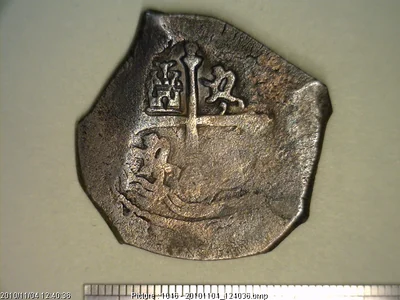
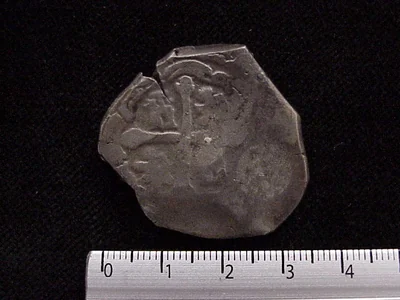
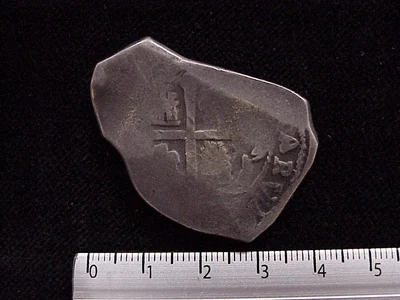
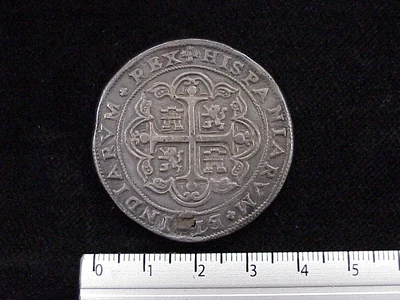
The 8 Reales was the standard large silver coin of the Spanish empire, known in English as the "piece of eight." It circulated worldwide as trade currency, from Europe to Asia via the Manila galleon. Your 1714 example was made by hand at the Mexico City Mint (Casa de Moneda de México) before machine striking arrived, using a process that produced the crude, off-round pieces collectors call cobs (in Spanish, macuquinas).
Specifications, which you should verify against your coin:
| Feature | Detail |
|---|---|
| Denomination | 8 Reales |
| Ruler | Felipe V (Philip V, first Bourbon king of Spain) |
| Year | 1714 |
| Mint | Mexico City (Casa de Moneda) |
| Weight | 25.79 grams |
| Diameter | 35 mm |
| Metal | Silver, .917 fineness (traditional standard) |
| Type | Hand-struck cob (macuquina), irregular shape |
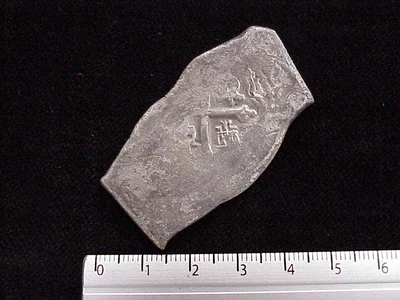
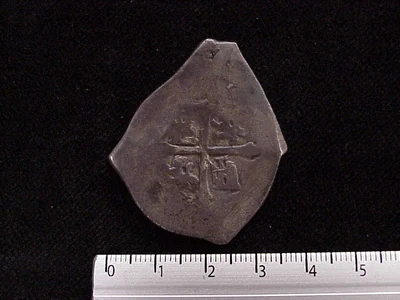
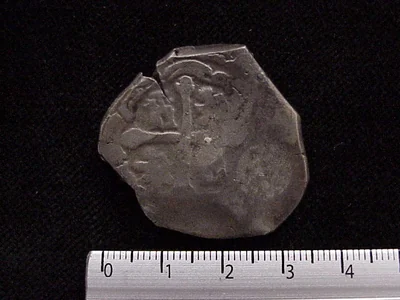
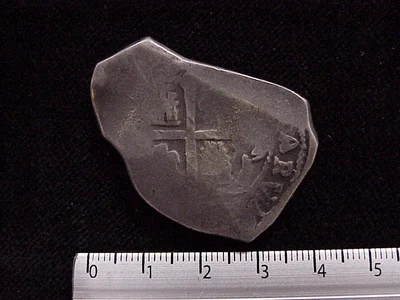
The irregular outline and rough relief are normal. These coins were cut from a silver bar and struck by hammer, so no two look exactly alike.
What it's worth in 2026
Because cobs vary so much piece to piece, value is a range, not a fixed number. Here is a realistic breakdown:
| Condition | What it looks like | Approx. value (USD) |
|---|---|---|
| Damaged / heavily worn | No clear date, corroded, clipped | 20 to 40 (near silver melt) |
| Circulated, partial detail | Some shield visible, date weak | 100 to 300 |
| Clear date and mint marks | Readable, full weight, decent strike | 400 to 900 |
| Sharp, well-centered, certified | Strong detail, NGC/PCGS graded | 1,500 to 4,000+ |
The single biggest value driver is a legible date. A cob with a clearly visible 1714 is worth far more than an otherwise similar coin where the date is off the flan or worn away. Full original weight matters too: colonial coins were often clipped, and a clipped, underweight example loses value.
How to check if yours is genuine
Spanish colonial silver is heavily faked, and cast copies are common. Check the basics first:
- Weigh it. A genuine, unclipped example should be close to 25.79 grams. Use a jewelry scale.
- Measure it. Around 35 mm across the widest point.
- Look at the surface. Real cobs were struck, so detail has crisp edges. Cast fakes look soft, grainy, or show a seam around the rim.
- Silver test. Genuine coins are non-magnetic and have the ring and heft of high-grade silver.
- Be suspicious of any bargain priced below the coin's silver content. That is a red flag for a fake.
For anything you plan to sell above a few hundred dollars, get it authenticated. NGC and PCGS both certify Spanish colonial cobs, and a graded holder removes the buyer's doubt and raises the price you can ask.
Where to sell it
You have a few honest options:
- A specialist dealer or auction house. Firms like Heritage Auctions and Stack's Bowers handle Spanish colonial silver regularly and reach the collectors who pay top prices. Best for high-grade or certified pieces.
- A verified numismatic shop from the Pesoteca dealer directory, which can value it in person on the spot.
- The Pesoteca buy-and-sell forum, where collectors trade directly.
Before selling, photograph the obverse, reverse, and edge in good light, and check the value ranges above. Don't dump it to the first Facebook offer, and never sell precious metal to anyone who won't let you weigh and inspect the piece first.
About "error" coins
Genuine mint errors (off-center strikes, double strikes, die rotation) can raise value. But on hand-struck cobs, most of what people call an "error" is simply the normal irregularity of the process, or post-mint damage like scratches and corrosion. If you think yours has a true error, post clear photos in the Pesoteca forum and let the community weigh in before you assume it's worth extra.
Got one of these silver cobs sitting in a drawer and want a read on the date and grade? Post front and back photos in the Pesoteca forum and the community will help you place it.
Historical context
This piece belongs to the reign of Felipe V of Spain (1700-1746). The first Bourbon king in Spain, grandson of Louis XIV of France. His first period of reign (1700-1724) lasted until his abdication in favor of Luis I.
The government of New Spain in 1714 was in the charge of Fernando de Alencastre, duke of Linares, following the Treaty of Utrecht.
The piece's numismatic type is cob, also called hammer-cut coin. The blanks were clipped with shears from a silver bar and struck between hand-held dies, so no cob has an edge or perfectly circular shape. It circulated as a reference trade coin throughout the Atlantic for more than two centuries.
The Mexico mint had been striking cobs almost without interruption since the 16th century. The final years before the 1732 pillar reform saw an increase in the volume of registered silver, pressured by European demand and by the mines of Zacatecas and Guanajuato. The dies were signed by the Mexico mint assayer active in the period, an official charged by the Royal Treasury with certifying that the silver fineness met the viceregal standard.
The colonial catalogs trace this piece within the families of the Mexico Real de a ocho, with prices that respond to rarity by year and assayer signature.
The year of the fall of Barcelona and the effective close of the War of the Spanish Succession.
This piece belongs to the era
Colonial / Virreinato →Explore all the Mexican coins of this era, their historical context and how they connect to the monetary system of the period.
Value range of this piece
Market estimate: $710 - $2,989 MXN depending on the grade of preservation (typical range between a circulated and an uncirculated piece).
See the full breakdown by grade (VG, F, VF, EF, AU, MS-60, MS-63, MS-65) for the whole series →
Other denominations from 1714
8 Reales Coloniales · Plata 0.900
Same denomination, other years
8 reales Plata 0.900 · 8 Reales Coloniales
Frequently asked questions
How much is an 8 Reales Felipe V 1714 worth?
Most examples sell for 100 to 800 USD depending on condition, with a legible 1714 date being the biggest value driver. Damaged or heavily clipped coins sit near silver melt (about 20 to 40 USD), while sharp, well-struck or certified pieces can reach 1,500 to 4,000 USD or more.
Is the 1714 Mexico 8 Reales rare?
Not in the strict sense. Spanish colonial 8 Reales ("pieces of eight") were minted in huge numbers and many survive. Rarity here is about condition: a coin with a clear date, full 25.79 g weight, and a strong strike is scarce and commands a real premium over an average worn example.
Where can I sell my 8 Reales Felipe V 1714?
For higher-grade or certified pieces, a specialist auction house like Heritage or Stack's Bowers reaches the buyers who pay the most. You can also use a verified shop from the [Pesoteca dealer directory](/tiendas) for an in-person valuation, or the [Pesoteca buy-and-sell forum](/foro/compra-venta) to trade with collectors. Photograph both sides and the edge first.
How can I tell if my 8 Reales Felipe V 1714 is genuine?
Weigh it (close to 25.79 g) and measure it (about 35 mm) with a jewelry scale and calipers. Real cobs were struck, so detail has crisp edges, while cast fakes look soft, grainy, or show a rim seam. The coin should be non-magnetic. Be suspicious of any price below its silver content, and get valuable pieces certified by NGC or PCGS.
Conversation
0 comments
Loading comments…