
1813 Chihuahua 8 Reales Silver: Value & Prices
The 1813 Chihuahua 8 Reales Silver: Value & Prices is worth between $706 and $2,971 MXN depending on its grade of preservation.
Prices updated: August 2026
The 1813 Chihuahua 8 Reales Silver: Value & Prices is worth between $706 and $2,971 MXN depending on its grade of preservation.
Prices updated: August 2026
How much is the 1813 Chihuahua 8 Reales Silver: Value & Prices worth?
The estimated value of the 1813 Chihuahua 8 Reales Silver: Value & Prices ranges from $706 (circulated, XF) up to $2,971 (official blister pack), with $2,147 as a reference for an uncirculated (UNC) piece. The estimate is based on the official mintage and the historical behavior of the family.
The real price depends on four factors: the grade of preservation (a circulated piece is worth the low end of the range; an uncirculated one, or one still in its official blister pack, the high end), the finish (satin vs mirror/proof), the rarity within the series based on the mintage, and the metal spot price on the day of the deal when the piece is silver or gold. Check the value-by-grade table above and compare with equivalent pieces before buying or selling.
Where to buy or sell this coin?
Browse the national directory of numismatic shops or the community forum to trade directly with other collectors.
Description
If you inherited an old Mexican silver coin dated 1813 with an eight and the word REALES on it, you have a piece worth real money, though rarely a fortune. Most 1813 Chihuahua 8 Reales trade from roughly 100 to a few hundred USD, with sharp, problem-free examples pushing past 1,500 USD. Here is what actually drives that number.
What you actually have
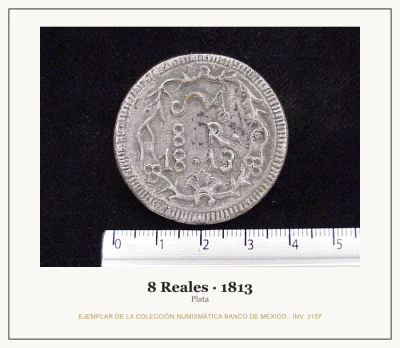
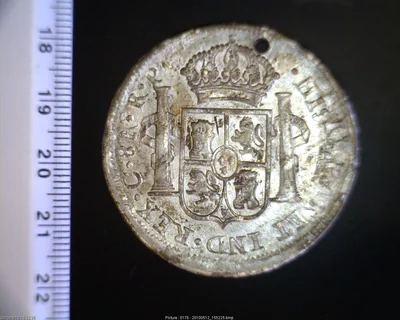
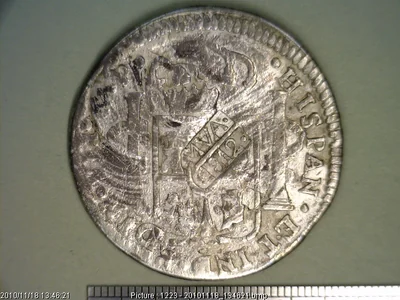
The 8 Reales was the silver "piece of eight," the workhorse trade coin of the Spanish-speaking world for centuries and the direct ancestor of the US dollar. Your 1813 example was struck at the Chihuahua mint (marked with a distinctive assay style) during the Mexican War of Independence, when control of the mints passed back and forth between Royalist and insurgent forces. That chaos is why war-era Chihuahua coins look cruder than the polished Mexico City strikes.
Key specs, catalogued as KM# 123:
- Metal: silver, .900 fine (90 percent pure)
- Weight: 25.64 grams
- Diameter: 40.14 mm
- Edge: reeded
- Assayer initials: RP (the official who certified the silver content)
- Mint: Chihuahua
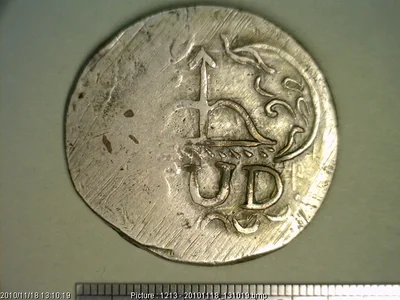
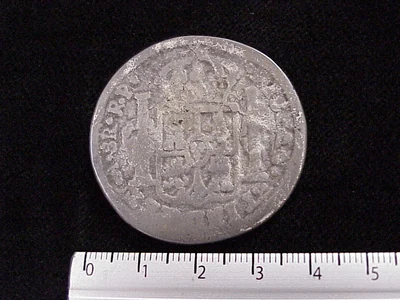
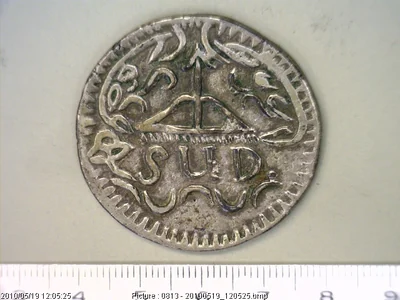
The Chihuahua coins of this period were often cast planchets or struck on rough blanks, so a genuine piece can look uneven. That is normal for the type, not damage.
What it's worth in 2026
There are two floors under this coin. The first is its silver: about 0.742 troy ounces of pure silver, so at current bullion prices the metal alone is worth roughly 20 to 25 USD. No genuine example should ever sell below melt. The second floor is collector demand, and war-era Chihuahua silver has a steady following.
Grade is everything. A worn, corroded, or cleaned coin sits near the low end. A sharp, original piece with clean surfaces and no problems climbs fast.
| Grade / condition | Typical value (USD) |
|---|---|
| Heavily worn / damaged | 30 to 80 |
| Circulated, honest wear (VF) | 100 to 300 |
| Sharp, minor wear (XF) | 300 to 800 |
| About Uncirculated / choice | 800 to 1,500+ |
These are working ranges for the type. A specific example can land anywhere in or beyond them depending on eye appeal, strike quality, and whether it has been certified by a grading service like NGC or PCGS. Certified problem-free coins command a real premium because buyers trust the grade and the authentication.
The myth to kill
"It's 200 years old, it must be worth thousands." Age alone means very little here. Millions of 8 Reales were struck across all the Mexican mints, and the type as a whole is common. What makes your coin interesting is the specific combination: Chihuahua mint, war date, and condition. A beat-up, scrubbed example is still a nice historical object, but it is a 50-dollar coin, not a 5,000-dollar one. Ignore social-media posts claiming any old "piece of eight" is worth a house.
How to tell if yours is genuine
Colonial and war-era silver is heavily faked, so verify before you buy or celebrate:
- Weigh it. Use a jewelry scale. A genuine coin should be close to 25.64 grams. Way off means trouble.
- Measure it. Diameter around 40.14 mm, with a reeded (grooved) edge.
- Check the metal. Real .900 silver rings, does not stick to a magnet, and shows natural gray toning, not a bright chrome shine.
- Study the design and marks. The mint mark and the RP assayer initials should match known Chihuahua examples. Fakes often get the engraving style or lettering wrong.
- Be suspicious of bargains. Any offer far below the coin's silver value is a red flag.
When in doubt, submit it to a grading service. A slabbed, authenticated coin is easier to sell and worth more.
Errors and varieties
Genuine mint errors (off-center strikes, die rotation, doubled dies) can multiply value, but most "errors" people spot are post-mint damage: dents, corrosion, or scratches. War-era Chihuahua coins are especially prone to being mistaken for errors because of their rough manufacture. If you think you have a true error, get a second opinion before assuming a premium.
Where to sell it
For a coin with real silver content, sell only where you can show the piece and its weight, and get paid on verified value:
- A verified numismatic dealer from the Pesoteca directory, who can appraise it on the spot.
- The Pesoteca buy-and-sell forum, where collectors trade directly.
- For higher-grade or certified pieces, a major auction house (Heritage, Stack's Bowers) reaches the strongest buyers.
Photograph the obverse, reverse, and edge in good light before you list. Do not dump it on a general marketplace to the first buyer who messages you.
Have a war-era 8 Reales and not sure of the mint or grade? Post clear photos of both sides on the Pesoteca forum and let collectors help you pin down what it is.
Historical context
This 8 reales silver piece corresponds to 1813, amid the Morelos stage (Congress of Chilpancingo) of the Mexican War of Independence. In 1813 Morelos took Acapulco (August) and convened the Congress of Chilpancingo (September 14), where he presented the Sentiments of the Nation. Félix María Calleja assumed the viceroyalty in March.
The Chihuahua mint (mark Ca) opened in 1811 as an emergency response to the insurgent blockade of the roads toward the central Mexico City mint. Authorized by Royal Order as a provisional royalist mint, it struck with rustic technique the pesos needed for troop pay and the trade of the mining north. Issuing side: provincial royalist (north). The silver fineness was .903 and the theoretical weight 27.07 grams, within the octaval system inherited from the viceroyalty.
The 1813 Chihuahua issues are from the third year of the provincial royalist mint. That year the flow of silver from Santa Eulalia and Batopilas was consolidated, countering the insurgent blockade of the center of the country.
In the numismatic market they are hunted by collectors of military history and the origins of the nation. When buying one-to-one, verify the authenticity of the planchet and the declared mint. Many common pieces are sold as "war rarities" without being so: consult the Krause reference before accepting a middleman's premium.
This piece belongs to the era
Colonial / Virreinato →Explore all the Mexican coins of this era, their historical context and how they connect to the monetary system of the period.
Value range of this piece
Market estimate: $706 - $2,971 MXN depending on the grade of preservation (typical range between a circulated and an uncirculated piece).
See the full breakdown by grade (VG, F, VF, EF, AU, MS-60, MS-63, MS-65) for the whole series →
Other denominations from 1813
misc-8 Reales Plata Independencia · Plata 0.900
Same denomination, other years
8 reales Plata 0.900 · misc-8 Reales Plata Independencia
Frequently asked questions
How much is an 1813 Chihuahua 8 Reales silver coin worth?
It depends almost entirely on condition. A worn or damaged example runs about 30 to 80 USD, a solid circulated coin 100 to 300 USD, and a sharp, problem-free piece 800 to 1,500 USD or more. The silver alone sets a floor of roughly 20 to 25 USD, so no genuine coin should sell below melt.
Is the 1813 8 Reales rare?
The 8 Reales as a type is common, since millions were struck across the Mexican mints. What gives this coin its collector value is the specific combination of the Chihuahua mint, the War of Independence date, and its condition. High-grade, certified examples are genuinely scarce; well-worn ones are not.
Where can I sell my 1813 8 Reales?
Use a verified dealer from the Pesoteca directory for an on-the-spot appraisal, or the Pesoteca buy-and-sell forum to reach collectors directly. For high-grade or certified coins, a major auction house like Heritage or Stack's Bowers gets the strongest bids. Photograph both sides and the edge before selling.
How do I know if my 1813 8 Reales is real?
Weigh it (should be about 25.64 grams) and measure it (around 40.14 mm with a reeded edge), then compare to the specs above. It should not stick to a magnet and should show natural gray toning. Check that the Chihuahua mint mark and RP assayer initials match known examples. When unsure, have it authenticated by NGC or PCGS.
Conversation
0 comments
Loading comments…