
1812 Copper 8 Reales with Countermarks: Value Guide
Prices updated: August 2026
Independence
Independence
How much is the 1812 Copper 8 Reales with Countermarks: Value Guide worth?
The market value of the 1812 Copper 8 Reales with Countermarks: Value Guide is not yet documented with enough data to give a firm range. Weigh and measure your piece, compare it against the specifications, and check the forum for a second opinion.
The real price depends on four factors: the grade of preservation (a circulated piece is worth the low end of the range; an uncirculated one, or one still in its official blister pack, the high end), the finish (satin vs mirror/proof), the rarity within the series based on the mintage, and the metal spot price on the day of the deal when the piece is silver or gold. Check the value-by-grade table above and compare with equivalent pieces before buying or selling.
Where to buy or sell this coin?
Browse the national directory of numismatic shops or the community forum to trade directly with other collectors.
Description
Most old Mexican colonial coppers are worth tens of dollars, not thousands. If you inherited or found a 1812 copper 8 reales with countermarks (resellos), the honest answer is: a circulated example usually trades in the range of a few tens of dollars up to a few hundred USD, and only the sharpest, verified pieces climb higher. Genuine, well-documented countermarks are what move the needle. Here is how to read what you actually have in 2026.
What this coin is
This is an 8 reales struck in copper during the Viceroyalty of New Spain (Nueva España), the Spanish colonial administration that ran Mexico before independence. The date is 1812, a period when the war of independence disrupted normal silver coinage and local emergency (necessity) issues in base metal appeared in circulation.
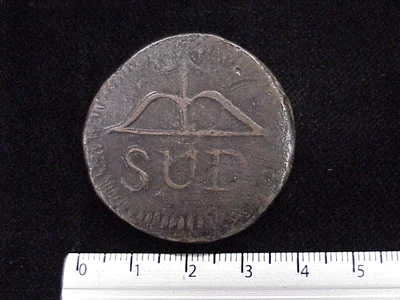
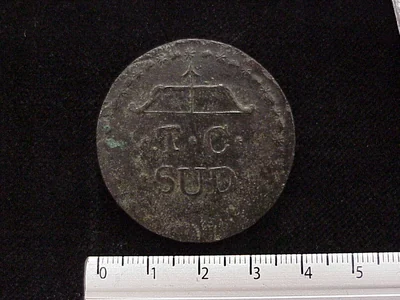
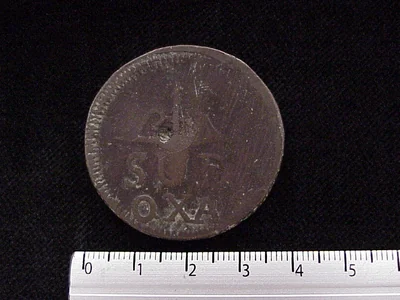
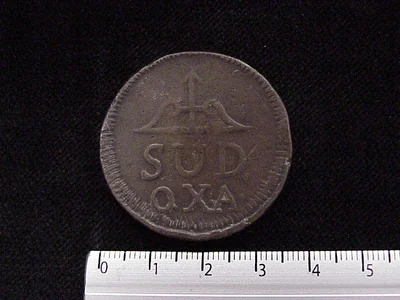
The defining feature is the countermarks (resellos): small stamps punched into the coin after it was originally struck. Authorities applied these to authorize, revalidate, or extend a coin's legal circulation. A countermark is not damage. It is an official mark, and on the right piece it adds interest and value rather than subtracting it.
Physical specs to check against your coin:
- Metal: copper
- Weight: 22.87 grams
- Diameter: 35 mm
- Edge: plain (smooth)
If your coin does not land close to those numbers, that alone is a red flag. Colonial coppers were crude by modern standards, so weights vary somewhat, but a piece that is far off in weight or diameter deserves suspicion.
What it is actually worth
Value on this type is driven by three things: condition (grade), the type and legibility of the countermark, and authenticity you can prove. Date and metal alone do not make it rare.
| Item | Detail | Typical value (USD) |
|---|---|---|
| 1812 copper 8 reales, heavily worn | countermark faint or unclear | roughly 20 to 75 |
| 1812 copper 8 reales, clear countermark | legible stamp, honest wear | roughly 75 to 300 |
| Sharp example, strong detail | attractive surfaces, clear resello | several hundred and up |
| Certified high grade / rare countermark | NGC or PCGS attributed | can reach four figures |
These are working ranges for the type, not a guaranteed quote for your specific coin. Colonial copper with countermarks is a specialist area, and prices swing hard on eye appeal and how desirable the particular countermark is. A boldly stamped, clearly attributed resello can be worth many times a worn, ambiguous one.
What this coin is not: a million-dollar rarity. Copper 8 reales of this era are historically interesting, but they are not the trophy silver pieces that set auction records. Anyone telling you an ordinary circulated copper 8 reales is worth a fortune is selling a story.
The countermark is where the money is
On most Mexican colonial coppers, the base coin is common. The specific countermark is what a serious collector pays for. Different regional authorities used different punches, some scarce, some abundant. A crisp, correctly attributed countermark can turn a 50-dollar coin into a several-hundred-dollar coin.
This is exactly why you should not scrub, polish, or "clean" the coin. Cleaning destroys the original surfaces and the countermark detail collectors want, and it cuts value sharply. Leave it as found.
How to tell if yours is genuine
Fakes and altered coins circulate in this category, including real coins with fake countermarks added later. Run these checks:
- Weigh and measure it. Target is 22.87 g and 35 mm. Use a scale that reads to 0.01 g.
- Look at the relief. Genuine strikes have depth and texture. Cast fakes look soft, flat, and sometimes show tiny bubbles or a seam on the edge.
- Study the countermark. A real countermark is punched into the metal and disturbs the surrounding surface. A tooled or cast fake mark sits oddly, too shallow or too uniform.
- Compare to reference images of the specific countermark type before you assume it is legitimate.
- For anything valuable, get it certified. NGC or PCGS will authenticate, grade, and attribute the countermark, and encapsulate it. That certification is the difference between selling at full value and being haggled down over doubt.
Where to sell it (for USD)
You want a buyer who understands colonial copper and countermarks, not a generic gold-and-silver desk that pays melt.
- Specialist auction houses. Firms like Heritage Auctions and Stack's Bowers handle Mexican colonial material and reach the collectors who pay real prices. Best route for a genuinely good, certified example.
- Certified first. Send it to NGC or PCGS before selling anything you think is worth more than a couple hundred dollars. Certification widens your buyer pool and defends your price.
- Verified dealers. Use a verified numismatic dealer rather than a pawn shop. A dealer who knows the series will value the countermark correctly.
- Collector-to-collector. The Pesoteca buy-and-sell forum connects you directly with people who actually want this type, often at better net prices than a quick flip.
Before you list it anywhere, photograph the obverse, reverse, and edge in good light, and note the exact weight. Buyers of this type will ask for all three. Do not dump it on the first social-media offer.
Related pages on Pesoteca
Compare yours against the full 8 Reales colonial series, browse the wider Colonial / Viceroyalty era, see other 8 reales types, or check other coins dated 1812.
Not sure whether your countermark is genuine or which authority stamped it? Post clear photos of the obverse, reverse, and edge in the Pesoteca forum and let collectors who specialize in colonial copper weigh in before you sell.
Historical context
This piece belongs to the category of counterstamps and countermarks applied over already-struck pieces of eight, a practice used by both insurgents and royalists during the War of Independence.
The government of New Spain in 1812 was in the hands of Francisco Javier Venegas, during the military peak of Morelos in the southern part of the colony.
The piece belongs to the category of counterstamps and countermarks, punches applied over already-struck pieces of eight to officially revalidate them, move them to another jurisdiction, or mark them with an insurgent or royalist symbol. Each counterstamp carries a political reading: the crowned M of Morelos, the Zongolica seal, the M.V.A., and other families documented in colonial catalogs.
The declared origin of minting is: counterstamp over a previously struck piece of eight. Counterstamps and countermarks were applied with the official punch of the authority that ordered them, without a personal assayer signature: the political mark replaced individual fineness certification.
The Krause catalog references this piece under KM#265.4, useful for cross-checking the entry against international auction listings.
The year the Constitution of Cadiz was promulgated, which temporarily reformed the political framework of the Spanish empire.
This piece belongs to the era
Colonial / Virreinato →Explore all the Mexican coins of this era, their historical context and how they connect to the monetary system of the period.
Value range of this piece
Value range without enough data for this piece.
See the full breakdown by grade (VG, F, VF, EF, AU, MS-60, MS-63, MS-65) for the whole series →
Other denominations from 1812
8 Reales Coloniales · Cobre
Same denomination, other years
8 reales Cobre · 8 Reales Coloniales
Frequently asked questions
How much is a 1812 copper 8 reales with countermarks worth?
It depends heavily on condition and the countermark itself. A heavily worn piece with a faint stamp runs roughly 20 to 75 USD, while a coin with a clear, legible countermark and honest wear can reach 75 to 300 USD. Sharp examples and certified pieces with a desirable, well-attributed countermark can climb into four figures. For a firm number, get it graded by NGC or PCGS.
Is the 1812 copper 8 reales rare?
The base coin is a colonial copper issue and is not itself scarce, so date and metal alone do not make it valuable. What can be rare is the specific countermark (resello) punched into it, since different regional authorities used different, sometimes hard-to-find stamps. A boldly struck, correctly attributed countermark is what drives price on this type.
How do I tell if my 1812 copper 8 reales is genuine?
Weigh it (target 22.87 grams) and measure it (35 mm, plain edge). Genuine strikes show real depth in the relief, while cast fakes look flat and soft, sometimes with tiny bubbles or an edge seam. The countermark should be punched into the metal and disturb the surrounding surface, not sit shallow or too uniform. For anything valuable, certification by NGC or PCGS is the definitive test.
Where can I sell a 1812 copper 8 reales in the US?
Use a buyer who understands colonial copper, not a generic bullion desk. Specialist auction houses like Heritage or Stack's Bowers reach collectors who pay full value, especially for a certified example. You can also use a verified dealer or sell collector-to-collector on the Pesoteca buy-and-sell forum. Certify anything worth more than a couple hundred dollars first, and photograph the obverse, reverse, and edge before listing.
Conversation
0 comments
Sources
Images for informational and educational purposes, attributed to their original source. Reference values; the real price depends on the grade, the specific variant and demand.
Loading comments…