
8 Reales Resplandor, Culiacán 1876: Silver Value & Facts
The 8 Reales Resplandor, Culiacán 1876: Silver Value & Facts is worth between $745 and $1,961 MXN depending on its grade of preservation.
Prices updated: August 2026
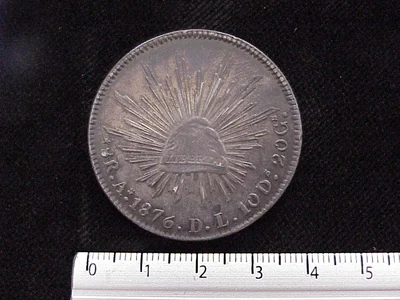
Strong silver peso .9028, Culiacán Mint, struck in 1876.
Strong silver peso .9028, Culiacán Mint, struck in 1876.
Design
Banxico
Reverse
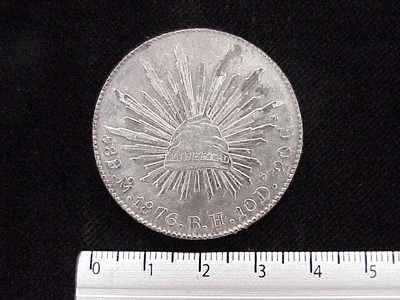
Reverse with the facing republican eagle devouring a serpent atop a nopal cactus, legend "REPÚBLICA MEXICANA". Piece attributed to the Culiacan mint, 1876.
Obverse
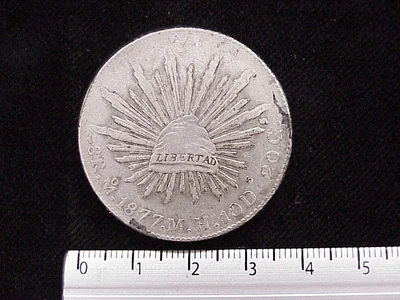
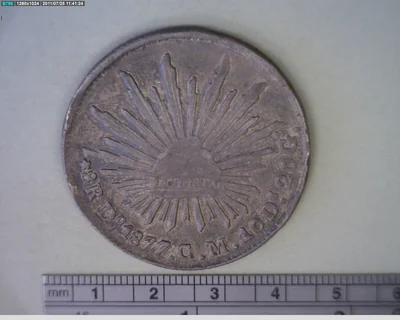
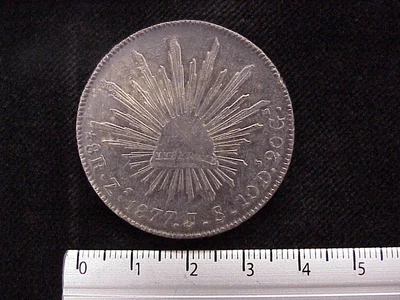
Obverse with a Phrygian cap over solar rays (resplandor) and the legend "LIBERTAD". Struck in .9028 silver following the republican eight-real standard in force until the monetary reform of 1905.
The 8 Reales Resplandor, Culiacán 1876: Silver Value & Facts is worth between $745 and $1,961 MXN depending on its grade of preservation.
Prices updated: August 2026
How much is the 8 Reales Resplandor, Culiacán 1876: Silver Value & Facts worth?
The estimated value of the 8 Reales Resplandor, Culiacán 1876: Silver Value & Facts ranges from $745 (circulated, XF) up to $1,961 (official blister pack), with $1,519 as a reference for an uncirculated (UNC) piece. The estimate is based on the official mintage and the historical behavior of the family.
The real price depends on four factors: the grade of preservation (a circulated piece is worth the low end of the range; an uncirculated one, or one still in its official blister pack, the high end), the finish (satin vs mirror/proof), the rarity within the series based on the mintage, and the metal spot price on the day of the deal when the piece is silver or gold. Check the value-by-grade table above and compare with equivalent pieces before buying or selling.
Where to buy or sell this coin?
Browse the national directory of numismatic shops or the community forum to trade directly with other collectors.
Price today
How much is the gold in a Centenario worth?
The Centenario is Mexico's main gold investment piece. Its price follows the gold spot in USD adjusted for MXN.
Description
If you inherited an old Mexican silver coin marked "8 Reales" with a radiant cap on the back, you have a real silver piece with a value floor. A worn 1876 Culiacán 8 Reales is worth roughly 25 to 45 USD for its silver alone in 2026. Sharp, uncirculated examples with original luster climb into the hundreds. Here is what actually sets the price, and how to check yours.
Quick answer: what it's worth
This is a genuine silver coin, so it has a hard floor: its melt value. The 1876 8 Reales Resplandor from the Culiacán mint contains 27.07 grams of coin silver at .903 fineness, which is about 0.786 troy ounces of pure silver. That metal content alone puts a base under the price no matter how worn the coin is.
Above that floor, value depends almost entirely on grade (how much detail and original shine survive):
- Heavily worn (Good to Fine): close to silver melt value, roughly 25 to 45 USD.
- Lightly circulated (Very Fine to Extremely Fine): about 50 to 120 USD, depending on eye appeal.
- Near-mint to Uncirculated with full luster: several hundred USD, and scarce die varieties can go higher at auction.
The difference between a worn example and a crisp one is not small. A sharp "resplandor" (the radiant liberty cap on the reverse) and a fully struck eagle on the front can multiply the price several times over.
What this coin actually is
"8 Reales" was the large silver denomination of the Mexican Republic in the 1800s, the direct descendant of the Spanish colonial "Real de a Ocho" (the piece of eight that circulated worldwide). Collectors call this type the Resplandor because of the rayed Phrygian cap, a republican symbol of liberty, on the reverse. The front (obverse) shows the Mexican eagle on a cactus.
The Culiacán mint, in what is now the state of Sinaloa, was one of several regional mints that supplied coinage to northwest Mexico for much of the 19th century. Culiacán issues are collected specifically for that regional character and for the die varieties that change from year to year.
Specifications (KM#377.3)
| Feature | Detail |
|---|---|
| Denomination | 8 Reales |
| Type | Resplandor (radiant cap) |
| Mint | Culiacán (Cn), Sinaloa |
| Year | 1876 |
| Metal | Silver, .903 fine |
| Weight | 27.07 g |
| Diameter | 39 mm |
| Edge | Reeded |
| Silver content | ~0.786 troy oz pure |
| Catalog | KM#377.3 |
Real prices: what these sell for
| Grade | Typical range (USD) | Where |
|---|---|---|
| Good to Fine | 25 to 45 | Coin shops, dealer buy price |
| Very Fine to XF | 50 to 120 | Collector market, forums |
| AU to Uncirculated | 200 to 600+ | Auction, certified pieces |
Certified examples in high grades, or those with a scarce mint-master (assayer) initial or die variety, are the ones that reach the top of that range and occasionally beyond. Condition and originality drive the number far more than the date itself. An 1876 is not a rare date on its own; a beautiful, untouched 1876 is what commands money.
The mistake that kills value: cleaning
The fastest way to lose money on a coin like this is to polish it. A shiny, scrubbed coin looks better to a beginner and worse to every buyer who matters. Cleaning leaves microscopic scratches and strips the original surface, and it can cut a coin's value in half or more. If your 1876 8 Reales has natural toning or grime, leave it alone.
How to tell if yours is genuine
Colonial and early republic silver is heavily counterfeited, so check the basics first:
- Weigh it. Use a jewelry scale. It should be very close to 27.07 grams. A light coin is a red flag.
- Measure it. Diameter should be about 39 mm, with a reeded (grooved) edge.
- Check the details. Look at the engraving style, the mint mark, and the assayer's initial. Fakes often have soft, mushy, or wrong-style lettering.
- Be suspicious of bargains. Any offer well below the silver value is almost certainly either fake or a trap.
For anything valuable, get it authenticated and graded by a recognized service (NGC or PCGS). A certified holder removes the guesswork for buyers and usually raises what you can get.
Where to sell it
- Verified coin shops. The Pesoteca shop directory lists dealers by city who can appraise the coin on the spot and pay fairly.
- The Pesoteca buy-and-sell forum. Sell directly to collectors in the forum, often for more than a dealer's wholesale offer.
Before you sell, photograph the obverse, reverse, and edge in good light, and compare your grade to the ranges above. Do not dump it on the first social-media offer. Because this is a precious-metal coin, only deal with buyers who will inspect the piece and confirm its weight in front of you.
Think you have a sharp, high-grade 1876, or spotted an unusual die variety? Post clear photos in the Pesoteca forum and let the community weigh in on the grade before you accept any offer.
Historical context
The year 1876 was one of political transition in Mexico: Sebastian Lerdo de Tejada left the presidency after Porfirio Diaz's Plan de Tuxtepec, with Jose Maria Iglesias as interim. End of the Restored Republic.
The Culiacan mint (Cn) was established in 1846 to strike silver from the mines of Rosario and Cosala. It was one of the last to close (1905), already under the gold standard of the late Porfiriato.
It is the first documented issue of the series in Culiacan, coinciding with the end of the Restored Republic.
For catalog reference, this mint's variant is listed as KM#377.3 in Krause. The piece is silver of .9028 fineness with a reeded edge and a theoretical weight of 27.07 grams. The 1876 Culiacan, Sinaloa example belongs to the middle phase of the mint (1846-1905) and is identified on the coin by the Cn mint mark.
In the Mexican numismatic market the Cn-1876 resplandor peso appears regularly at auction and at central-region street markets. When hunting it, it's advisable to verify a clean reeded edge, with no clipping, and that the Cn mint mark is crisp. Before paying a middleman premium, consult the reference range by grade in public catalogs and on the Pesoteca forum; many examples of this decade (1870s) can be obtained at par price without speculative intermediaries.
This piece belongs to the era
República Restaurada y Porfiriato →Explore all the Mexican coins of this era, their historical context and how they connect to the monetary system of the period.
Value range of this piece
Market estimate: $745 - $1,961 MXN depending on the grade of preservation (typical range between a circulated and an uncirculated piece).
See the full breakdown by grade (VG, F, VF, EF, AU, MS-60, MS-63, MS-65) for the whole series →
Other denominations from 1876
8 Reales Republicanos (Resplandor) · Plata 0.900
Same denomination, other years
8 reales Plata 0.900 · 8 Reales Republicanos (Resplandor)
Frequently asked questions
How much is an 1876 Culiacán 8 Reales worth?
Its value starts at silver melt, since it holds about 0.786 troy ounces of pure silver (27.07 g at .903 fine). A worn example runs roughly 25 to 45 USD, lightly circulated coins 50 to 120 USD, and uncirculated pieces with full luster several hundred USD or more. Grade and originality matter far more than the date.
Is the 1876 Culiacán 8 Reales rare?
The 1876 date itself is not rare, but high-grade, uncleaned examples are genuinely scarce and command the strongest prices. Certain die varieties and assayer initials from the Culiacán mint can also add a premium. A pristine, untouched coin is what collectors chase, not simply an old one.
Where can I sell my 1876 Culiacán 8 Reales?
The safest options are a verified dealer from the [Pesoteca shop directory](/tiendas), who can appraise it on the spot, or the [Pesoteca buy-and-sell forum](/foro/compra-venta) where you sell directly to collectors. Photograph the obverse, reverse, and edge, check the price ranges here first, and avoid selling to the first social-media buyer.
How do I know if my 1876 8 Reales is genuine?
Weigh it with a jewelry scale (it should be near 27.07 g) and measure the diameter (about 39 mm with a reeded edge). Compare the engraving, mint mark, and assayer initial against known examples, since fakes often have soft or wrong-style lettering. For valuable pieces, get it certified by NGC or PCGS.
Conversation
0 comments
Sources
- Ejemplar de la Coleccion Numismatica Banco de Mexico . inv. 6004
- Ejemplar de la Coleccion Numismatica Banco de Mexico . inv. 6002
- Ejemplar de la Coleccion Numismatica Banco de Mexico . inv. 6005
- Ejemplar de la Coleccion Numismatica Banco de Mexico . inv. 6001
- Ejemplar de la Coleccion Numismatica Banco de Mexico . inv. 6003
Images for informational and educational purposes, attributed to their original source. Reference values; the real price depends on the grade, the specific variant and demand.
Loading comments…