
Centenario 50 Pesos Gold Coin (1922): Value & How to Sell
The Centenario 50 Pesos Gold Coin : Value & How to Sell is worth between $90,081 and $98,660 MXN depending on its grade of preservation.
Prices updated: August 2026
Centenario
Centenario
Design
Banxico
Obverse
Centenario
The Centenario 50 Pesos Gold Coin : Value & How to Sell is worth between $90,081 and $98,660 MXN depending on its grade of preservation.
Prices updated: August 2026
How much is the Centenario 50 Pesos Gold Coin (1922): Value & How to Sell worth?
The estimated value of the Centenario 50 Pesos Gold Coin (1922): Value & How to Sell ranges from $90,081 (circulated, XF) up to $98,660 (official blister pack), with $95,540 as a reference for an uncirculated (UNC) piece. The estimate is based on the official mintage and the historical behavior of the family.
The real price depends on four factors: the grade of preservation (a circulated piece is worth the low end of the range; an uncirculated one, or one still in its official blister pack, the high end), the finish (satin vs mirror/proof), the rarity within the series based on the mintage, and the metal spot price on the day of the deal when the piece is silver or gold. Check the value-by-grade table above and compare with equivalent pieces before buying or selling.
Where to buy or sell this coin?
Browse the national directory of numismatic shops or the community forum to trade directly with other collectors.
Description
If you inherited a 1922 Mexican 50 Pesos gold coin (the "Centenario"), the good news is simple: it is real gold, and it has a hard value floor. As of 2026, its melt value alone runs around 2,500 USD or higher, because it holds about 1.2 troy ounces of pure gold. A well-preserved 1922 example can bring more than that because it is the first year of the series.
This is one of the few Mexican coins where "is it worth money?" has a fast, honest answer: yes, at minimum it is worth its gold content, and there is always a buyer.
What you actually have
The Centenario 50 Pesos is a gold coin struck at .999 fineness. Each piece weighs 41.7 grams, measures 37 millimeters across, and contains 37.5 grams (1.205 troy ounces) of pure gold. The edge is incuse, meaning the lettering is stamped into the rim rather than raised.
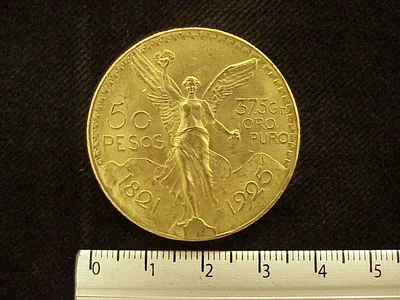
The name "Centenario" comes from its origin: it was first issued in 1922 to mark 100 years since Mexico completed its independence. The design became the face of Mexican gold. The front (obverse) shows the winged Angel of Independence with the Popocatépetl and Iztaccíhuatl volcanoes behind her. The back (reverse) carries the national coat of arms, an eagle on a cactus.
The 1922 is the coin that opened the entire family. It was struck for decades afterward and later reissued as a modern bullion coin, so 1922 originals share the market with newer dates and restrikes.
How much is a 1922 Centenario worth?
Value breaks into two layers.
Gold value (the floor). Because it holds 1.205 troy ounces of pure gold, the coin can never be worth less than that gold, minus a small dealer margin. Whatever gold trades at today, multiply by roughly 1.2 to get the baseline. This is why any Centenario, in any condition, always sells.
Collector premium (the upside). A 1922 in high grade, certified by NGC or PCGS, sells above melt because it is the first-year issue of a landmark series. First-year coins carry weight when a collector is building a complete set. A worn, uncertified 1922 trades close to gold value; a sharp, graded example commands a premium over it.
| Coin | Year | Gold content | Approx. value in USD |
|---|---|---|---|
| 50 Pesos Centenario | 1922 (first year) | 1.205 oz pure gold | Melt value plus a first-year premium in high grade |
| 50 Pesos Centenario | Later dates / restrikes | 1.205 oz pure gold | Close to melt value |
We avoid quoting a fixed dollar figure because gold moves daily. Check the current gold price, multiply by 1.205, and you have your floor. Anything above that is collector demand for grade and date.
The myth to ignore
A common belief is that any old gold coin is automatically worth a fortune far above its metal. For the Centenario, that is mostly false. The 50 Pesos was minted in large numbers over many years and reissued for investors, so most examples are valued as bullion, not as rarities. The 1922 first-year issue carries a modest premium in top grade, but a circulated one is worth its gold and little more. Do not expect a five-figure payout for a common date in average condition.
How to tell if yours is genuine
Gold fakes, often from overseas, almost always fail on physics. Use these checks:
- Weight. A real Centenario weighs 41.7 grams. Not 41.5, not 42. A kitchen scale accurate to 0.1 gram catches most counterfeits, because fakes use lower-fineness or base metal and rarely hit the exact weight.
- Diameter. It measures 37 millimeters across.
- Edge. The lettering on the rim is incuse (pressed in), not raised. A wrong edge is a red flag.
- Certification. If the coin is worth more than a few hundred dollars to you, or you plan to sell at full value, get it graded by NGC or PCGS. A slabbed, certified coin removes all doubt for a buyer and raises the price.
If a piece is offered well below gold value, assume something is wrong.
Where to sell it
Because it is a precious-metal coin, you have real options and a guaranteed buyer:
- A verified numismatic dealer from the Pesoteca directory will weigh it, appraise it, and pay on the spot with no middleman markup.
- The Pesoteca buy-and-sell forum puts you in front of collectors who pay for grade and first-year appeal, not just melt.
- Local coin shops and bullion dealers will buy at close to gold value.
Before you sell, photograph the front, back, and edge, and confirm the weight. For anything above bullion price, a dealer appraisal or NGC/PCGS grading is worth the fee. Do not accept the first lowball offer on social media.
Historical context
This piece is a 50 pesos gold Centenario minted in 1922, a commemorative type for the centennial of the completion of Independence (September 27, 1821), first issued in 1921 under the government of Álvaro Obregón.
In 1922 the government of Álvaro Obregón (1920-1924) continued. That year the Bucareli Treaties with the United States were signed and economic reconstruction advanced after the armed revolution.
The obverse bears Winged Victory taken from the column of the Angel of Independence (inaugurated in 1910), with Popocatépetl and Iztaccíhuatl in the background, attributed to sculptor José Núñez Ledesma. The reverse shows the national coat of arms. Specifications: total weight 41.6666 grams, .900 fineness, pure gold content 37.5 grams (1.2057 troy ounces), diameter 37 millimeters, reeded edge. Krause reference KM#481 for the classic 1921-1947 cycle.
The year 1922 is the second of the original issue and has a low mintage within the 1921-1931 cycle, which gives it numismatic value on top of its gold content.
In the Mexican market the Centenario is bought for its gold content (1.2057 troy ounces) and for its numismatic value when the year has a short mintage. When hunting one, compare the premium over spot at several dealers and verify weight (41.6666 grams) and diameter (37 millimeters) to rule out reproductions before accepting a middleman's markup.
This piece belongs to the era
México Moderno (pre-1992) →Explore all the Mexican coins of this era, their historical context and how they connect to the monetary system of the period.
Go deeper on this coin
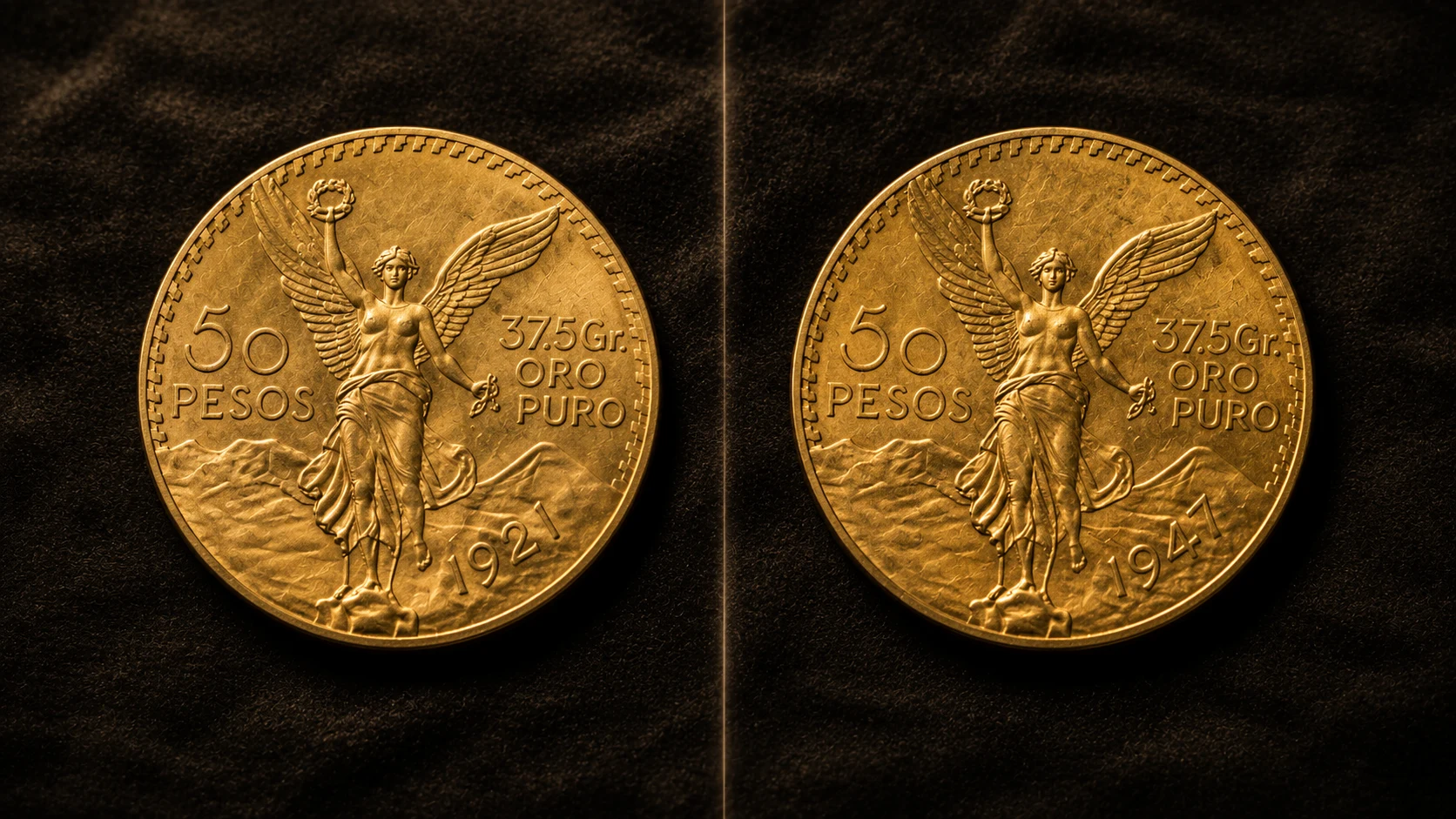
Centenario 50 Pesos Oro: cómo distinguir el original (1921-1925) de la reacuñación (y por qué la 1947 que buscas no es lo que crees)
Buscas 'Centenario 1947' en internet porque alguien te dijo que vale millones. Aquí va la verdad: la original solo se acuñó entre 1921 y 1925. La 1947 es reacuñación, vale solo el oro. Te explico la diferencia.
Read the full article →Value range of this piece
Market estimate: $90,081 - $98,660 MXN depending on the grade of preservation (typical range between a circulated and an uncirculated piece).
See the full breakdown by grade (VG, F, VF, EF, AU, MS-60, MS-63, MS-65) for the whole series →
Same denomination, other years
50 pesos Oro 0.999 · Centenario 50 pesos oro
Frequently asked questions
How much is a 1922 50 Pesos gold Centenario worth?
At minimum it is worth its gold content, since it holds 1.205 troy ounces of pure gold. Check the current gold price and multiply by about 1.2 for the floor value, roughly 2,500 USD or more as of {{AÑO}}. A high-grade, NGC or PCGS certified 1922 sells above that because it is the first year of the series. A worn, uncertified example trades close to gold value.
Is the 1922 Centenario rare?
Not in the way people hope. The 50 Pesos was struck over many years and later reissued as a bullion coin, so most examples are valued for their gold, not their scarcity. The 1922 does carry a first-year premium in top certified grade, but a circulated one is worth its metal and little more. Do not expect a rare-coin windfall for a common condition.
How do I tell if my Centenario is genuine?
Weight is the giveaway. A real coin weighs exactly 41.7 grams and measures 37 millimeters, with incuse (pressed-in) edge lettering. Fakes use lower-fineness gold or base metal and rarely hit the exact weight. Weigh it on a scale accurate to 0.1 gram. For full-value sales, have it certified by NGC or PCGS to remove all doubt.
Where can I sell a 1922 50 Pesos gold coin?
A [verified dealer from the Pesoteca directory](/tiendas) will weigh, appraise, and pay on the spot, or list it in the [Pesoteca buy-and-sell forum](/foro/compra-venta) to reach collectors who pay for grade and first-year appeal. Local bullion dealers also buy at close to gold value. Photograph the front, back, and edge, confirm the weight, and skip the first lowball social-media offer.
Conversation
0 comments
Sources
Images for informational and educational purposes, attributed to their original source. Reference values; the real price depends on the grade, the specific variant and demand.
Loading comments…