
50 Pesos Oro Centenario 1923: Value & Gold Content
The 50 Pesos Oro Centenario 1923: Value & Gold Content is worth between $90,081 and $98,660 MXN depending on its grade of preservation.
Prices updated: August 2026
Centenario
Centenario
Design
Banxico
Reverse
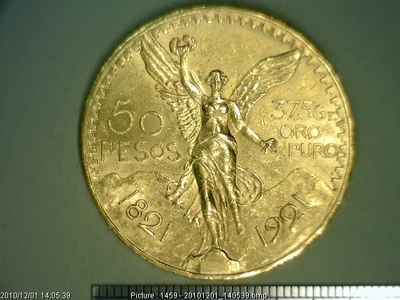
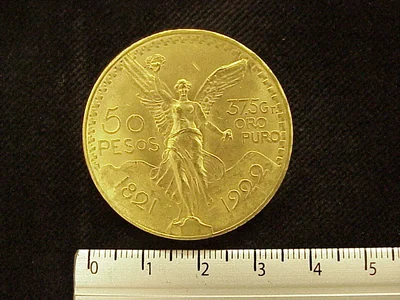
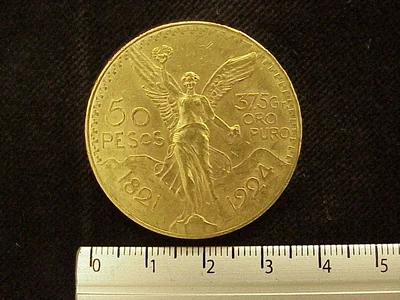
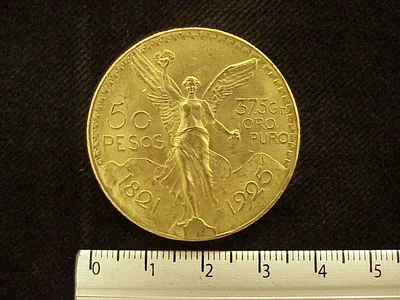
Winged Victory (figure from the Ángel de la Independencia) standing on a globe, holding a laurel wreath in the right hand and broken chains in the left, with the volcanoes Popocatépetl and Iztaccíhuatl in the background. Around it the legend "50 PESOS 37.5 Gr ORO PURO" and the dates 1821-1923.
Obverse
Centenario
The 50 Pesos Oro Centenario 1923: Value & Gold Content is worth between $90,081 and $98,660 MXN depending on its grade of preservation.
Prices updated: August 2026
How much is the 50 Pesos Oro Centenario 1923: Value & Gold Content worth?
The estimated value of the 50 Pesos Oro Centenario 1923: Value & Gold Content ranges from $90,081 (circulated, XF) up to $98,660 (official blister pack), with $95,540 as a reference for an uncirculated (UNC) piece. The estimate is based on the official mintage and the historical behavior of the family.
The real price depends on four factors: the grade of preservation (a circulated piece is worth the low end of the range; an uncirculated one, or one still in its official blister pack, the high end), the finish (satin vs mirror/proof), the rarity within the series based on the mintage, and the metal spot price on the day of the deal when the piece is silver or gold. Check the value-by-grade table above and compare with equivalent pieces before buying or selling.
Where to buy or sell this coin?
Browse the national directory of numismatic shops or the community forum to trade directly with other collectors.
Description
The 1923 Mexican 50 Pesos Gold Centenario is worth its gold, not its age. In 2026 that means roughly 4,000 to 4,500 USD depending on the daily gold price, because each coin holds 1.2057 troy ounces of pure gold. It is not rare, and it is not a museum piece worth a fortune beyond its metal.
If you inherited or found one of these, here is the honest picture: this is a bullion coin. Its value tracks the spot price of gold almost exactly, and the year on the coin barely matters. Let's break down what you actually have.
What the 1923 Centenario is
The Centenario (Spanish for "centennial") is the best-known Mexican gold coin. It was first struck in 1921 to mark 100 years of Mexican independence (1821 to 1921), and the 1923 issue is part of that original circulating series. The design you recognize sits on the reverse: the Winged Victory (the figure from Mexico City's Angel of Independence monument) standing on a globe, with the volcanoes Popocatépetl and Iztaccíhuatl behind her, plus the legend "50 PESOS 37.5 Gr ORO PURO" and the dates 1821 to 1923. The other side (the obverse) carries the Mexican coat of arms with the eagle and the words "Estados Unidos Mexicanos."
That inscription, "37.5 Gr ORO PURO," is the key. It is stamped right on the coin and tells you the pure gold content in grams.
What it's actually worth
A 1923 Centenario is a gold investment coin, so it trades at close to its melt value. Here are the hard numbers, straight off the coin:
| Spec | Figure |
|---|---|
| Total weight | 41.67 g |
| Fineness | .900 (90% gold, 10% copper) |
| Pure gold content | 37.5 g (1.2057 troy oz) |
| Diameter | 37 mm |
| Edge | Incuse lettering |
| 1923 mintage | 432,000 |
| Approx. value (2026) | Roughly 4,000 to 4,500 USD, tracking gold spot |
The copper is added for hardness; a pure-gold coin would be too soft to circulate. To find your exact value on any given day, multiply the current gold spot price per troy ounce by 1.2057. A dealer will then pay slightly under that (their margin) or charge slightly over it if you are buying.
Mexican coin prices are often quoted in pesos. In mid-2026 market quotes, the 50 Pesos Centenario traded around 85,000 Mexican pesos, but that figure moves daily with both the gold price and the peso-to-dollar exchange rate. Always confirm the day's price before you buy or sell.
Is the 1923 Centenario rare?
No, and this is where a lot of people get their hopes up. The 1923 issue had a mintage of 432,000 pieces, and Mexico's central bank (Banxico) restruck the Centenario for decades starting in 1943. That means a large supply exists. The year, the mint state, and the "historical" angle add little to the price. Its worth is in the gold, not in scarcity.
Compare that to genuinely scarce Mexican gold, like early republic pieces or certain low-mintage dates, where rarity does drive prices above melt. The Centenario is the opposite: a common, high-liquidity bullion coin that most gold dealers worldwide recognize on sight.
How to tell if yours is genuine
Counterfeits of the Centenario exist because it is a well-known gold coin, but the specs make it straightforward to check:
- Weight: It must weigh 41.67 g. A jeweler's scale settles most fakes instantly.
- Diameter: 37 mm across.
- Magnetism: Gold is not magnetic. If a magnet pulls on it, it is not solid gold.
- Inscription: The reverse reads "37.5 Gr ORO PURO."
- Edge: Incuse (recessed) lettering, not a plain or reeded edge.
If anything looks off, take it to a reputable gold buyer or coin dealer who can weigh it and run a density or specific-gravity test. That test alone catches almost every counterfeit, because faking both the exact weight and the exact volume of real gold is very hard to do.
Where to buy or sell
Since the Centenario trades so close to its gold content, the only real difference between buyers is the commission or spread each one charges. Get quotes from several dealers before you commit. Any established precious-metals dealer or coin shop that handles gold bullion will price it; you do not need a Mexican specialist.
For dealers and gold buyers organized by area, check the Pesoteca shop directory to request quotes. You can also read more about the full Centenario series and its place in the modern pre-1992 era of Mexican coinage.
Have a 1923 Centenario and want a second opinion on authenticity or the best place to sell it? Post the weight and clear photos of both sides in the Pesoteca forum and the community will weigh in.
Historical context
This piece is a 50 peso gold Centenario struck in 1923, a commemorative type marking the centennial of the consummation of Independence (September 27, 1821), first issued in 1921 under the government of Álvaro Obregón.
In 1923 Álvaro Obregón was governing in his final stretch. The assassination of Pancho Villa on July 20 in Parral and the De la Huerta rebellion in December marked the year politically.
The obverse bears the Winged Victory taken from the column of the Ángel de la Independencia (inaugurated in 1910), with Popocatépetl and Iztaccíhuatl in the background, attributed to the sculptor José Núñez Ledesma. The reverse shows the national coat of arms. Specifications: total weight 41.6666 grams, .900 fineness, pure gold content 37.5 grams (1.2057 troy ounces), diameter 37 millimeters, reeded edge. Krause reference KM#481 for the classic 1921-1947 cycle.
The year 1923 belongs to the original 1921-1931 cycle of everyday circulation, prior to the interruption of continuous minting at the end of the decade.
In the Mexican market the Centenario is bought for its gold content (1.2057 troy ounces) and for its numismatic value when the year has a short mintage. When hunting for one, compare the premium over spot at several dealers and verify weight (41.6666 grams) and diameter (37 millimeters) to rule out reproductions before accepting a middleman markup.
This piece belongs to the era
México Moderno (pre-1992) →Explore all the Mexican coins of this era, their historical context and how they connect to the monetary system of the period.
Go deeper on this coin
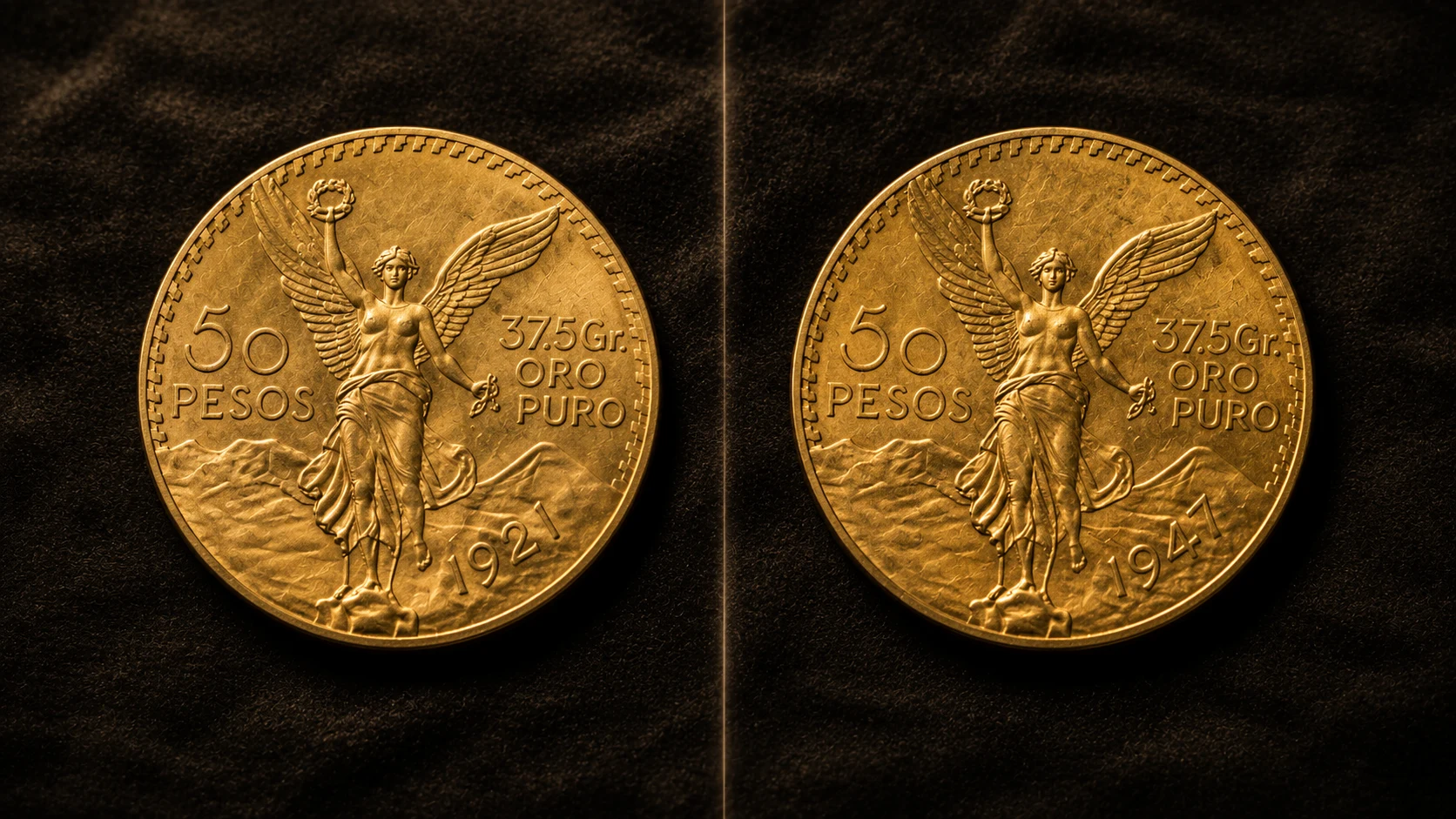
Centenario 50 Pesos Oro: cómo distinguir el original (1921-1925) de la reacuñación (y por qué la 1947 que buscas no es lo que crees)
Buscas 'Centenario 1947' en internet porque alguien te dijo que vale millones. Aquí va la verdad: la original solo se acuñó entre 1921 y 1925. La 1947 es reacuñación, vale solo el oro. Te explico la diferencia.
Read the full article →Value range of this piece
Market estimate: $90,081 - $98,660 MXN depending on the grade of preservation (typical range between a circulated and an uncirculated piece).
See the full breakdown by grade (VG, F, VF, EF, AU, MS-60, MS-63, MS-65) for the whole series →
Same denomination, other years
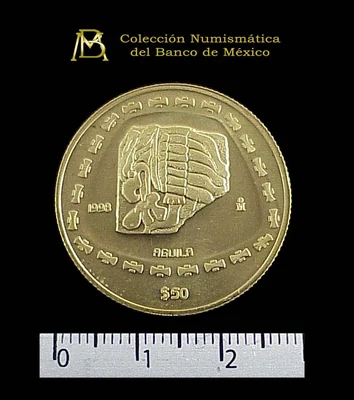
50 pesos Oro 0.999 · Centenario 50 pesos oro
Frequently asked questions
How much is a 1923 50 Pesos Gold Centenario worth?
Almost all of its value comes from the gold, not the year. In {{AÑO}} it is worth roughly 4,000 to 4,500 USD, tracking the daily gold spot price. Each coin holds 1.2057 troy ounces of pure gold, so multiply the current spot price per ounce by 1.2057 for a live estimate. Confirm the day's price before you buy or sell, since it changes constantly.
Is the 1923 Centenario rare?
No, not in the way people hope. The 1923 mintage was 432,000 pieces, and Mexico's central bank restruck the Centenario for decades starting in 1943, so there is plenty of supply. It is easy to find. Its value is in the gold content, not in scarcity, and the year adds almost nothing to the price.
How can I tell if my Centenario is genuine?
It must weigh 41.67 g and measure 37 mm across, and gold is not magnetic, so a magnet should not pull on it. The reverse is stamped "37.5 Gr ORO PURO" and the edge has incuse (recessed) lettering. If in doubt, take it to a reputable gold buyer who can weigh it and run a density or specific-gravity test, which catches almost every fake.
Where should I sell a 1923 Centenario?
Because it trades near its gold content, the difference between buyers is mostly the commission each one charges. Get quotes from several dealers before closing. Any established gold or coin dealer can price it. The Pesoteca shop directory lists precious-metals and coin dealers by area so you can request quotes.
Conversation
0 comments
Sources
Images for informational and educational purposes, attributed to their original source. Reference values; the real price depends on the grade, the specific variant and demand.
Loading comments…