
1/2 Real Fernando VII 1814: Value & How to Sell
Prices updated: August 2026
Viceroyalty · Mexico City Mint
Viceroyalty · Mexico City Mint
How much is the coin 1/2 Real Fernando VII 1814: Value & How to Sell worth?
The market value of the coin 1/2 Real Fernando VII 1814: Value & How to Sell is not yet documented with enough data to give a firm range. Weigh and measure your piece, compare it against the specifications, and check the forum for a second opinion.
The real price depends on four factors: the grade of preservation (a circulated piece is worth the low end of the range; an uncirculated one, or one still in its official blister pack, the high end), the finish (satin vs mirror/proof), the rarity within the series based on the mintage, and the metal spot price on the day of the deal when the piece is silver or gold. Check the value-by-grade table above and compare with equivalent pieces before buying or selling.
Where to buy or sell this coin?
Browse the national directory of numismatic shops or the community forum to trade directly with other collectors.
Description
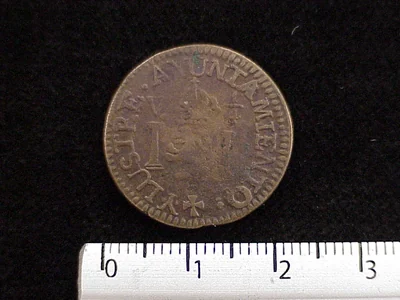
If you inherited or found a 1/2 Real Fernando VII 1814, here is the honest answer: in worn, everyday condition it is worth a few dollars, not a fortune. A sharp, well-preserved example can reach the low hundreds of dollars, and a top certified piece can go higher. This is a copper colonial coin from Spanish Mexico, common enough that condition, not age, decides the price.
What this coin actually is
The 1/2 real (half real) was small change in the Spanish colonial monetary system used across México (then the Viceroyalty of New Spain). The portrait and name belong to Fernando VII, king of Spain. This particular 1814 issue was struck in copper rather than silver, which matters for value: there is no precious-metal floor under it the way there is under a silver coin.
Exact specs, keep these to check your piece:
- Metal: Copper
- Weight: 6.79 grams
- Diameter: 27.66 mm
- Edge: Plain (smooth)
- Year struck: 1814 (single year for this issue)
- Era: Colonial / Viceroyalty of New Spain
What it's worth in 2026
Don't expect a headline number. Age alone means very little here. What drives the price is grade (how worn it is), whether it's authentic, and whether a serious collector wants that exact variety at that moment. A copper colonial half real that has circulated hard, with flat, smooth surfaces, sits at the bottom of the range. A crisp example with full detail and original surfaces is where the money is.
| Condition | What you're likely looking at (USD) |
|---|---|
| Heavily worn, corroded, or damaged | A few dollars to about 20 |
| Moderate wear, legible details | Roughly 25 to 80 |
| Sharp, well-preserved, minimal wear | Around 100 to 300 |
| Top certified (NGC/PCGS high grade) | Several hundred dollars and up |
These are realistic ranges for a copper half real of this period, not a guaranteed price. If you see a listing claiming this coin is worth thousands in average condition, treat it as a sales pitch, not a fact.
The myth to ignore
A common belief: "it's from 1814, so it must be rare and valuable." It isn't rare because it's old. Millions of small colonial coins survive, and copper coins in particular tend to survive corroded or worn, which caps their value. The pieces that command real money are the exceptional survivors: clean surfaces, sharp strike, and ideally a grade from a recognized service. Everything else is inexpensive.
Another trap is "error" hype online. Genuine mint errors (off-center strikes, die rotation, doubled strikes) can multiply the value of a coin. Most so-called errors people post are actually post-mint damage: knocks, corrosion, or environmental wear. That damage lowers value, it does not raise it.
How to check what yours is worth
- Weigh and measure it. A genuine piece is close to 6.79 grams and 27.66 mm. If yours is far off, be suspicious of a cast copy.
- Look at the relief. Authentic strikes show crisp raised detail. Fakes and cast copies usually look flat, mushy, or grainy under magnification.
- Grade it honestly. Compare wear against a reference. Our coin grading guide walks you through what separates a 20-dollar coin from a 200-dollar one.
- Certify high-value pieces. If you think you have a top example, submitting it to NGC or PCGS (the two leading grading companies) confirms authenticity and grade, and certified coins consistently sell for more than raw ones.
Where to sell it
If you want a fair price without getting lowballed:
- A verified dealer from the Pesoteca shop directory can appraise it on the spot and often buy it.
- The Pesoteca buy/sell forum puts you in front of collectors who actually want colonial coppers.
- Photograph the front, back, and edge in good light before you list anything, and check the ranges above so you know a bad offer when you hear one.
Avoid dumping it to the first buyer on social media, and be extra careful on open marketplaces where copies circulate. Ask any seller or buyer for the weight and clear edge photos.
Not sure which grade band your coin falls into, or think you might have a genuine error? Post clear photos of both sides in the Pesoteca forum and let collectors weigh in before you sell.
Historical context
Edge: Plain.
This piece belongs to the era
Colonial / Virreinato →Explore all the Mexican coins of this era, their historical context and how they connect to the monetary system of the period.
Value range of this piece
Value range without enough data for this piece.
See the full breakdown by grade (VG, F, VF, EF, AU, MS-60, MS-63, MS-65) for the whole series →
Other denominations from 1814
Reales Coloniales (1/2 a 4 reales) · Cobre
Frequently asked questions
How much is a 1/2 Real Fernando VII 1814 worth?
It depends almost entirely on condition. A worn or corroded copper example is worth a few dollars up to about 20 USD. A sharp, well-preserved piece can reach roughly 100 to 300 USD, and a top certified coin from NGC or PCGS can go higher. Age alone does not make it valuable.
Is the 1/2 Real Fernando VII 1814 rare?
Not in worn condition. Many colonial half reales survive, so common examples are inexpensive. What is genuinely scarce is a high-grade piece with clean surfaces and full detail. Those exceptional survivors are where the real value sits.
How can I tell if my 1/2 Real Fernando VII 1814 is genuine?
Check the specs first: it should weigh about 6.79 grams and measure 27.66 mm. Look for crisp raised relief; fakes and cast copies usually look flat or grainy. For anything you think is valuable, grading by NGC or PCGS is the surest confirmation of authenticity.
Where can I sell a 1/2 Real Fernando VII 1814?
The safest routes are a verified dealer from the Pesoteca shop directory, who can value it in person, or the Pesoteca buy/sell forum among collectors. Photograph the front, back, and edge, and compare the grade ranges before selling so you can spot a lowball offer.
Conversation
0 comments
Sources
Images for informational and educational purposes, attributed to their original source. Reference values; the real price depends on the grade, the specific variant and demand.
Loading comments…