
BIL-G
1 pieceFamily G · Current
2018–present
The latest family issued by Banxico (2018–present). Polymer and cotton, vertical format, defining Mexican imagery.
View pieces →Banknote catalog
149 published banknotes: 19th-century private banks, the Revolution, old pesos and the current Family G. Filter by family or denomination. Official Banxico data, no memberships.
This is Pesoteca's Mexican banknote catalog: paper money cataloged with the official collection of the Banco de México and verified historical context. From the private-bank notes of the 19th century to the Family G in polymer, passing through the Revolution and the old pesos. Filter by family, denomination, era or bank.
If you came looking for how much a Mexican banknote is worth or where to sell banknotes, open your piece's page: every note has its value range, its history and the signs that make it more valuable (low serial, radar, error). To buy or sell, the shop directory gathers dealers from all over the country; and if you don't know what note you have, post it to the forum.
11 banknotes
10– 11 of 11 banknotes · filters applied
Page 2 of 2
What's here?
Mexico has been printing banknotes since before the Banco de México. Between 1864 and 1925 dozens of private issuing banks circulated notes (Zacatecas, Yucateco, Mercantil) until Banxico took over issuance in 1925. Cataloged here are the notes running from a one-peso note of the Banco de Zacatecas (1900) to the current 500-peso polymer note of Family G.
Collecting banknotes has its own name: notaphily. It's the close cousin of numismatics, but with paper instead of metal. If you have a note put away and want to know what makes it rare, check how much your banknote is worth in seconds.
By family
Each family groups banknotes that share an issuer, era and design. The PSM System assigns a unique code to each piece (PSM-BIL-G.0001, PSM-BIL-PRIV.0420, etc.) to identify it without ambiguity when you see it at an auction or numismatic shop.
BIL-G
1 piece2018–present
The latest family issued by Banxico (2018–present). Polymer and cotton, vertical format, defining Mexican imagery.
View pieces →BIL-F
12 pieces2006–2018
The 2006–2018 transition: the arrival of polymer (20 and 50 pesos) and a new design for the 100, 200, 500 and 1000 pesos.
View pieces →BIL-D
9 pieces1996–2006
The Family D of the new peso: a redesign with picturesque motifs of the country and modern historical figures.
View pieces →BIL-AA
6 pieces1993–1995
The 1993 monetary reform: three zeros dropped. The N$ symbol appears on the 10, 20, 50 and 100 new-peso notes.
View pieces →BIL-A
28 pieces1969–1992
Pre-reform old pesos: 1, 5, 10, 20, 50, 100, 500, 1000, 2000, 5000, 10000, 20000, 50000 and 100000 pesos.
View pieces →BIL-REV
11 pieces1910–1925
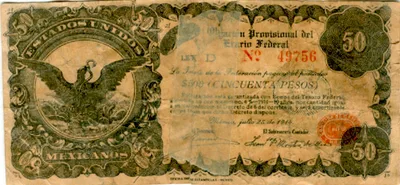
Banknotes of the Mexican Revolution (1910–1920): the Constitutionalist Government, Villa, Carranza and state governments.
View pieces →BIL-PRIV
66 pieces1864–1925
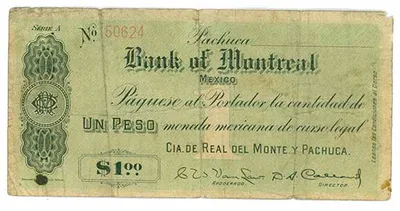
Private issuing banks 1864–1925: Banco de Zacatecas, Yucateco, Peninsular Mexicano, Mercantil, Mexicano de Comercio e Industria.
View pieces →BIL-ANT
6 piecespre-1864
Pre-1864 forerunners: royal vouchers, Federal Treasury obligations and the first paper-money proofs in Mexico.
View pieces →BIL-MOD
3 piecesvarious
Modern pieces pending assignment to an official family (proofs, specimens, commemoratives).
View pieces →Keep exploring
Banknotes are only one leg of the Pesoteca catalog. If you're interested in the historical context, Mexican coins or want to ask the forum, this way.
Catalog
The complete catalog of coins with filters by era, denomination and metal.
Guide
The complete guide to the niche: eras, mints, market, certification.
Tool
Find out in seconds whether your note is worth more than face value by serial, family or error.
System
Pesoteca's own catalog to identify every piece without ambiguity.
Community
Have a banknote and don't know what it is? Post it and the community will help you identify it.
Article
The 2,000-peso note: designed, decreed, never printed. The full story.
Quick guide
Pesoteca catalogs 149 Mexican banknotes: from the private banks of the 19th century and the paper money of the Revolution to the old pesos and the current Family G of Banxico. Collecting banknotes is called notaphily. Every page carries its issuer, year, denomination and reference value. Find yours above by family or denomination. It's free and grows every week.
The most-read guides: the most valuable Mexican banknotes, the axolotl note (50 pesos), the most counterfeited banknotes and the guide to getting started in notaphily.
Prefer coins? Explore the catalog of Mexican coins or the Mint's medals. And if you want to sell, see where to sell near you.
It depends on three things: the denomination and family, the condition and whether it has any rarity. A circulated note from a recent family is usually worth its face value; an uncirculated one (new, no folds) from a withdrawn denomination can be worth several times more. Notes with a low serial number, a radar (palindrome) or repeated digits, or a printing error, are the ones that climb the most. On every page in this catalog you'll see an estimated market value range.
Check four things: that it's uncirculated, the serial number (a low serial like 00000123, a radar like 1234321 or repeated digits are worth more), printing errors (misaligned cut, ink smear, shifted colors) and that it belongs to a family already withdrawn from circulation. If your note meets any of these, post it to the Pesoteca forum and the community will help you identify it. This catalog lets you place your piece by denomination, family or issuing bank.
In the Pesoteca directory of numismatic shops you'll find dealers and businesses that buy and sell banknotes in Mexico. Find a nearby shop in the directory, bring your note and ask for an appraisal; it's worth comparing at two or three places because it's an informal market with no regulated price. Before selling, identify your piece well in this catalog so you don't let it go for less than it's worth.
At the numismatic shops in the Pesoteca directory you can buy individual notes or complete a series. There are also collectors in the forum who trade and sell. Start by deciding what you want to put together (a full family, a denomination, notes from one issuing bank) and use this catalog's filters to see what exists before you buy.
Notaphily is the collecting of paper money: banknotes. It's the close cousin of numismatics (which covers coins), but focused on paper and polymer. In Mexico, notaphily spans everything from the private issuing banks of the 19th century to Banco de México's current Family G, passing through the paper money of the Revolution and the old pesos.
The Pesoteca catalog organizes Mexican banknotes into families by their issuer and era: Family G (current, polymer since 2018), F (transition 2006-2018), D (the new peso), AA (the new pesos of 1993), A (old pesos), the Revolution family, the private issuing banks (1864-1925) and the earlier forerunners. You can explore each family with the filter above.
Yes. The Pesoteca banknote pages are built with information from Banco de México's official numismatic collection (denomination, portrait, motif, year, security features) and rounded out with verified historical context. The market values are estimates based on the informal collecting market, not official prices.
Banknotes that are still legal tender can be used or exchanged at face value. When Banco de México withdraws a family from circulation it sets a deadline to exchange it; after that deadline the note loses its legal-tender status but may keep its collector value. Check the circulation status on each banknote's page in this catalog.
Printing errors make a note more valuable because they're pieces struck outside the norm that escaped quality control. The most sought after are misaligned cuts (the design appears shifted or clipped), smeared or runny ink, shifted colors, double printing and notes missing one of the security features. A common note with a genuine error can be worth several times its face value. If you think you have one, post it to the forum to verify it, because there are also fake alterations.
Rarity comes from several combined factors: a denomination or family with few survivors in good condition, a special serial number (a low serial like 00000045, a radar like 1234321, or repeated digits), a printing error, a specific uncommon signature or series, and above all uncirculated condition. A note from a withdrawn family, without folds and with an interesting serial, is the combo that notaphily collectors chase the most.
Commemorative notes (like the 100 peso Constitution note or the anniversary issues) tend to have smaller runs and are therefore more coveted. To find out if yours is a special issue, check the family and the motif on its page in this catalog: there we note whether it's commemorative and its context. No mass-printed piece is literally unique, but those from a limited run or with unrepeatable features (an error, a special serial) come close.