
Mexico 1 Peso Banknote (1970): Value & How to Sell
Familia A · algodón
Period: México Contemporáneo
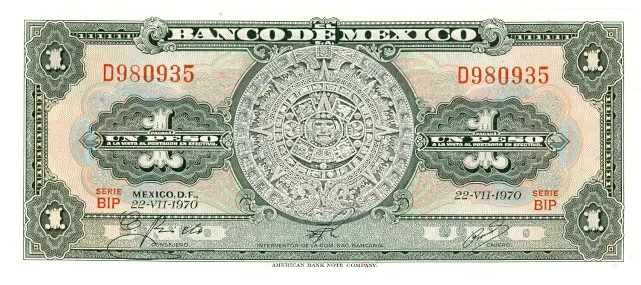
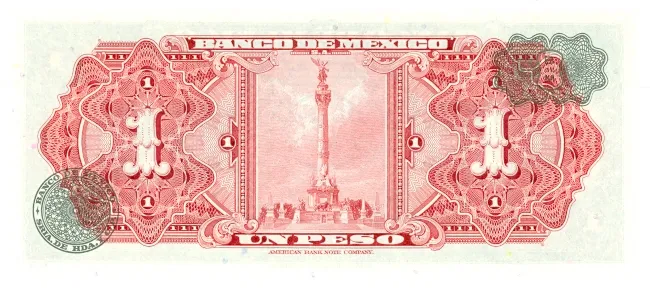
Design
Banxico
Obverse
Piedra del Sol (Calendario Azteca)
The Sun Stone or Aztec Calendar in the center
Reverse
The Angel of Independence
About this banknote
Most 1970 Mexican 1 peso banknotes are worth a few US dollars, not a fortune. They were printed in huge numbers and survive by the millions. But an uncirculated note with a low serial number, a palindrome (radar) serial, or a genuine printing error can sell for several times more. Here is what actually drives the value, and how to check yours.
This is the green 1 peso note issued by the Banco de México, part of what Mexican collectors call Familia A (the "A family," the first modern series of Bank of Mexico notes). The front shows the Piedra del Sol, the Aztec Sun Stone, often called the "Aztec Calendar." It is the carved stone monolith displayed at the National Museum of Anthropology in Mexico City and one of the most recognizable images in the country. The back shows the Ángel de la Independencia, the winged Victory column on Paseo de la Reforma in Mexico City.
How much is it worth in 2026
This note is no longer legal tender for spending, so its value is collector value, not face value. For the average circulated example, that means roughly 1 to 5 US dollars. It is a common note, and no amount of age changes that on its own.
What moves the price up:
- Condition (grade). An uncirculated (UNC) note with no folds, no stains, sharp corners and full crispness is worth several times a worn one. Collectors pay for eye appeal.
- Serial number. A low serial (like 0000012), a radar / palindrome serial (reads the same both ways, like 1234321), or a note from an early print run attracts specialist buyers.
- Genuine printing errors. Misaligned cuts, ink smears, factory folds, or repeated / off-center serials turn a common note into a rarity that can sell for many times face.
Be skeptical of the sky-high asking prices you see online. Most Familia A notes are common. A typical example is worth a modest amount; only the scarce variants command real money.
Quick value reference
| Type | Condition | Rough value (USD) |
|---|---|---|
| Standard 1 peso, circulated | Folds, wear | 1 to 5 |
| Standard 1 peso, uncirculated | Crisp, no folds | 5 to 20 |
| Low or radar serial | Uncirculated | 20 to 100+ |
| Genuine printing error | Any | Several times face, case by case |
Values are collector estimates for the common variety. A verified error or an exceptional serial in high grade can exceed these ranges. Always confirm against recent sales.
The myth: "it's old, so it's worth a fortune"
Age alone does not make a banknote valuable. This series was printed in enormous quantities and survives in the tens of millions. Rarity comes from survivors in top grade, special serials, and errors, not from the year on the note. A worn 1970 peso is worth about what a cup of coffee costs.
How to check what yours is worth
- Grade it honestly. Look for folds, stains, pinholes, tears and corner wear. Crisp and flat is worth far more than soft and creased.
- Read the serial number. Note any low number, palindrome, or unusual pattern.
- Check for errors. Compare against a normal note for misprints, ink shifts or cutting mistakes. Everyday wear is not an error.
- Confirm it is genuine. Compare the design, paper, colors and signatures against official Banco de México images. Reproductions usually have smooth paper and flat, dull colors.
If you think you have a real error or an unusual serial, post clear photos of both sides in the Pesoteca forum and the community will help you assess it. For context on fakes, see our piece on the most counterfeited banknotes in Mexico.
Where to sell it
World paper money (notaphily) is an active English-language market, so you have real options:
- A verified numismatic dealer from the Pesoteca directory can appraise and buy it on the spot.
- The Pesoteca buy-and-sell forum connects you with collectors directly.
- International platforms and world-banknote auctions reach US and global buyers, useful for scarce serials or errors.
Whichever route you choose, photograph both faces in good light, note the serial number and condition, and do not dump it on the first social-media offer. A common note is worth a few dollars, but a genuine error or standout serial deserves a proper appraisal.
Got a 1 peso note with a strange serial or a possible printing error? Post it in the forum and let the community take a look before you sell.
Historical context
The 1-peso note of 1970 closes out the low end of the so-called Family A of the Banco de México, the family of "old pesos" that circulated before the 1993 reform. Curiously, this small piece does not bear a national hero but a symbol: the Sun Stone, mistakenly called the Aztec Calendar, that monolithic disc of Mexica culture now kept at the National Museum of Anthropology, which became the visual emblem of the pre-Hispanic in Mexico.
The reverse shows the Angel of Independence, the Winged Victory of Paseo de la Reforma, one of the capital's most recognizable monuments. The pairing is no accident: Indigenous roots on the front and the independence struggle on the back, two ideas of nationhood on a note of the most humble denomination.
In those years a peso still went a long way for everyday things. The runaway inflation that would later force the printing of notes worth thousands and tens of thousands of pesos had not yet arrived, so this piece belongs to a monetary Mexico that, seen from today, feels almost endearing.
Frequently asked questions
How much is the 1970 Mexican 1 peso banknote worth?
A typical circulated example is worth about 1 to 5 US dollars, since it is a common note printed in huge numbers. An uncirculated note can reach 5 to 20 dollars, and one with a low serial, a palindrome serial, or a genuine printing error can bring several times more. Condition and rarity decide the price.
Is the 1 peso Aztec Sun Stone note rare?
No, the standard note is common. It belongs to the Banco de México Familia A series and survives by the millions. Real scarcity comes from top-grade uncirculated examples, special serial numbers (low or radar/palindrome), and genuine printing errors, not from age alone.
Where can I sell my 1970 Mexican 1 peso banknote?
The safest options are a verified dealer from the Pesoteca directory (/tiendas), who can appraise it on the spot, or the Pesoteca buy-and-sell forum (/foro/compra-venta) with other collectors. World banknote auctions and international platforms also reach US and global buyers, which helps for scarce serials or errors. Photograph both sides and note the serial and condition before you sell.
How can I tell if my 1 peso note is genuine?
Compare the design, paper texture, colors and signatures against official Banco de México images. Genuine notes have crisp printing and proper paper; reproductions tend to have smooth paper and flat, dull colors. If you are unsure, post clear photos of both sides in the Pesoteca forum (/foro) for a second opinion.
Familia A
This banknote belongs to the BIL-A family within the Sistema PSM . Explore all the banknotes that share origin, era and design with this piece.
Ver todos los billetes de la familia A →