
Mexican 10 Nuevos Pesos Banknote (1992): Value & Guide
Familia A · algodón
Period: México Contemporáneo
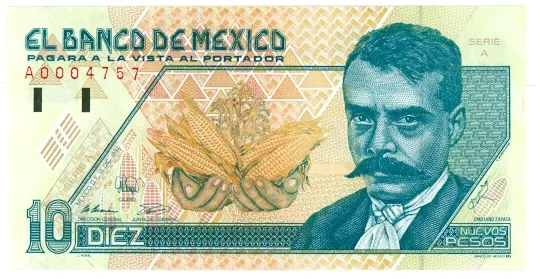
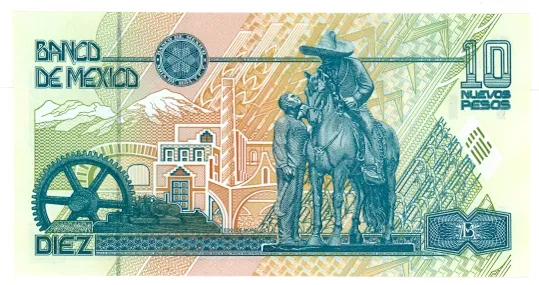
Design
Banxico
Obverse
Emiliano Zapata
Portrait of Emiliano Zapata and ears of corn
Reverse
The Chinameca hacienda with figures on horseback and volcanoes in the background
About this banknote
Most 1992 Mexican 10 nuevos pesos notes with Emiliano Zapata are worth a few dollars, not a fortune. A crisp uncirculated example, a low or radar serial number, or a genuine printing error can push it into the tens of dollars. Here is what yours is actually worth in 2026 and how to check.
What it's worth right now
This note is no longer legal tender for spending, so its value is collector value, not face value. In 2026, honest figures look like this:
- A circulated note with folds and soft corners: roughly 3 to 8 USD.
- A clean, crisp, truly uncirculated note: around 15 to 40 USD, sometimes more for the earliest series.
- A note with a low serial number, a radar (palindrome) serial, or a genuine printing error: from 50 USD into the low hundreds, driven entirely by demand.
Ignore the inflated listings you see on some marketplaces. The Banco de México Serie A (Family A) notes were printed in large quantities, so the plain, worn examples are common and stay cheap. Condition and serial number do the heavy lifting on price.
| Feature | Typical value (USD) | Notes |
|---|---|---|
| Circulated, common serial | 3 to 8 | Folds and wear kill the premium |
| Crisp uncirculated | 15 to 40 | No folds, sharp corners, no stains |
| Low or radar serial | 50 to 150+ | Depends on how low or how clean |
| Genuine printing error | 60 to several hundred | Miscut, ink shift, mismatched serials |
What the note is
The 10 nuevos pesos note dates from the 1993 monetary reform, when Mexico dropped three zeros from the peso and rebased the currency. The "N$" (nuevos pesos, or new pesos) marking on this family is the giveaway that it belongs to that transition era.
The front carries Emiliano Zapata, the agrarian leader of the Mexican Revolution and author of the Plan de Ayala, whose slogan was "Tierra y Libertad" (Land and Liberty). He appears with ears of corn, a nod to the farmland he fought for.
The back shows the hacienda de Chinameca in the state of Morelos, the site where Zapata was ambushed and killed in 1919, with mounted figures and volcanoes in the background. It is a Banco de México issue, part of Family A.
The myth: "an old note must be worth a lot"
Age alone does not make paper money valuable. A 1992 date feels old, but these notes are barely three decades removed from circulation and were printed by the millions. What actually drives value on Family A notes is the combination of top condition and a special serial number or a factory error. A worn note with a random serial is common, and no amount of patience changes that.
How to tell if yours is genuine
Check the security features against official Banco de México reference images:
- Watermark: hold the note to the light and look for the portrait watermark in the blank margin.
- Security thread: a thin embedded thread running through the paper.
- Microprinting: tiny text that stays sharp under magnification.
- Intaglio relief: raised ink you can feel with a fingertip on the portrait and lettering.
- Paper and color: genuine notes use cotton-based paper with layered, textured color. Reproductions feel smooth and look flat.
When the paper or the printing looks off, post clear photos of both sides and ask the community before you buy or sell. See also the most counterfeited banknotes in Mexico for what forgers target.
Do printing errors add value?
Yes. Genuine factory errors turn a common note into something collectors chase: misaligned cuts, smeared or shifted ink, factory folds, and repeated or off-center serial numbers. Low serials and radar serials also lift the price. What does not count is ordinary handling damage: a tear, a coffee stain, or a crease from your wallet is not a mint error and lowers value instead.
If you think yours has a real error, upload it to the Pesoteca forum so collectors can confirm it before you set a price.
Where to sell it
To sell a 1992 10 nuevos pesos note, the safest routes are a verified dealer from the Pesoteca shop directory, who can appraise it on the spot, or the Pesoteca buy-and-sell forum among collectors. Photograph both faces in good light, note the serial number, and flag any low serial, radar serial, or error, since those raise the price. Avoid dumping it to the first bidder on a general marketplace.
Got one with an unusual serial or still sealed in a bank pack? Post it in the forum and let the community weigh in on what it's really worth.
Historical context
Near the end of Family A, the 10 pesos of 1992 pays tribute to Emiliano Zapata, the Caudillo of the South and agrarian leader of the Mexican Revolution. Under the banner of "Land and Liberty," Zapata led the peasant struggle in Morelos with the Plan of Ayala, demanding the return of land to the villages. His figure became a perpetual symbol of agrarian justice in Mexico. The ears of corn surrounding him underscore that bond with the countryside.
The reverse evokes the Chinameca hacienda, in Morelos, where Zapata was assassinated in an ambush in 1919; the figures on horseback and the volcanoes in the background complete the revolutionary scene.
This note belongs to the last of the "old pesos." By 1992 the monetary reform had already been decreed that, starting in January 1993, would remove three zeros from the peso, so this piece lived only briefly before its value came to be expressed in new pesos.
Frequently asked questions
How much is the 1992 Mexican 10 nuevos pesos note worth?
As a collector item, a worn example runs about 3 to 8 USD, while a crisp uncirculated note brings roughly 15 to 40 USD. A low serial number, a radar (palindrome) serial, or a genuine printing error can push it from 50 USD into the low hundreds. Condition and serial number decide everything.
Is the 1992 10 pesos Zapata note rare?
Not in worn condition. Banco de México printed the Family A notes in large numbers, so common examples are cheap and easy to find. Rarity comes from top uncirculated grade, special serial numbers, or factory printing errors, and only those variants command real premiums.
Where can I sell my 1992 Mexican 10 pesos banknote?
The safest options are a verified dealer from the Pesoteca shop directory, who can appraise it in person, or the Pesoteca buy-and-sell forum among collectors. Photograph both sides in good light and note the serial number and any error before agreeing on a price.
How do I know if my 1992 10 pesos note is genuine?
Check the security features against official Banco de México images: the portrait watermark visible against light, the embedded security thread, microprinting, and raised intaglio ink you can feel. Genuine notes use textured cotton paper with layered color; reproductions feel smooth and print flat. When in doubt, post photos in the Pesoteca forum.
Familia A
This banknote belongs to the BIL-A family within the Sistema PSM . Explore all the banknotes that share origin, era and design with this piece.
Ver todos los billetes de la familia A →