
Mexico 10,000 Pesos Banknote (1981): Value & Prices
Familia A · algodón
Period: México Contemporáneo
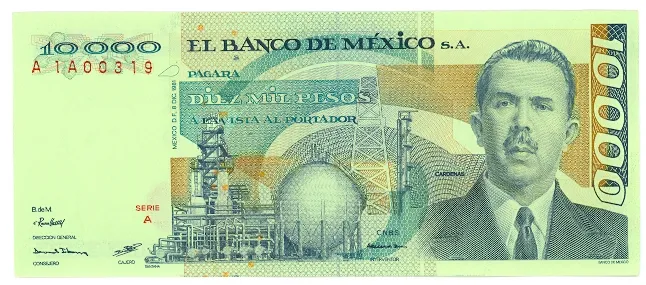
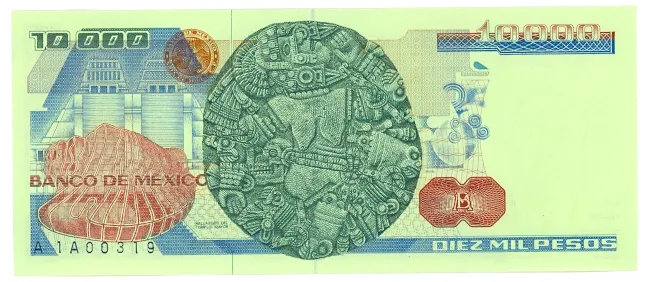
Design
Banxico
Obverse
Matías Romero
Portrait of Matías Romero
Reverse
The National Palace
About this banknote
Most 1981 Mexico 10,000 pesos banknotes are worth a few US dollars, not a fortune. This is a common note from the Banco de México Type A family. The pieces that bring real money are uncirculated examples, low or radar serial numbers, and genuine printing errors. Here is what yours is actually worth and how to check.
What this note is
The 10,000 pesos note dated 1981 shows Matías Romero on the face, a diplomat and finance minister from the era of Benito Juárez and the Reform period. The back features the Palacio Nacional (National Palace) in Mexico City. The design matches the 1978 issue, with the date being the main difference collectors track between the two.
This is part of the Banco de México Type A family (familia A), a large series of Mexican banknotes from the 1970s and 1980s. Note that these "old pesos" were replaced in 1993, when Mexico dropped three zeros from its currency. A 10,000 old-peso note like this one equals 10 new pesos in face terms, but it is no longer legal tender and cannot be spent.
How much it is worth in 2026
This note is out of circulation, so its value is collector value, not face value. Condition drives almost everything.
- Circulated (folds, soft corners, handling): typically a few US dollars, roughly 2 to 6 USD.
- Uncirculated (crisp, no folds, sharp corners, no stains): usually 8 to 25 USD depending on eye appeal and demand.
- Special serial numbers or errors: can bring several times more, occasionally into the low hundreds of dollars.
We want to be blunt about the online pricing you will see. Many listings ask far more than these notes trade for. Most Type A notes are common and were printed in large quantities. Unless yours has a genuine scarcity factor, treat inflated asking prices with skepticism.
| Note | Year | Condition | Typical value (USD) |
|---|---|---|---|
| 10,000 pesos, Matías Romero | 1981 | Circulated | 2 to 6 |
| 10,000 pesos, Matías Romero | 1981 | Uncirculated | 8 to 25 |
| 10,000 pesos, Matías Romero | 1981 | Special serial / error | 50 to a few hundred |
What makes yours worth more
Check three things:
- Grade. An uncirculated note with no folds, full body, and original crispness is worth several times a worn one. A single center fold drops the value hard.
- Serial number. Low serials (like 0000123), radar/palindrome serials (a number that reads the same forward and backward, sometimes called "capicúa" in Spanish), solid digits, or first-series prefixes attract collectors.
- Printing errors. Misaligned cuts, ink smears, missing print, or a factory fold can turn a common note into a genuine rarity worth many times face. Normal wear and damage from use is not an error.
If you think you have a real error or an unusual serial, post clear photos of both sides in the Pesoteca forum and the community will help you check it.
How to tell if it is genuine
Genuine notes have a watermark visible when held to light, a security thread, raised intaglio printing you can feel, and consistent, layered colors. Reproductions and photocopies usually have smooth paper, flat colors, and no watermark. Compare the design, paper, and signatures with official Banco de México references. For context on which Mexican notes get faked most, see our guide to the most counterfeited Mexican banknotes.
Where to sell it
For US and international collectors, world paper money (notaphily) is an active market. Your best options:
- A verified numismatic shop from the Pesoteca directory, which can appraise it on the spot.
- The Pesoteca buy-and-sell forum, where you deal directly with collectors.
- For high-grade or error notes, third-party grading (PMG) can add confidence and value before sale.
Photograph both sides in good light, note the serial number and condition honestly, and do not dump it to the first bidder on social media. A crisp uncirculated note or one with a special serial is worth taking the time to sell right.
Got a 1981 10,000 pesos note with an odd serial or a possible error? Post it in the forum and let the community weigh in before you sell.
Historical context
This 10,000 pesos of 1981 keeps the portrait of Matías Romero, the Oaxacan diplomat and financier close to Juárez who dominated Mexico's relations with the United States in the nineteenth century. His presence on the note breaks with the usual gallery of military heroes and makes him one of the most atypical figures in the national paper money.
As on the 1978 issue, the reverse presents the National Palace, seat of government in the heart of Mexico City, with its monumental facade overlooking the Plaza de la Constitución.
The piece belongs to Family A of the "old pesos." In 1981, a step away from the 1982 crisis, the country was dragging growing debt and inflationary pressure; the 10,000 pesos was already a very high denomination, a prelude to the notes of twenty thousand, fifty thousand, and one hundred thousand that would arrive before the 1993 reform.
Frequently asked questions
How much is the 1981 Mexico 10,000 pesos banknote worth?
It is out of circulation, so it has collector value only. A circulated note is worth a few US dollars (roughly 2 to 6 USD), while a crisp uncirculated example runs about 8 to 25 USD. Notes with special serial numbers or genuine printing errors can bring several times more, occasionally into the low hundreds. Condition and rarity decide the price.
Is the 1981 10,000 pesos note rare?
No, the base note is common. It belongs to the Banco de México Type A family and was printed in large quantities. What is scarce, and worth more, is a truly uncirculated example, a low or radar serial number, a first-series prefix, or a factory printing error. Without one of those factors, expect only a few dollars.
Where can I sell my 1981 Mexico 10,000 pesos note?
The safest options are a verified shop from the Pesoteca directory (/tiendas), which can appraise it in person, or the Pesoteca buy-and-sell forum (/foro/compra-venta) where you deal with collectors directly. Photograph both sides in good light and check for a low serial, radar serial, or error, which raise the value. For high-grade or error notes, consider PMG grading first.
How do I tell if my 1981 10,000 pesos note is genuine?
Check the security features: a watermark visible when held to light, a security thread, raised intaglio printing you can feel, and layered, consistent colors. Reproductions usually have smooth paper, flat colors, and no watermark. Compare the design, paper, and signatures against official Banco de México images. If in doubt, post photos in the Pesoteca forum (/foro).
Familia A
This banknote belongs to the BIL-A family within the Sistema PSM . Explore all the banknotes that share origin, era and design with this piece.
Ver todos los billetes de la familia A →