
Mexico 20 Nuevos Pesos (1992), Benito Juárez
Familia A · algodón
Period: México Contemporáneo
Design
Banxico
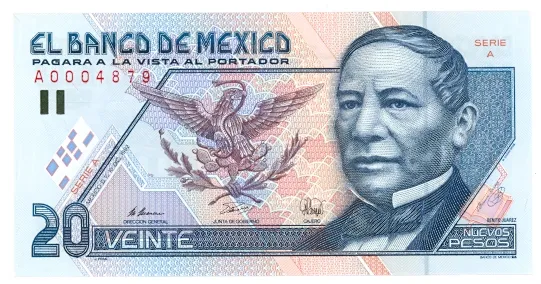
Obverse
Benito Juárez
Portrait of Benito Juárez and the National Coat of Arms
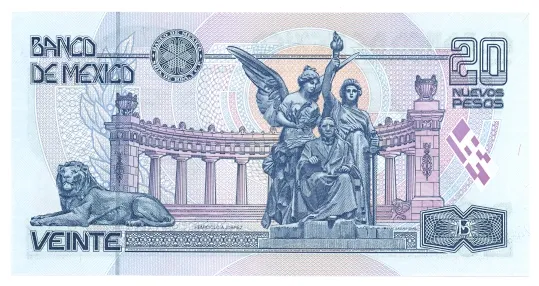
Reverse
The Hemiciclo a Juárez monument at the Alameda Central
About this banknote
Most 1992 Mexico 20 nuevos pesos notes are worth a few dollars in collector value, not a fortune. This is a common note from the Banco de México Family A series. The exceptions that bring real money are uncirculated examples, low or radar serial numbers, and genuine printing errors. Here is how to tell which one you have.
What it is
The front carries a portrait of Benito Juárez, the president who led Mexico's Reforma and defended the Republic against Emperor Maximilian, alongside the National Coat of Arms. The back shows the Hemiciclo a Juárez, the white marble monument in Mexico City's Alameda Central park.
A quick note on the denomination. In 1993 Mexico dropped three zeros from its currency and briefly called it the "nuevo peso" (new peso). This note reads "20 nuevos pesos" or "N$20" and belongs to the transitional Family A issued by the Banco de México. It is the direct predecessor of the well-known blue polymer 20-peso note (Family F) that came later.
How much is it worth in 2026
This note is out of circulation, so it no longer has spending value in Mexico. Its worth is purely collector value, and for most examples that is modest. In 2026, a typical circulated 1992 20 nuevos pesos note trades for roughly 2 to 8 USD. A crisp uncirculated example can reach 15 to 40 USD depending on the grade and buyer.
What actually moves the price:
- Condition. An uncirculated note (no folds, no stains, sharp corners) is worth several times a worn one. Notaphily grading runs from Good up to Gem Uncirculated (65 EPQ and higher on PMG's scale). Grade is the single biggest factor for a common note like this.
- Serial number. Low serials (like 0000012), radar/palindrome serials (reads the same both directions, e.g. 1234321), and solid serials command premiums from collectors who chase them.
- First series (prefix letter). Early series letters can carry a small premium.
- Printing errors. Genuine factory errors are the real multipliers (more below).
Ignore the inflated listings you see online. Most Family A notes are common. "Rare" gets thrown around loosely, and a folded, thumbed note is not rare no matter how old the seller says it is.
Values at a glance
| Note | Year | Condition | Typical value (USD) |
|---|---|---|---|
| 20 nuevos pesos, Juárez | 1992 | Circulated (folds, wear) | 2 to 8 |
| 20 nuevos pesos, Juárez | 1992 | Uncirculated | 15 to 40 |
| 20 nuevos pesos, Juárez | 1992 | Low / radar serial | 25 to 100+ |
| 20 nuevos pesos, Juárez | 1992 | Genuine printing error | Multiples of face value, varies |
Ranges reflect the open collector market for common Family A notes; exact figures depend on grade, buyer, and demand at the time.
The myth: "an old peso note is worth a fortune"
Age alone does not make a banknote valuable. Millions of these were printed and plenty survive, including uncirculated ones pulled from bank straps. A note is worth real money when demand outstrips the surviving supply in a given grade, or when it carries a feature collectors specifically hunt (a special serial or a verified error). A common note in worn condition is worth close to its face value in collector terms, and this one no longer spends.
Does it have valuable printing errors?
Yes, genuine factory errors turn a common note into something collectors will pay a multiple for. Watch for:
- Misaligned or off-center cuts
- Ink smears or missing colors from the press
- Fold-overs that happened during printing
- Repeated, mismatched, or badly off-center serial numbers
Normal wear and handling damage is not an error. A crease from your wallet is not a factory fold. If you think yours has a real error, post clear photos of both sides in the forum so the community can weigh in.
How to tell if yours is genuine
Check the security features against official Banco de México images for this note: the watermark held to the light, the security thread, microprinting, and the feel of the intaglio (raised) printing under your fingers. Reproductions and cheap prints usually show flat colors, smooth paper, and no relief. Compare the portrait, signatures, and design details to a verified reference. When in doubt, ask in the forum.
Where to sell it
For a common note, your best options are collectors and dealers who know the series:
- A verified numismatic dealer from the Pesoteca shop directory, who can value it in person.
- The Pesoteca buy-and-sell forum, where world-paper-money collectors trade directly.
- For a genuinely scarce note (verified error, standout serial, high grade), consider a graded submission to PMG and an international auction house, where the world paper money market is active.
Photograph both sides in good light before you sell, and check the serial and condition first. Don't dump it to the first Facebook offer.
For context on what to watch out for, see Mexico's most counterfeited banknotes.
Got a 1992 20 nuevos pesos with an odd serial or in mint condition? Post the front and back in the forum and let the community tell you what it's really worth.
Historical context
The 20 pesos of 1992 replaces the Corregidora with Benito Juárez, the Benemérito de las Américas, a Zapotec Indigenous man from Oaxaca who rose to the Presidency and led the liberal Reform and the resistance against the French intervention. His phrase "respect for the rights of others is peace" sums up his legacy as a symbol of the Republic and of the secular State. The note accompanies his portrait with the National Coat of Arms.
The reverse shows the Hemiciclo a Juárez, the white marble monument in the Alameda Central of Mexico City, erected in his honor in 1910.
This piece belongs to the last of the "old pesos" of Family A. Issued in 1992, it barely managed to circulate before the January 1993 monetary reform divided all values by a thousand; its denomination would later reappear converted into 20 new pesos.
Frequently asked questions
How much is the 1992 Mexico 20 nuevos pesos note worth?
In {{AÑO}}, a circulated example typically brings 2 to 8 USD in collector value, since it no longer circulates as currency. An uncirculated note can reach 15 to 40 USD. Low or radar serial numbers and genuine printing errors push it higher, sometimes well past 100 USD. Condition drives the price.
Is the 1992 20 nuevos pesos note rare?
No, it's a common Banco de México Family A note with large numbers surviving. Age doesn't make it rare. The exceptions are uncirculated examples in top grade, notes with low, radar, or solid serial numbers, and verified factory printing errors. Those are what collectors actually chase.
Where can I sell my 1992 20 nuevos pesos note?
The safest routes are a verified dealer from the [Pesoteca shop directory](/tiendas), who can value it on the spot, or the [Pesoteca buy-and-sell forum](/foro/compra-venta) among collectors. Photograph both sides in good light and check the serial and grade first. For a genuinely scarce note, a graded PMG submission and an international auction reach more buyers.
How do I tell if my 1992 20 nuevos pesos note is genuine?
Check the security features against official Banco de México images: the watermark held to the light, the security thread, microprinting, and raised intaglio printing you can feel. Reproductions usually have smooth paper, flat colors, and no relief. Compare the portrait, signatures, and design to a verified reference, and ask in the [forum](/foro) if you're unsure.
Familia A
This banknote belongs to the BIL-A family within the Sistema PSM . Explore all the banknotes that share origin, era and design with this piece.
Ver todos los billetes de la familia A →